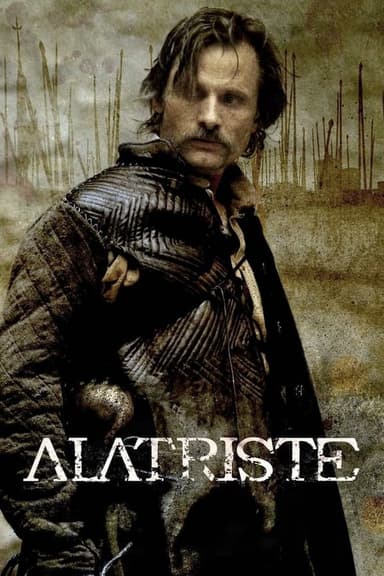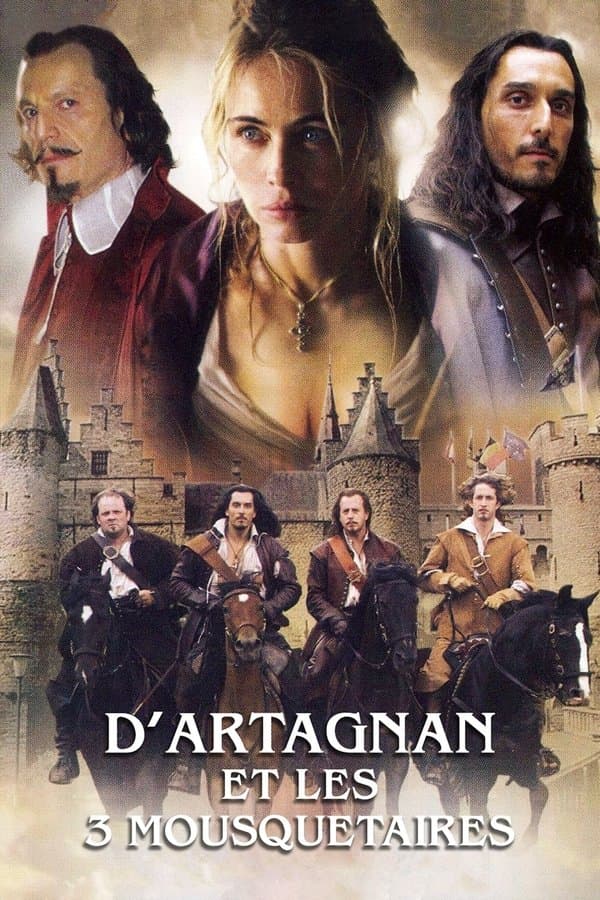
D'Artagnan and the Three Musketeers
2005 • Action, Adventure • R
Exile and possibly death are in the cards for the Queen of France in this edgy cloak-and-dagger adventure based on Alexandre Dumas' unrivaled tale of THE THREE MUSKETEERS and their reckless romantic friend D'Artagnan. Supernatural powers and dark mystical forces add an exciting twist to this classic tale.
Runtime: 3h 30m
Buy related books from Amazon
As an Amazon Associate I earn from qualifying purchases. Read the full disclosure.
Why you should read the novels
If you loved the swordplay of D'Artagnan and the Three Musketeers (2005), read The Three Musketeers by Alexandre Dumas in English for the complete, uncut adventure. The novel's witty dialogue, intricate intrigue, and unforgettable camaraderie deliver richer stakes than any fast-paced screen retelling.
Dumas's classic swashbuckler offers character depth modern adaptations compress: Athos's tragic past, Milady de Winter's chilling complexity, and d'Artagnan's growth from impetuous Gascon to seasoned hero. Every chapter brims with historical color, political tension, and laugh-out-loud banter.
For extra context, explore The Memoirs of Monsieur d'Artagnan by Gatien de Courtilz de Sandras, the 17th-century inspiration behind Dumas's hero. Reading the sources lets you savor the full plot, themes, and nuance that the 2005 film can only sample.
Adaptation differences
Compared with the Alexandre Dumas novel, the 2005 screen adaptation streamlines the episodic, serialized narrative into a tighter, quest-driven arc. Extended journeys, multiple duels, and side adventures are merged or omitted, and timelines compress weeks and months of intrigue into hours of runtime.
Character development is simplified. The book lingers on d'Artagnan's maturation, the distinct philosophies of Athos, Porthos, and Aramis, and Milady de Winter's layered backstory and motives; the adaptation emphasizes forward momentum and action, trimming moral ambiguity and slower revelations.
The novel's political and religious context—Queen Anne and Buckingham, Cardinal Richelieu's realpolitik, and the buildup around the Huguenot conflict and La Rochelle—receives broader, subtler treatment on the page. The film focuses on clear stakes and villainy, toning down satire, social critique, and historical nuance.
Dumas balances rousing bravado with bittersweet consequences and barbed irony. Screen versions, including the 2005 film, typically brighten the tone, sharpen romance, and wrap subplots neatly, whereas the book allows for messy aftermaths, lingering losses, and reflections on honor versus survival.
D'Artagnan and the Three Musketeers inspired from
The Memoirs of Monsieur d'Artagnan
by Gatien de Courtilz de Sandras
The Three Musketeers
by Alexandre Dumas