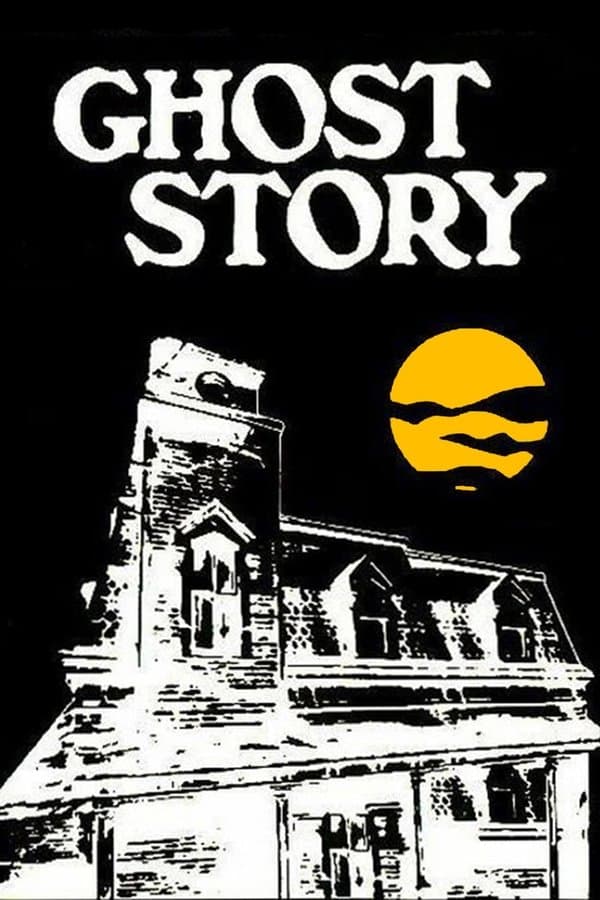
Ghost Story
1981 • Drama, Horror, Thriller • R
Four successful elderly gentlemen, members of the Chowder Society, share a gruesome, 50-year-old secret. When one of Edward Wanderley's twin sons dies in a bizarre accident, the group begins to see a pattern of frightening events developing.
Runtime: 1h 50m
Buy related books from Amazon
As an Amazon Associate I earn from qualifying purchases. Read the full disclosure.
Why you should read the novel
Before watching the 1981 film, experience the chilling power of Ghost Story by Peter Straub, the landmark literary horror novel that inspired it. Straub’s classic delivers a richer, deeper, and far more unsettling journey than any two-hour adaptation can capture.
On the page, Ghost Story unfolds across multiple timelines, voices, and interlocking mysteries. You’ll meet the Chowder Society in full, feel the weight of Milburn’s buried sins, and confront an antagonist whose shape-shifting nature and mythic roots are explored with haunting detail. The novel’s atmosphere, character depth, and creeping dread make it an essential horror book.
If you want the definitive Ghost Story experience—meticulous world-building, layered themes, and a steadily mounting sense of doom—read the book instead of relying on the movie alone. Discover why Peter Straub’s Ghost Story remains a timeless classic of literary horror that fans of Stephen King and Shirley Jackson still recommend.
Adaptation differences
Ghost Story book vs movie differences begin with scope and structure. Peter Straub’s novel is sprawling, multi-threaded, and nonlinear, weaving several stories, perspectives, and town histories. The 1981 film streamlines events into a more direct, linear ghost-revenge narrative, prioritizing clear plot beats over the book’s layered, nesting-tale architecture.
Another major change is the nature of the antagonist. In the novel, the entity is an ancient, shape-shifting force that manifests across identities and eras, tied to folklore and deeper myth. The film largely presents a singular revenant linked to Eva/Alma, emphasizing vengeance and spectral appearances rather than the book’s expansive supernatural cosmology.
Character consolidation is significant. The movie trims the Chowder Society’s inner lives, merges or compresses arcs, and famously has one actor portray both Don and his brother David—streamlining their relationship. Subplots and supporting threats found in the novel, such as the dangerous Bate brothers and town-wide disturbances, are reduced or omitted to keep the film focused and contained.
Tone and climax also diverge. The novel’s finale sprawls across wintry landscapes with a mounting, existential dread and an emphasis on storytelling as power. The film resolves in compact set pieces featuring practical effects, jump-scare rhythms, and a more conventional confrontation. Overall, the movie captures the premise and mood, while the book delivers the full thematic depth, mythic breadth, and slow-burn terror that make Ghost Story unforgettable.
Ghost Story inspired from
Ghost Story
by Peter Straub