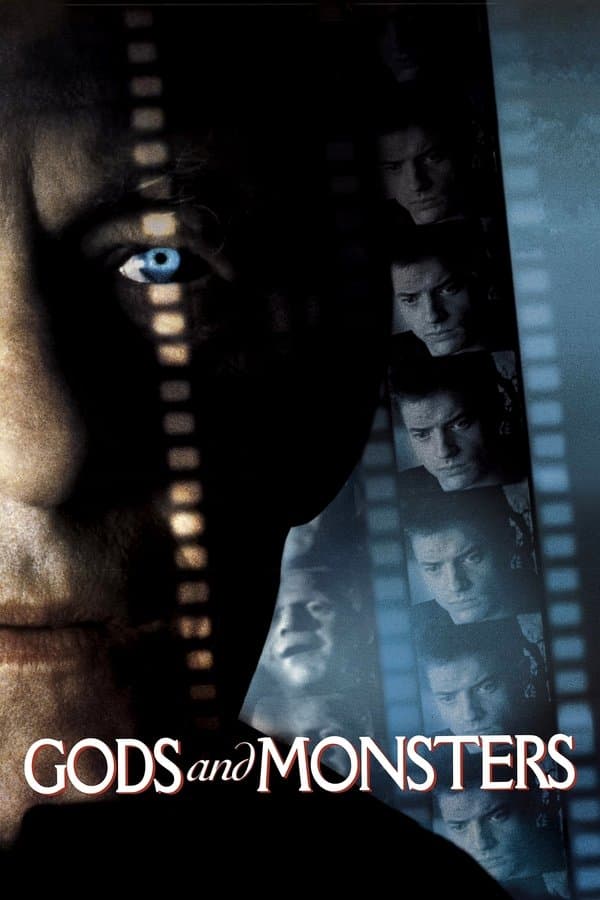
Gods and Monsters
1998 • Drama • R
It's 1957, and James Whale's heyday as the director of "Frankenstein," "Bride of Frankenstein" and "The Invisible Man" is long behind him. Retired and a semi-recluse, he lives his days accompanied only by images from his past. When his dour housekeeper, Hannah, hires a handsome young gardener, the flamboyant director and simple yard man develop an unlikely friendship, which will change them forever.
Runtime: 1h 45m
Buy related books from Amazon
As an Amazon Associate I earn from qualifying purchases. Read the full disclosure.
Why you should read the novel
Discover Father of Frankenstein by Christopher Bram, the gripping novel that inspired the acclaimed film Gods and Monsters. Bram’s book invites you directly into James Whale’s mind, offering the layered interiority and historical texture that only a novel can deliver.
On the page, Whale’s wit, pain, and artistic brilliance unfold with unhurried depth, tracing his journey from the trenches of World War I to the soundstages of Universal. Bram’s evocative prose reveals Hollywood’s golden age, queer history, and the haunting legacy of Frankenstein with nuance the screen can only suggest.
If you love literary biography, film history, or LGBTQ+ fiction, reading the source novel is the richest way to experience this story. Whether in paperback, ebook, or audiobook, Father of Frankenstein offers a more intimate, emotionally resonant encounter than any viewing could provide.
Adaptation differences
The biggest difference between the book and the movie lies in scope and tone. Christopher Bram’s Father of Frankenstein ranges widely through James Whale’s past and social world, while the film streamlines events into a tightly focused chamber piece. The movie emphasizes an elegiac mood and accessible arc; the novel is more expansive, thornier, and often darker.
Bram’s novel privileges interiority and shifting perspectives, letting readers inhabit Whale’s memories, fantasies, and contradictions alongside other viewpoints. The film translates those histories into vivid visual flashbacks and dreamlike nods to Frankenstein and Bride of Frankenstein, but necessarily compresses subplots and secondary relationships the book explores at length, including Hollywood circles and domestic dynamics.
Characterization diverges in notable ways. The novel renders Clayton Boone’s conflicts with greater ambiguity and psychological complexity, probing masculinity, attraction, and fear in more explicit, sometimes uncomfortable detail. The film softens and simplifies some edges to suit mainstream pacing and rating expectations, reducing certain sexual frankness and amplifying Whale’s gentle, reflective charisma.
Finally, the endings differ in emphasis. The book treats Whale’s decline and death with deliberate ambiguity, leaving motivations, complicity, and memory’s distortions open to interpretation. The film offers a clearer, more cathartic resolution and a reflective epilogue, trading the novel’s interpretive murk for thematic closure. In short, the novel invites analysis; the movie offers summation.
Gods and Monsters inspired from
Father of Frankenstein
by Christopher Bram