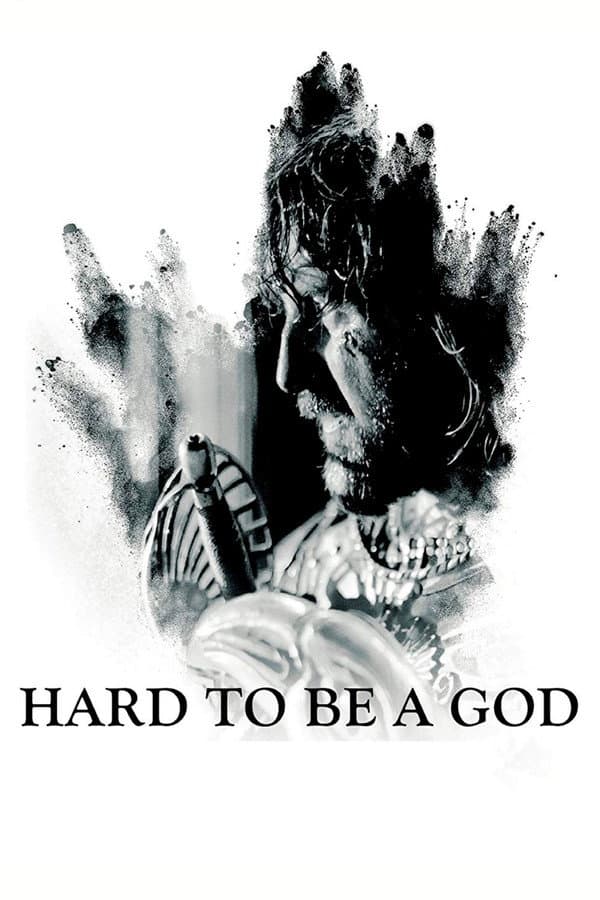
Hard to Be a God
2014 • Drama, Science Fiction • NR
A group of scientists is sent to the planet Arkanar to help the local civilization, which is in the Medieval phase of its own history, to find the right path to progress. Their task is a difficult one: they cannot interfere violently and in no case can they kill. The scientist Rumata tries to save the local intellectuals from their punishment and cannot avoid taking a position.
Runtime: 2h 57m
Buy related books from Amazon
As an Amazon Associate I earn from qualifying purchases. Read the full disclosure.
Why you should read the novel
Before you stream the movie, discover the original Hard to Be a God novel by the Strugatsky brothers—a landmark of classic science fiction. The book’s rich world-building, philosophical depth, and razor-sharp satire provide the full context the film only hints at.
Reading the novel reveals the ethics of the Earth “progressors,” the political machinery of Arkanar, and Rumata/Anton’s conflicted inner life. You’ll get clear motivations, stakes, and ideas—history, responsibility, and power—told with wit, tension, and human warmth.
If the film’s imagery intrigued you, the book will illuminate it. Available in English in print, ebook, and audiobook, Hard to Be a God is the best way to grasp the complete story and its timeless questions.
Adaptation differences
The biggest difference between the Hard to Be a God book and movie is framing. The novel clearly presents a science‑fiction setup—Earth’s Institute of Experimental History, “progressors,” and a non‑interference policy—while the film downplays or obscures this, favoring an almost pure medieval immersion. Book readers get explicit context; movie viewers get hints and atmosphere.
Point of view and characterization also diverge. The Strugatsky novel foregrounds Rumata/Anton’s inner voice, irony, and moral struggle; the film adopts an observational camera and fragmented dialogue, rendering motives opaque. Key relationships (such as Rumata’s personal attachments and his efforts to protect persecuted intellectuals) are more developed and emotionally articulated on the page.
Structure and clarity differ markedly. The book lays out factions, timelines, and political moves (Don Reba, the Greys, purges) with narrative signposts. The movie compresses events, merges or sidelines subplots, and lets scenes flow in a near-continuous present. Some episodes that are pivotal in the novel—like the fate of sages and reformers—are altered, minimized, or left ambiguous on screen.
Tone and emphasis shift as well. The novel balances adventure, satire, and philosophical inquiry, culminating in a morally charged reckoning with the cost of intervention. The film prioritizes sensory immersion—mud, chaos, and grotesque detail—over explicit thesis statements, ending with greater ambiguity. For readers comparing book vs. film, the novel offers conceptual clarity; the adaptation offers visceral experience.
Hard to Be a God inspired from
Hard to Be a God
by Arkady Strugatsky, Boris Strugatsky