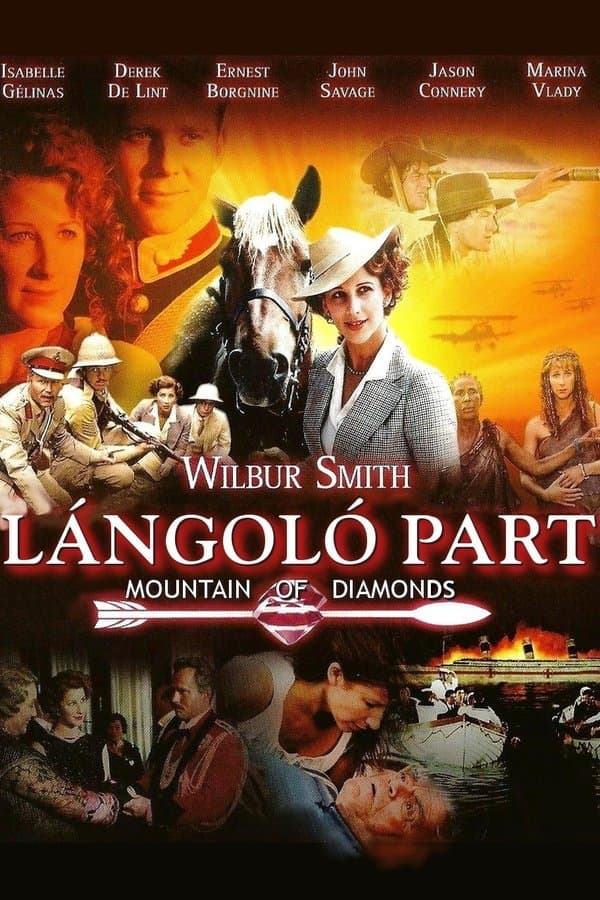
Mountain of Diamonds
1991 • Adventure, TV Movie
France, 1915. Young and radiantly beautiful Centaine de Thiry is the happiest woman in the world: in a few more hours she will be married to pilot Michael Courteney, the love of her life. But fate has it otherwise: Michael is shot down in a reconnaissance plane shortly before his wedding. Life has lost its meaning for Centaine. When the young woman realizes soon afterwards that she is expecting a baby, her zest for live is revived. She decides to give birth to the child in South Africa, the home country of her deceased fiancé.
Buy related books from Amazon
As an Amazon Associate I earn from qualifying purchases. Read the full disclosure.
Why you should read the novel
Before pressing play, experience the source that ignited a century of adventure storytelling: King Solomon's Mines by H. Rider Haggard. The novel’s vivid landscapes, tense survival sequences, and richly imagined cultures create a depth and momentum no screen can fully capture.
Reading the book unlocks Allan Quatermain’s wry, reflective voice, the moral gray areas of exploration, and the intricate politics surrounding the treasure. It’s classic adventure literature that rewards you with nuance, context, and historical texture you won’t get from a condensed screenplay.
If you love timeless quests, lost maps, and high-stakes journeys, choose the original. King Solomon’s Mines remains a fast, gripping, and immersive read—ideal for fans of classic fiction, book-versus-movie comparisons, and anyone seeking the definitive version of this legendary expedition.
Adaptation differences
Story structure is typically streamlined in the 1991 adaptation: the trek is shorter, obstacles are merged, and exposition is compressed. The novel dwells on the brutal Kalahari crossing, hunger, thirst, and exacting navigation, while the film emphasizes set pieces and momentum over the slow-burn, survival-forward tension of the book.
Characterization shifts are significant. Allan Quatermain in the novel is older, pragmatic, and introspective; onscreen he often becomes a more quippy, swashbuckling action lead. Films frequently introduce or amplify a romantic interest and condense companions like Sir Henry Curtis and Captain Good, while Umbopa’s (Ignosi’s) hidden-king arc and inner resolve are simplified.
Cultural and thematic layers are reduced. The book’s detailed Kukuana politics, succession struggle with Twala, and the eerie influence of Gagool carry moral ambiguity and period-specific attitudes. The adaptation typically foregrounds spectacle and clear-cut villainy, dialing back ethnographic detail, political nuance, and the ethical questions surrounding exploration and empire.
Climactic elements are reimagined for visual impact. The novel’s treasure chamber, traps, and aftermath unfold with measured dread and consequence; screen versions often heighten explosions, collapses, and last-second escapes. Endings are neater, with altered fates and a brisk epilogue, whereas the book lingers on loss, cost, and what the survivors truly gain—or fail to reclaim.
Mountain of Diamonds inspired from
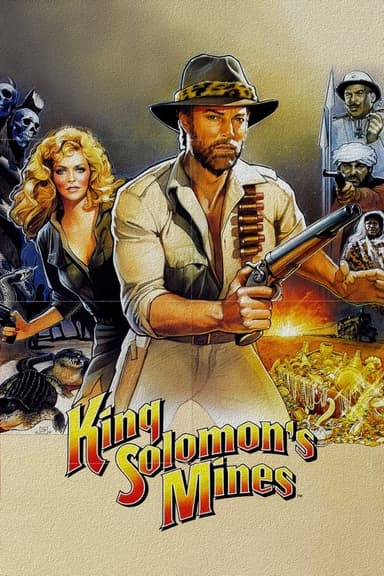
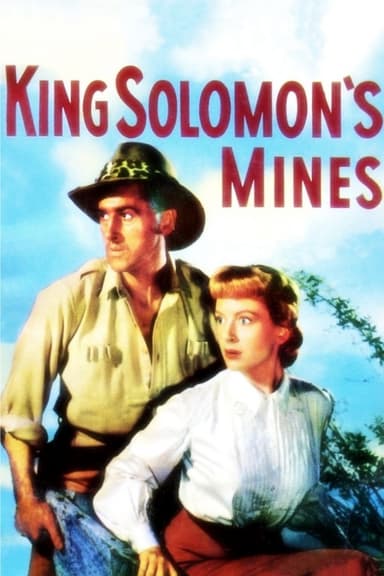
King Solomon's Mines
by H. Rider Haggard