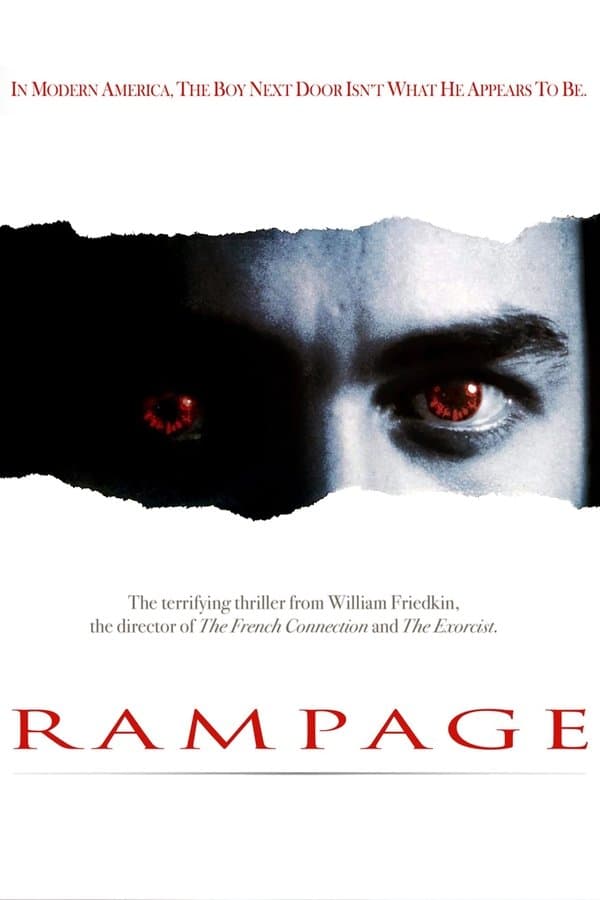
Rampage
1987 • Crime, Drama, Thriller • R
Liberal district attorney decides to seek the death penalty for a man who slaughtered a family at Christmastime, then drank their blood. He escapes, though, and starts killing again.
Runtime: 1h 31m
Buy related books from Amazon
As an Amazon Associate I earn from qualifying purchases. Read the full disclosure.
Why you should read the novel
Thinking about watching Rampage (1987)? Read the source first. William P. Wood’s Rampage delivers a gripping legal thriller whose psychological depth and procedural realism go far beyond what the film can show.
Wood, a former prosecutor, opens the door to the courtroom’s inner workings—insanity defenses, forensic evidence, and strategy sessions—giving you context, nuance, and ethical complexity that get compressed on screen.
If you crave true-crime–inflected fiction with real-world resonance, the Rampage book offers richer character insight, clearer stakes, and a more thought-provoking exploration of justice than the movie alone. Start with the novel.
Adaptation differences
The Rampage book by William P. Wood is a legal-procedural novel inspired by real events, while the 1987 film streamlines the story into a tighter, moodier thriller. The movie compresses timelines, consolidates roles, and heightens atmosphere; the novel builds tension through investigative detail and courtroom process.
Wood devotes substantial space to pretrial motions, psychiatric evaluations, and the evolving strategy around the insanity defense. The film trims or simplifies many of these steps, prioritizing pace and visual storytelling over granular procedure, which shifts how the ethical stakes and legal ambiguities register with the audience.
Characterization diverges notably. The novel lingers on the prosecutor’s internal conflicts, the victims’ families’ grief, and expert testimony, offering layered perspectives on culpability. The movie externalizes the killer’s pathology and leans on composite characters and altered names, resulting in a broader but less textually nuanced portrait of motive and responsibility.
Endings and emphasis vary across versions of the film, affecting the tone regarding punishment and sanity. The novel’s resolution stays anchored in its legal themes and consequences, giving readers a clearer through line on culpability, appeals, and policy implications than the adaptation provides.
Rampage inspired from
Rampage
by William P. Wood