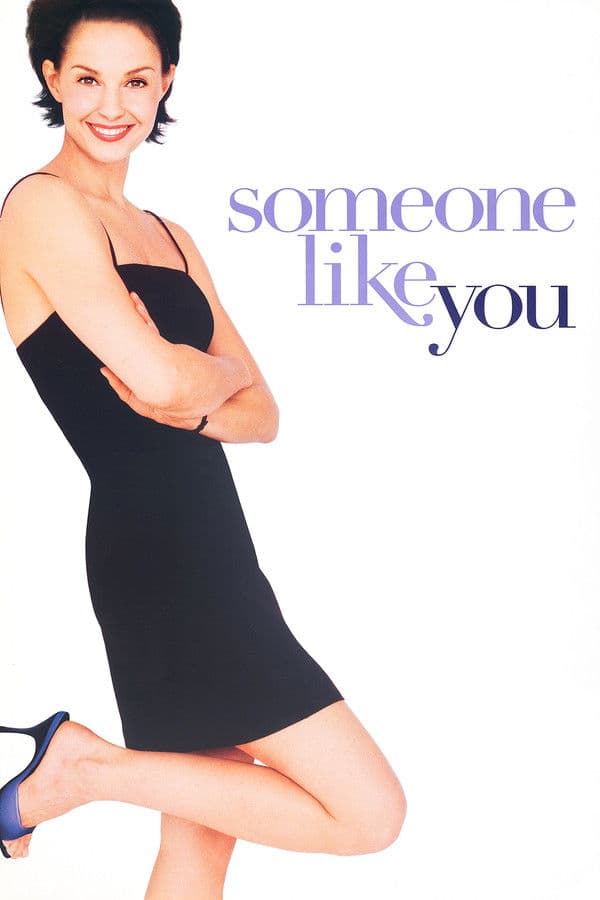
Someone Like You...
2001 • Comedy, Romance • PG-13
Jane Goodale has everything going for her. She's a producer on a popular daytime talk show, and is in a hot romance with the show's dashing executive producer Ray. But when the relationship goes terribly awry, Jane begins an extensive study of the male animal, including her womanizing roommate Eddie. Jane puts her studies and romantic misadventure to use as a pseudonymous sex columnist -- and becomes a sensation.
Runtime: 1h 37m
Buy related books from Amazon
As an Amazon Associate I earn from qualifying purchases. Read the full disclosure.
Why you should read the novel
Before you stream the film, discover the sharp, funny, and fearless voice that started it all: Laura Zigman’s novel Animal Husbandry. The book digs deeper into heartbreak, desire, and recovery with biting wit and intimate honesty you simply can’t pack into a two-hour movie.
If you loved the “cow theory” and New York dating vibes in Someone Like You, the Animal Husbandry book delivers richer context, smarter satire, and the kind of confessional observations that make you underline passages. It’s perfect for fans of smart romantic fiction who crave character depth and real emotional insights.
Reading the source novel means savoring the original humor, the unfiltered inner monologue, and the nuanced growth arc that inspired the adaptation. Start with the book to experience the full story as the author intended—then watch the movie to see how Hollywood reimagined it.
Adaptation differences
Tone and perspective shift significantly from page to screen. Animal Husbandry is sharper and more introspective, told through a candid, confessional lens that blends satire with pop-ethology. The film lightens the mood into a glossy rom-com rhythm, prioritizing meet-cute chemistry and punchy set pieces over the novel’s internal debates and emotional excavation.
Character focus is streamlined for cinematic momentum. Side characters and coworkers are compressed or combined, and some edges are sanded down to fit a traditional romantic-comedy arc. Notably, the protagonist’s surname changes from the novel’s Jane Goodall to Jane Goodale in the film, signaling a broader effort to avoid real-life confusion and to soften the story’s more pointed metafictional jokes.
The workplace and media angle is reframed to heighten spectacle. On screen, Jane’s behavioral “cow theory” becomes a buzzy, public phenomenon, driving talk-show segments and watercooler moments. In the book, her ideas unfold more like field notes—intimate, analytical, and often private—inviting readers into the messy process of turning heartbreak into a framework rather than the instant virality portrayed in the movie.
The endings and themes also diverge. The film leans into a conventionally uplifting romantic resolution, tidying loose ends to satisfy genre expectations. The novel places greater weight on self-knowledge, the ethics of labeling behavior, and the uneven path of healing, with a slower, more reflective timeline that resists easy answers even when hope remains.
Someone Like You... inspired from
Animal Husbandry
by Laura Zigman