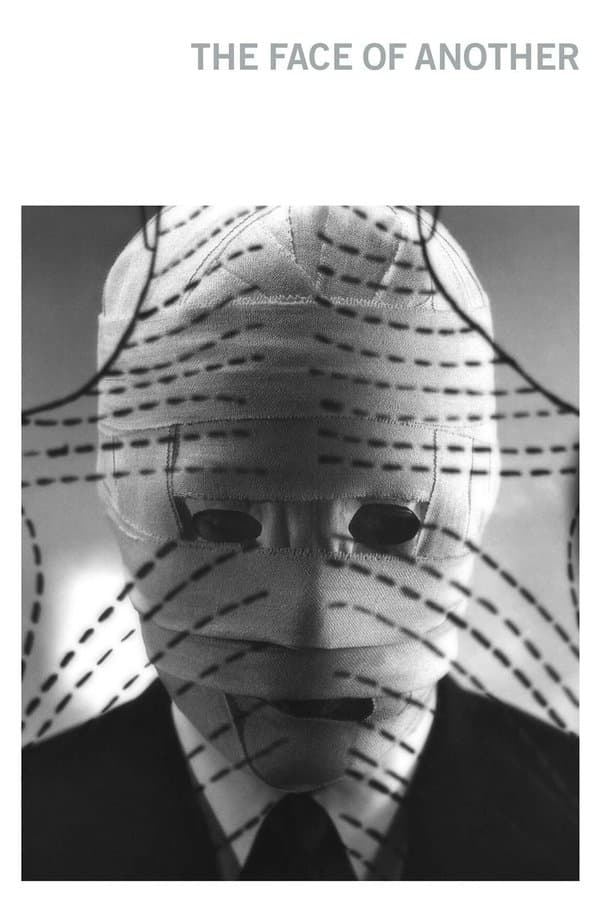
The Face of Another
1966 • Drama, Science Fiction • NR
A businessman with a disfigured face obtains a lifelike mask from his new doctor, but the mask starts altering his personality and causing him to question his identity.
Runtime: 2h 2m
Buy related books from Amazon
As an Amazon Associate I earn from qualifying purchases. Read the full disclosure.
Why you should read the novel
Before you watch the 1966 film The Face of Another, experience Kobo Abe’s original novel, The Face of Another. The book offers a deeper, more intimate exploration of identity, anonymity, and moral responsibility—directly from the mind that conceived the story. For readers of existential fiction and Japanese literature, it’s essential, unsettling, and unforgettable.
Abe’s novel invites you inside the protagonist’s private notebooks and clinical reflections, revealing the obsessive research, ethical doubts, and psychological unraveling behind the mask. This is the core experience the movie can only suggest: precise language, provocative ideas, and the uncomfortable honesty of first-person confession.
If you want the fullest version of this tale, read the source material. The Face of Another book provides richer context, sharper philosophical stakes, and a more complete portrait of the man behind the mask—perfect for book clubs, students, and serious readers of psychological drama.
Adaptation differences
Structure is the most immediate difference. Kobo Abe’s novel unfolds through first-person notebooks, pseudo-reports, and intimate addresses to the narrator’s wife, immersing you in his private logic and rationalizations. The film translates this internal storm into an external, visual language—elliptical scenes, bold compositions, and minimalist dialogue—shifting the emphasis from reasoning to atmosphere.
Teshigahara’s adaptation introduces a parallel thread about a young woman with facial scarring, intercut with the main story. This subplot, absent from the book, broadens the film’s scope to postwar trauma and social gaze, reframing the theme of “appearance” as a collective wound rather than only a personal crisis.
Characterization also diverges. The novel dwells on the ethics of mask-making, the scientist’s methodical planning, and the nuanced psychology of his wife, who becomes a complex interlocutor to his experiment. The film keeps her more enigmatic and pares back the procedural detail, while naming and defining characters more concretely for the screen.
Tone and focus differ as well. The book privileges philosophical inquiry and technical specificity, building tension from the narrator’s self-justification and self-deception. The film pursues a cooler, modernist severity—graphic design, production design, and sound shaping meaning—condensing debates into charged set pieces. Reading the novel reveals motives, methods, and moral ambiguities that the movie stylizes and streamlines.
The Face of Another inspired from
The Face of Another
by Kobo Abe