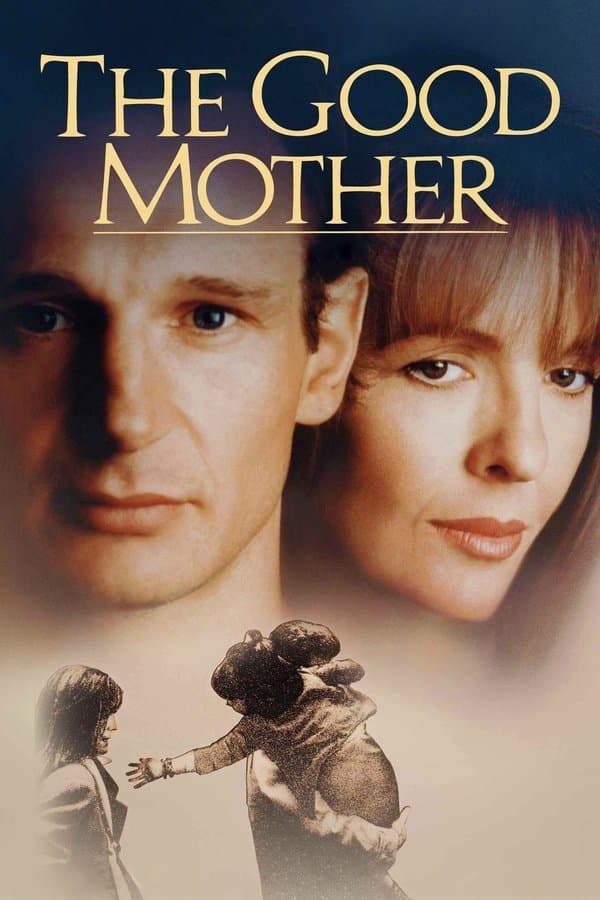
The Good Mother
1988 • Drama, Romance • R
After finding a sexually liberated boyfriend, a divorced woman gets sued over daughter's custody, by her ex, who claims that her lover has a bad influence on the kid.
Runtime: 1h 44m
Buy related books from Amazon
As an Amazon Associate I earn from qualifying purchases. Read the full disclosure.
Why you should read the novel
Before watching the 1988 film, discover the source: The Good Mother by Sue Miller, a critically acclaimed novel that explores divorce, desire, and custody with a depth only literature can sustain. Sue Miller’s precise, compassionate prose immerses you in Anna’s inner life, where love, autonomy, and parenthood collide in unforgettable ways.
The novel offers rich psychological insight, layered moral questions, and a textured New England setting that reward close reading. If you value character-driven stories, intimate emotional stakes, and nuanced portrayals of sexuality and parenting, the book delivers a more complex, thought-provoking experience than any adaptation can encapsulate.
For readers seeking a literary exploration of boundaries, responsibility, and social judgment, The Good Mother is essential. Read the novel to understand the full context behind the custody battle and to engage with Miller’s subtle craft—an experience that continues to resonate long after the last page.
Adaptation differences
Looking for the differences between the book and the movie? Sue Miller’s The Good Mother unfolds in an intimate, introspective voice that the film inevitably externalizes. The novel’s first-person depth shapes how we perceive Anna’s choices, while the adaptation leans on visual cues and courtroom exchanges, shifting the emphasis from interior moral conflict to public judgment and legal drama.
The book’s treatment of sexuality and boundaries is more nuanced, gradual, and ambiguously human. To meet runtime and ratings constraints, the film condenses and softens certain contexts, foregrounding controversy over complexity. As a result, the novel presents a wider spectrum of intentions, misunderstandings, and consequences that the screen version can only sketch.
Characterization diverges as well. In the novel, Anna’s history, her parenting philosophy, and her lover’s artistic life receive fuller development, and side characters (including family and legal professionals) carry more weight. The movie streamlines timelines and subplots, trimming back supporting perspectives that, in the book, add ethical texture and emotional stakes.
While the core custody outcome aligns, the forms of aftermath differ. The novel lingers in the uncomfortable spaces—self-scrutiny, community judgment, and the long echo of desire and regret—whereas the film resolves with clearer dramatic beats. Readers who want the most complete picture of motives, context, and consequences will find the book’s scope and ambiguity far richer than the adaptation.
The Good Mother inspired from
The Good Mother
by Sue Miller