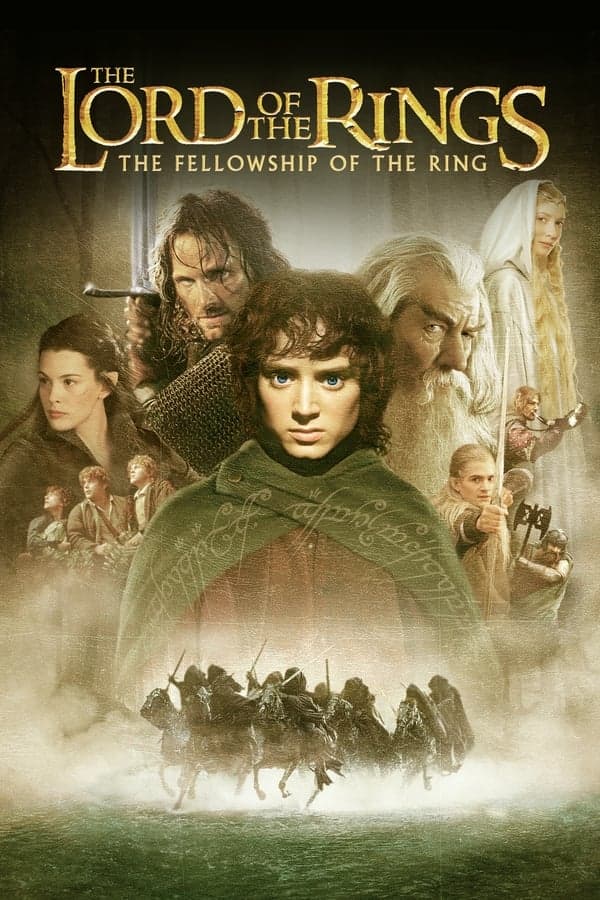
The Lord of the Rings: The Fellowship of the Ring
2001 • Action, Adventure, Fantasy • PG-13
Young hobbit Frodo Baggins, after inheriting a mysterious ring from his uncle Bilbo, must leave his home in order to keep it from falling into the hands of its evil creator. Along the way, a fellowship is formed to protect the ringbearer and make sure that the ring arrives at its final destination: Mt. Doom, the only place where it can be destroyed.
Runtime: 2h 59m
Buy related books from Amazon
As an Amazon Associate I earn from qualifying purchases. Read the full disclosure.
Why you should read the novel
Tom Bombadil alone is reason to open the book. He is a strange, singing master of the Old Forest who is untouched by the Ring, and he has no place in the film. The chapters around him, from the grasping willows to the fog-bound Barrow-downs, give the hobbits' journey an eerie, fairy-tale middle that the screen skips entirely.
Tolkien's pace is the other gift. Seventeen years pass between Bilbo's party and Frodo's departure, and the long walk out of the Shire lets you feel how slowly the shadow gathers. Because the story stays mostly with Frodo, the dangers arrive as he meets them, and Saruman's betrayal lands with more surprise.
The book is also dense with songs, histories and half-told legends that make Middle-earth feel older than any single quest. Characters the film reshapes or trims, such as Glorfindel at the Ford and Bilbo offering to carry the Ring at the Council, appear here as Tolkien wrote them. Readers who loved Aragorn and Arwen will find their fuller story waiting in the appendices of the complete Lord of the Rings.
Adaptation differences
Boromir's death closes the film, but Tolkien's volume ends before it; his last stand and redemption open The Two Towers instead. The film borrows that scene to give its first part a climax, so the book's ending is quieter and more uncertain, with the Fellowship already breaking apart.
Arwen takes Glorfindel's place on the road to Rivendell. She carries the wounded Frodo to the Ford of Bruinen and raises the flood against the Ringwraiths, which in the book is the work of Elrond, with Gandalf's help. Jackson said the change gave the Aragorn and Arwen romance more screen time, a story Tolkien mostly keeps to his appendices.
The largest cut is Tom Bombadil and Goldberry, along with the chapters in the Old Forest, at Bombadil's house and on the Barrow-downs. Because that episode is gone, the hobbits get their blades from Aragorn rather than from a barrow. The film also drops the seventeen years between Bilbo's party and Frodo's departure, and the party celebrates only Bilbo, not Frodo's coming of age as well.
Saruman gets a larger role. Gandalf tells him where the Ring is, which he never does in the book, and the film cuts away to show Saruman watching and hindering the Fellowship, while the book stays mostly with Frodo. Gandalf's escape from Orthanc changes too: he sends a moth to summon Gwaihir, where in the book the eagle simply happens to fly past.
Smaller shifts include Bilbo's absence from the Council of Elrond, so he never offers to carry the Ring himself, and his brief transformation into a Gollum-like creature in Rivendell, which in the book is only how Frodo sees him under the Ring's pull. Some dialogue is moved to new places or speakers. Gandalf's words to Frodo in Bag End, for example, are spoken in Moria. Beyond these changes the film follows the book closely.
The Lord of the Rings: The Fellowship of the Ring inspired from
The Fellowship of the Ring
by J. R. R. Tolkien