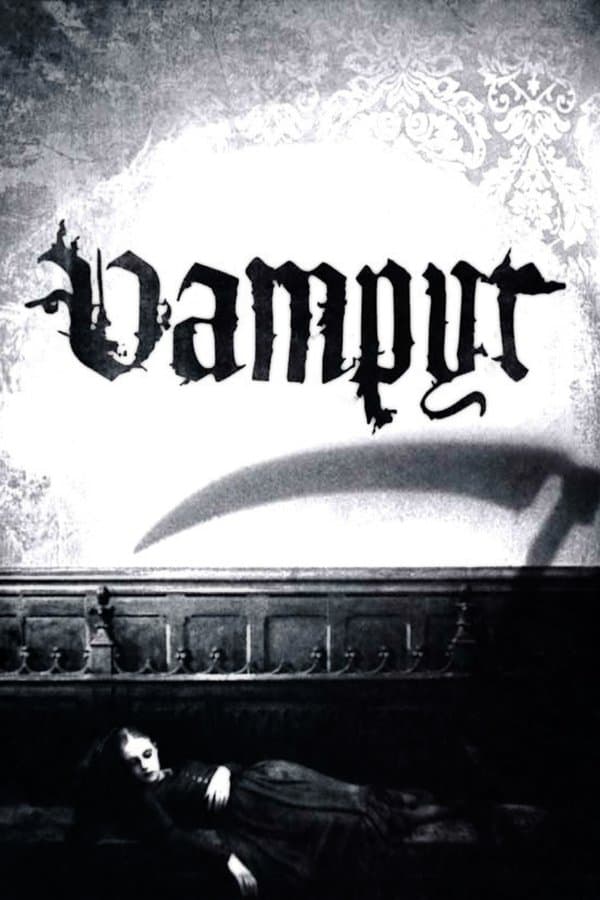
Vampyr
1932 • Fantasy, Horror, Mystery • NR
A superstitious drifter stumbles upon an inn where a severely ill adolescent girl is slowly becoming a vampire.
Runtime: 1h 14m
Buy related books from Amazon
As an Amazon Associate I earn from qualifying purchases. Read the full disclosure.
Why you should read the novels
Before pressing play on Vampyr (1932), experience the source that inspired its ghostly imagery: J. Sheridan Le Fanu’s Gothic masterworks. Reading Carmilla and the tales in In a Glass Darkly delivers the intimate psychology, textured folklore, and quietly mounting dread that cinema can only suggest.
Le Fanu’s prose places you inside candlelit corridors and moonlit forests, exploring desire, superstition, and the fragile boundary between life and death. Carmilla remains one of the most influential vampire stories ever written—lyrical, provocative, and haunting—while The Room in the Dragon Volant offers perilous intrigue and the uncanny sensation of premature burial that shaped the film’s dream sequences.
The books are concise, atmospheric, and highly readable today. Whether you pick a modern annotated edition or a public-domain ebook, you’ll uncover rich character motives, detailed vampire lore, and the narrative clarity behind Vampyr’s shadows—making the film even more rewarding afterward.
Adaptation differences
Vampyr (1932) blends multiple Le Fanu tales, while the core source, Carmilla, is a focused novella. Dreyer fuses motifs from In a Glass Darkly—especially the entombment eeriness of The Room in the Dragon Volant—into a single, drifting narrative. The result is a collage of Le Fanu’s imagery and ideas rather than a direct, scene-by-scene retelling of one book.
Character perspective shifts dramatically. Carmilla is narrated by Laura, whose intimate, first-person account emphasizes seduction, friendship, and creeping suspicion. The film replaces her with Allan (or David) Gray, a male wanderer drawn to occult phenomena. This change pivots the story from a personal, confessional Gothic to an observer’s dreamlike investigation, reducing the novella’s close psychological tension and queer subtext.
The vampire herself changes in nature and effect. In the book, Carmilla appears as a beautiful, youthful woman whose allure and intimacy are central to her predation. In the film, the vampiric force is an older woman (often identified as Marguerite Chopin), aided by a sinister doctor. Dreyer downplays erotic fascination and foregrounds plague-like affliction, spectral shadows, and conspiratorial servants, redirecting the horror from intimate seduction to oppressive, communal menace.
Tone, structure, and exposition also diverge. Le Fanu supplies clear vampire lore, backstory, and methodical investigation culminating in a decisive, ritual destruction. Dreyer’s film uses minimal dialogue, floating camera moves, and superimpositions to craft ambiguity and oneiric logic. Even the climaxes differ: Carmilla ends with formal exhumation and annihilation guided by scholars, while Vampyr resolves through surreal set-pieces—the staking in a crypt and the doctor’s suffocation in a mill—underscoring cinema’s visual poetry over the book’s explanatory Gothic design.
Vampyr inspired from
The Room in the Dragon Volant
by J. Sheridan Le Fanu
Carmilla
by J. Sheridan Le Fanu
In a Glass Darkly
by J. Sheridan Le Fanu