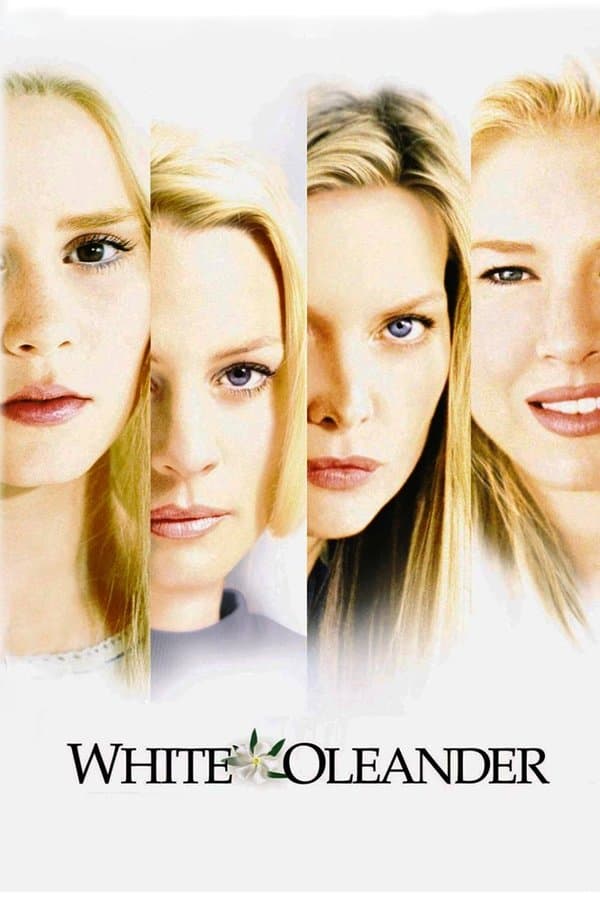
White Oleander
2002 • Drama • PG-13
A teenager journeys through a series of foster homes after her mother goes to prison for committing a crime of passion.
Runtime: 1h 49m
Buy related books from Amazon
As an Amazon Associate I earn from qualifying purchases. Read the full disclosure.
Why you should read the novel
Before you press play, consider opening White Oleander by Janet Fitch. The novel’s lyrical voice, vivid imagery, and fierce psychological insight turn Astrid’s coming-of-age into a deeply lived experience you can’t skim past. Every page blooms with sensory detail and hard-won wisdom the screen can only hint at.
Reading the White Oleander book lets you inhabit Astrid’s inner world—her evolving art, her shifting loyalties, and the way Los Angeles itself becomes a character. Fitch’s elegant prose and intimate first-person perspective invite slow, reflective reading that reveals new layers of meaning with every chapter.
If you’re searching for a powerful, unforgettable story about mothers, daughters, and self-discovery, choose the novel over the movie. The book’s emotional range, nuanced themes, and unforgettable sentences make White Oleander by Janet Fitch the definitive version of this modern classic.
Adaptation differences
Scope and structure are the biggest differences between the White Oleander movie and the book. The film streamlines Astrid’s years in foster care into fewer households and a tighter timeline, while the novel chronicles additional placements, detours, and setbacks that build a wider, more intricate portrait of survival.
Voice is another major shift. On the page, Janet Fitch’s first-person narration is poetic and razor-sharp, full of metaphors, prison letters, and reflective passages that map Astrid’s inner weather. The film can only approximate that interiority with visuals and dialogue, softening the novel’s lyrical intensity and the symbolic weight of the oleander itself.
Several character arcs are condensed. Claire’s fragility and marriage dynamics receive far richer development in the book; Astrid’s relationships with Paul Trout and Rena also unfold with greater nuance. The Starr chapter—and the violent fallout of that household—is more layered on the page, whereas the movie compresses events and tempers graphic details to fit mainstream runtime and content constraints.
Finally, the endings diverge in tone and texture. The novel’s resolution is more open-ended and morally complex, emphasizing Astrid’s hard-earned autonomy and an uneasy peace with her mother’s influence. The film leans toward a clearer, more cathartic closure, leaving some of the book’s ambiguity—and its haunting aftertaste—behind.
White Oleander inspired from
White Oleander
by Janet Fitch