Gate
2015 • Action & Adventure, Animation, Comedy, Drama • TV-14
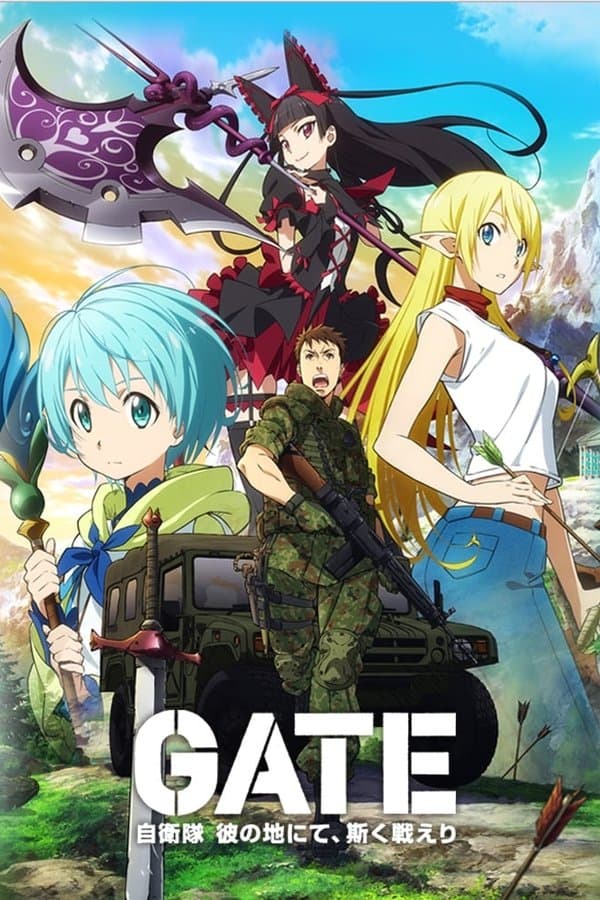
On August 20XX, a gate suddenly appears in Tokyo's Ginza district, unleashing a portal where monsters, medieval knights and other fantasy beings come from another world and wreak havoc on Tokyo. The Japanese Defense Force take action against these monsters and push them back into the "Gate". Third Reconnaissance Team is dispatched to the "Special Region" lead by officer (and otaku) Youji Itami. On their travels, they are joined by a beautiful elf girl who is a survivor from the dragon's rampage and guide the group across the dangerous new world.
Buy related books from Amazon
As an Amazon Associate I earn from qualifying purchases. Read the full disclosure.
Why you should read the novel
While the 2015 TV series 'Gate' delivers an exciting glimpse into its world, the original novels by Takumi Yanai provide a much deeper and more immersive experience. Readers can delve into the detailed politics, military strategies, and world-building that the adaptation often condenses or omits. By reading the novels, you experience richer character development, uncover nuanced cultural conflicts, and witness the motivations and backstories that drive each major figure in both worlds.
The books explore themes such as the impact of modern technology on a fantasy society, the complexity of diplomatic relations, and the ethical dilemmas faced by soldiers far more thoroughly than the anime. As a result, you get to see the internal debates, longer conversations, and expanded scenes that flesh out motivations and stakes in a way that television restrictions can't accommodate. For those who love intricate plots and thought-provoking scenarios, the novels are essential reading.
Additionally, the novels are more mature in tone and content, with a sharper focus on the consequences of the wars and alliances depicted. This makes them ideal for readers seeking a more sophisticated and realistic perspective on what happens when two vastly different worlds—and militaries—collide. Choosing to read 'Gate: Thus the JSDF Fought There!' gives you access to the full complexity and depth of Yanai's vision.
Adaptation differences
The TV adaptation of 'Gate' condenses numerous plotlines, character arcs, and even alters some events for pacing and accessibility. Many supporting characters receive less screen time or have their motivations simplified, which reduces the intricacy of interactions found in the novels. This streamlining is necessary for a limited-episode format, but it means that numerous subplots, especially those dealing with internal Japanese political struggles and inter-agency conflicts, are left unexplored or only briefly mentioned.
In the novels, protagonist Itami’s character is given more depth, with extensive background details and personal struggles that do not fully appear in the anime. Side characters from both the fantasy and JSDF sides enjoy longer arcs that better display their development, relationships, and decisions. Notable figures such as Pina Co Lada and Rory Mercury have richer inner lives and motivations in the books compared to their often trope-driven on-screen portrayals.
Another significant difference is the tone and details of violence and political intrigue. The novels pull fewer punches and are more explicit about casualties, military operations, and the cold calculations behind political maneuvering. The anime, aiming for wider appeal, sometimes makes light of serious themes or shies away from certain darker moments, which dilutes the sense of consequence and realism found in the original text.
Finally, certain events are reordered, compressed, or entirely omitted, such as multi-layered battle sequences and complex negotiations between realms. The novels’ intricate depictions of strategy and the emotional toll of conflict provide far greater insight than the action-focused, fast-paced anime. For those interested in fuller, more coherent world-building and narrative payoff, the differences make reading the source material a profoundly more rewarding and complete experience.
Gate inspired from
Gate: Thus the JSDF Fought There!
by Takumi Yanai