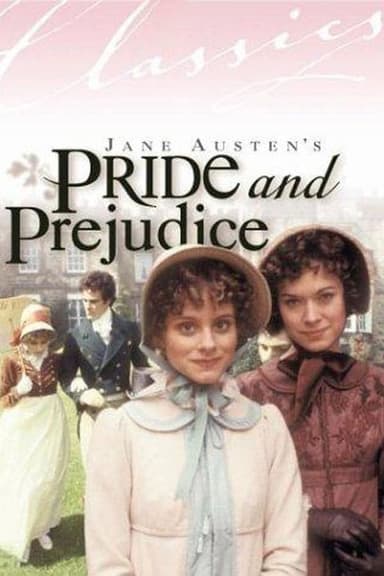
Pride and Prejudice
1952 • Drama
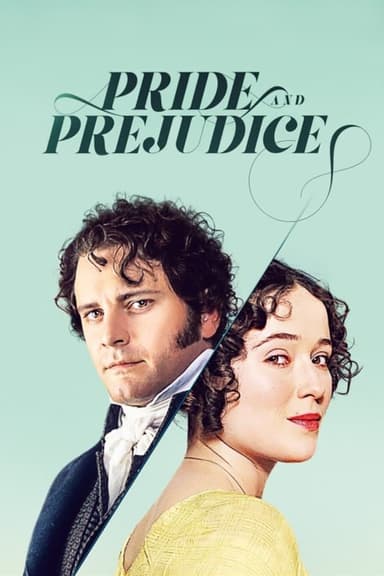
In early 19th century England, Mr and Mrs Bennet's five unmarried daughters vie for the affections of rich and eligible Mr Bingley and his status-conscious friend, Mr Darcy, who have moved into their neighbourhood. While Bingley takes an immediate liking to eldest daughter Jane, Darcy has difficulty adapting to local society and repeatedly clashes with second-eldest Elizabeth.
Buy related books from Amazon
As an Amazon Associate I earn from qualifying purchases. Read the full disclosure.
Why you should read the novel
Before you watch Pride and Prejudice (1952), experience Jane Austen’s Pride and Prejudice in its original form. The novel’s sparkling irony, precise language, and immersive Regency detail reward every chapter. Reading the classic book delivers the slow-burn romance and social satire no screen version can fully capture.
On the page, Elizabeth Bennet and Mr. Darcy come alive through letters, inner reflections, and razor-sharp dialogue that adaptations must condense. You’ll savor Austen’s exact wording, layered humor, and the subtle shifts in pride, prejudice, and perception that define this legendary Jane Austen novel.
Whether you pick a beautiful print edition or the free public-domain text, the book offers deeper character development for the Bennet family, Charlotte Lucas, Wickham, and more. Read Pride and Prejudice to enjoy the definitive Regency romance classic and understand why the novel remains essential literature.
Adaptation differences
Structure and pacing: Pride and Prejudice (1952) compresses the novel into brief episodes, merging or trimming scenes to fit broadcast limits. The book unfolds over months with letters, visits, and reflective pauses; the series moves faster and simplifies chronology, changing how key revelations land.
Character depth: Austen builds complexity through narrative voice and epistolary passages—especially Darcy’s letter and Elizabeth’s evolving self-awareness. The 1952 adaptation must externalize this interiority as dialogue and reactions, often reducing nuance for side characters and streamlining arcs that the book explores in detail.
Tone and themes: On the page, Austen’s satire of class, entailment, and marriage economics is witty and pointed. Early television conventions tend to soften scandal and social critique (notably around Lydia and Wickham), emphasizing polite romance over the novel’s sharper commentary on manners and status.
World and setting: The book presents a broad Regency canvas—country walks, assemblies, Rosings, and Pemberley—rendered with texture. The 1952 production, largely studio-bound with limited sets, concentrates events and reduces scenic variety, so the sense of place and societal breadth found in the novel is diminished.
Pride and Prejudice inspired from
Pride and Prejudice
by Jane Austen