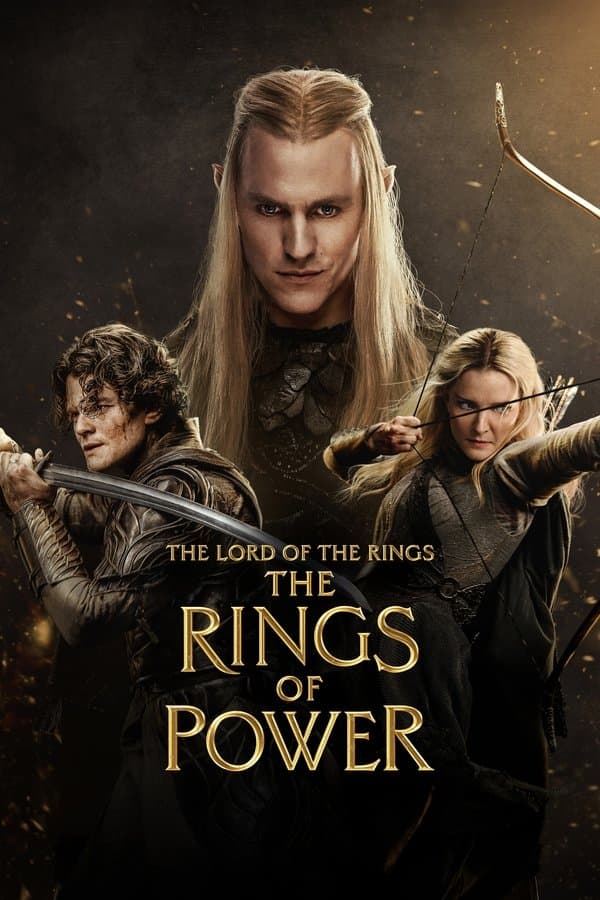
The Lord of the Rings: The Rings of Power
2022 • Action & Adventure, Drama, Sci-Fi & Fantasy • TV-14
Beginning in a time of relative peace, we follow an ensemble cast of characters as they confront the re-emergence of evil to Middle-earth. From the darkest depths of the Misty Mountains, to the majestic forests of Lindon, to the breathtaking island kingdom of Númenor, to the furthest reaches of the map, these kingdoms and characters will carve out legacies that live on long after they are gone.
Buy related books from Amazon
As an Amazon Associate I earn from qualifying purchases. Read the full disclosure.
Why you should read the novels
The appendices at the back of The Return of the King are where the series found its skeleton: a terse chronicle of Númenor's kings, the forging of the Rings, and the long shadow of Sauron, told in the voice of a historian rather than a storyteller. Reading them after watching shows how little Tolkien actually fixed in place, and how much weight each sentence carries.
The Lord of the Rings itself gives the Second Age something the screen can only approximate: distance. Its characters speak of those ages as legend, already half lost, and that sense of deep, grieving time is part of what makes the old stories haunting. The series has to show everything up close. The books let the past stay vast and remote.
For readers who want more, The Silmarillion and Unfinished Tales hold Tolkien's fuller accounts of this era. The series was not permitted to draw on them, so they offer a version of the story that exists nowhere on screen.
Adaptation differences
Appendix B of The Lord of the Rings sets the Second Age out as a chronology spanning thousands of years, and the series reportedly compresses that span into a much shorter timeline so its ensemble can share one continuous story. Events that Tolkien spaced across generations therefore sit much closer together on screen.
Galadriel is also reshaped. The series makes her a younger lead and commander of the Northern Armies, a military role that reportedly does not come from Tolkien's texts.
Much of this follows from the rights situation. The showrunners have said they hold rights to The Lord of the Rings, including its appendices, and to The Hobbit, but not to The Silmarillion, Unfinished Tales or The History of Middle-earth. The writers reportedly built the story from the appendices and from passages where characters look back to earlier ages, and invented new material to fill the gaps while trying not to openly contradict the books they cannot use. No confirmed information exists on whether the ending departs from Tolkien, so as far as is known there is no documented change there. The research behind these points is limited, so other differences may exist.
The Lord of the Rings: The Rings of Power inspired from
The History of Middle-earth
by J.R.R. Tolkien, Christopher Tolkien
Unfinished Tales
by J.R.R. Tolkien
The Lord of the Rings
by J.R.R. Tolkien
The Silmarillion
by J.R.R. Tolkien