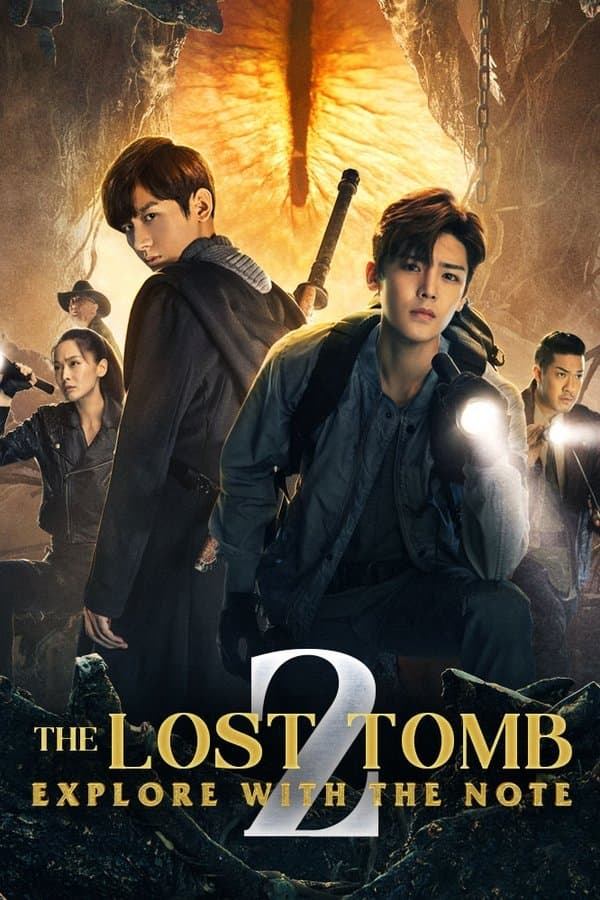
The Lost Tomb 2: Explore with the Note
2019 • Action & Adventure, Drama
Decades after a deadly encounter with the undead, Wu Xie, grandson of the sole survivor of a Changsha grave-robbing expedition, uncovers secrets in his grandfather’s notes. Joined by his uncle Wu Sansheng and fellow tomb robbers, he embarks on a dangerous quest for ancient treasures—only to face mysterious tombs, hidden puzzles, and deadly secrets that challenge everything they thought they knew.
Buy related books from Amazon
As an Amazon Associate I earn from qualifying purchases. Read the full disclosure.
Why you should read the novel
Immerse yourself in the original world crafted by Nan Pai San Shu, where each twist and turn in 'The Lost Tomb: Sea Palace' is meticulously detailed. The novel provides an atmospheric and layered exploration of ancient tombs, replete with enigmatic puzzles, lurking dangers, and compelling protagonists whose inner thoughts and motivations are fully explored. By reading the source material, you gain a direct connection to the author's vision, discovering elements and nuances absent from the screen.
Printed words weave a richer tapestry of suspense and wonder, revealing the mysteries of the Sea Palace in greater depth. Characters’ backgrounds, relationships, and emotional journeys are delivered with greater intricacy, offering deeper insight into their choices and actions. The world-building is lush and immersive, transporting readers into labyrinthine tombs and mythical landscapes that spark the imagination far more vividly than visual effects can manage.
The novel also delves into themes of legacy, ambition, and trust, making each discovery within the tomb not only thrilling but meaningful. By choosing to read 'The Lost Tomb: Sea Palace,' you'll unlock hidden layers of narrative, savoring a more complete adventure that will linger with you long after the last page is turned.
Adaptation differences
One striking difference between the TV adaptation and the book is the level of detail afforded to the story and characters. While the series propels the plot with high-paced action and meticulously crafted visuals, it often condenses or omits subtler points from the original narrative. Key moments, such as in-depth character motivations and origin stories, may be simplified or skipped for brevity, affecting the emotional impact and development arcs so carefully constructed in the novel.
Secondly, the television series sometimes alters or combines events and characters for dramatic effect. Certain secondary characters are either merged, given expanded or reduced roles, or eliminated altogether to fit within the constraints of a TV season. This reshuffling can lead to changes in dynamics, altering the way relationships form and progress as compared to the book’s more organic pacing. Finer threads of intrigue and subplots present in the novel may be shortened or left unresolved.
Visually, the adaptation brings the tombs and supernatural elements to life, but this can come at the expense of the imaginative tension present in the book. The novel relies heavily on atmosphere and description, allowing readers to conjure up their own visions of peril and mystery, heightening suspense. On screen, some of this tension is sacrificed for CGI spectacle, potentially dulling the sense of discovery and danger that defines the reading experience.
Lastly, the tone and themes can shift distinctly between mediums. The book invests time in exploring the psychological complexities of the characters and the moral ambiguities of tomb-raiding, whereas the series often foregrounds action and melodrama. Such shifts may appeal to viewers seeking excitement, but the novel rewards patient readers with layers of meaning and a slow-burn intensity that the adaptation sometimes forgoes in favor of entertainment value.
The Lost Tomb 2: Explore with the Note inspired from
The Lost Tomb: Sea Palace
by Nan Pai San Shu