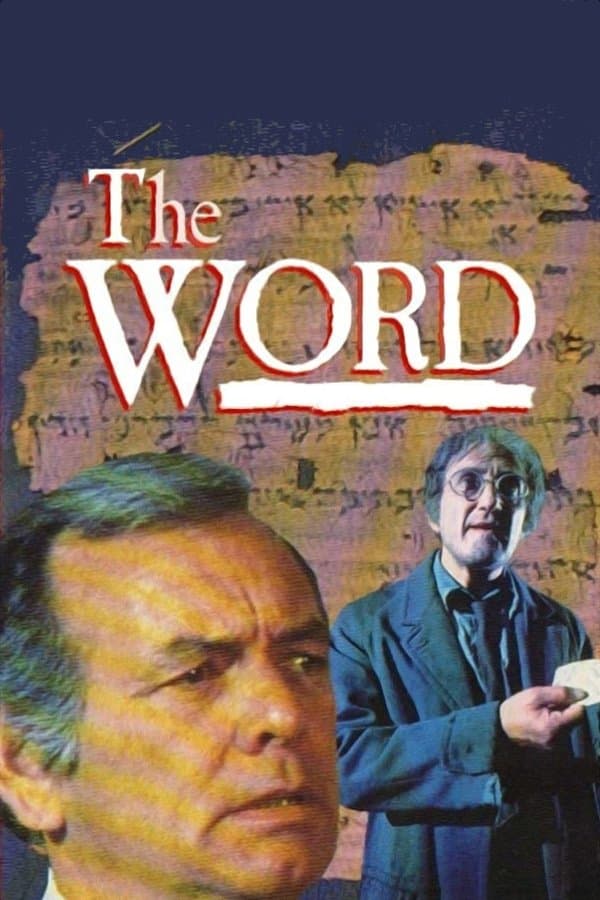
The Word
1978 • Drama • NR
A document is discovered that appears to be an ancient eyewitness account of the life of Jesus Christ. A public relations executive is hired to publicize this document as a new version of the Bible, but he finds himself enmeshed in controversy and intrigue.
Why you should read the novel
Before you watch the 1978 TV adaptation, experience Irving Wallace’s original novel The Word. The book immerses you in a masterfully plotted religious-conspiracy thriller where scholarship, politics, and faith collide with razor-sharp tension.
Wallace’s novel delivers rich character psychology and meticulous detail you cannot get on screen. From manuscript authentication and linguistic sleuthing to globe-spanning intrigue, the novel offers a depth of research and suspense that rewards every chapter.
If you love intelligent thrillers with real historical texture, make The Word your next read. Discover the provocative questions, layered clues, and moral stakes exactly as the author intended—unabridged, unfiltered, and unforgettable.
Adaptation differences
The 1978 miniseries compresses the novel’s broad scope, streamlining timelines and merging or omitting secondary players to fit broadcast length. The book unfolds as a layered investigation; the series emphasizes thriller beats and cliffhangers over the novel’s gradual, documentary-like accumulation of evidence.
Irving Wallace devotes extensive pages to textual criticism, paleography, translation disputes, and the politics of scholarly committees. On television, these detailed debates are distilled into faster, more accessible exposition, reducing the procedural complexity that gives the book its distinctive intellectual charge.
Tone and content also diverge. The novel tackles adult themes—media manipulation, corporate ethics in religion, and messy personal fallout—with frankness. The miniseries, shaped by 1970s broadcast standards, softens sexual content, trims controversial subplots, and reframes some motives to keep the focus on mainstream suspense.
Finally, the book’s resolution leans on a painstaking forensic unmasking and its moral aftermath, leaving readers to wrestle with faith, truth, and power. The adaptation favors a cleaner, more dramatic televised payoff, prioritizing narrative closure and momentum over the novel’s lingering ambiguity and reflective epilogue.
The Word inspired from
The Word
by Irving Wallace