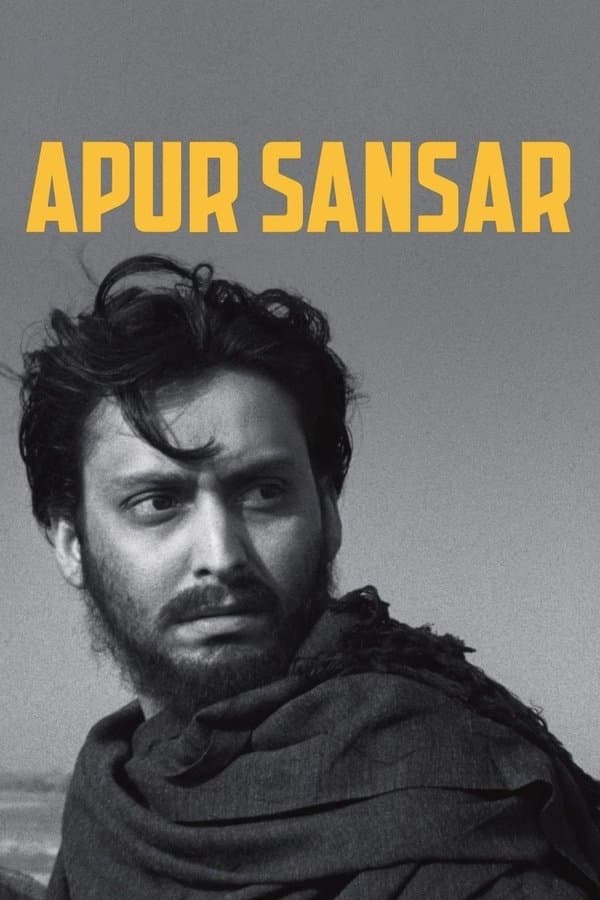
Apur Sansar
1959 • Drama • PG-13
Apu, now a jobless ex-student dreaming vaguely of a future as a writer, is invited to join an old college friend on a trip up-country to a village wedding.
Runtime: 1h 45m
Buy related books from Amazon
As an Amazon Associate I earn from qualifying purchases. Read the full disclosure.
Why you should read the novels
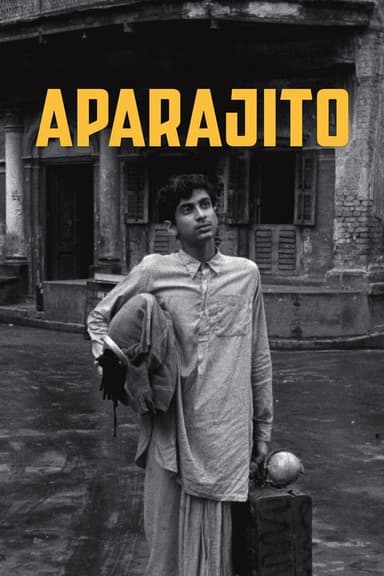
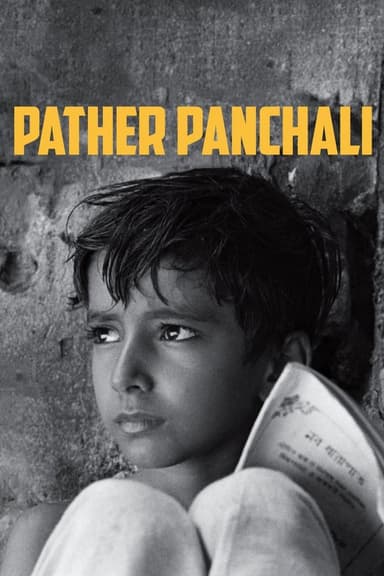
If you loved Apur Sansar, read the novels that inspired the Apu Trilogy. In English translation, Bibhutibhushan Bandyopadhyay’s Pather Panchali: Song of the Road and Aparajito: The Unvanquished offer the full, soulful arc of Apu’s life that no film can fully contain.
On the page, you’ll find interior reflections, rich Calcutta street life, and nuanced social textures—education, friendship, hardship, and wonder—rendered with lyrical detail. The books’ quiet revelations, cultural context, and psychological depth make a compelling book vs movie case for experiencing the source material first.
Discover why generations of readers return to these classics. Pick up the English translations of Pather Panchali and Aparajito to meet Apu in his own words, explore scenes the film couldn’t include, and appreciate the storytelling that shaped one of cinema’s most beloved adaptations.
Adaptation differences
Apur Sansar adapts only the late chapter of Apu’s story, drawing chiefly from the latter portions of Aparajito while building new scenes and compressing timelines. The novels together span more years, locations, and formative episodes, offering a broader social and psychological canvas than the film’s focused portrait of marriage, loss, and renewal.
Character arcs are streamlined on screen. The movie crystallizes Apu and Aparna’s relationship into a concise, intensely moving romance, highlighted by the famous last-minute wedding scenario. In the books, courtship and marriage unfold with more conventional, gradual rhythms, with names and circumstances that can vary by translation and edition, and with greater attention to family networks and social nuance.
A key difference is interiority. The novels dwell on Apu’s inner voice—his intellectual restlessness, literary ambitions, and philosophical questioning—across extended chapters of student life and bohemian struggle in Calcutta. The film replaces much of this introspection with visual and musical economy, using silence, framing, and performance to imply thoughts the prose makes explicit.
Resolution and structure diverge as well. Apur Sansar seeks a concentrated emotional catharsis in the father–son reunion, whereas the books trace that relationship over a longer span with more ambiguity and fluctuation. Supporting figures are condensed or amalgamated on screen (for example, acquaintances and mentors cohere into a few memorable friends), and whole subplots are pruned to achieve the movie’s lyrical momentum and tight narrative focus.
Apur Sansar inspired from
Pather Panchali: Song of the Road
by Bibhutibhushan Bandyopadhyay
Aparajito: The Unvanquished
by Bibhutibhushan Bandyopadhyay