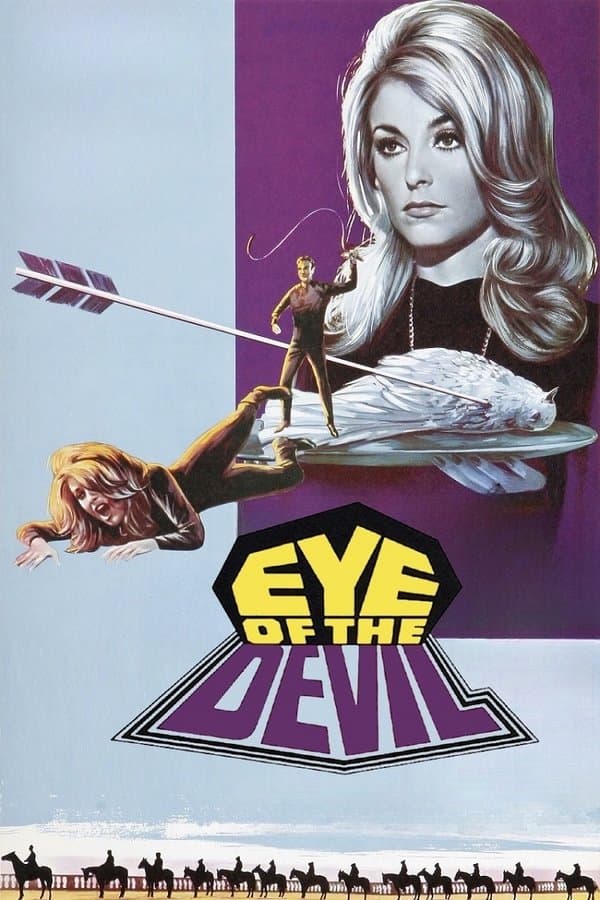
Eye of the Devil
1966 • Horror, Mystery, Thriller • NR
A French nobleman deserts his wife because of an ancient family secret.
Runtime: 1h 36m
Buy related books from Amazon
As an Amazon Associate I earn from qualifying purchases. Read the full disclosure.
Why you should read the novel
If Eye of the Devil (1966) intrigued you with its eerie ritual and aristocratic dread, the source novel Day of the Arrow by Philip Loraine offers an even richer, more immersive experience. On the page, the folk-horror mystery unfolds with layered clues, unsettling folklore, and a meticulously built sense of inevitability that rewards close reading.
The novel deepens the psychology behind the superstition, the history of the estate, and the whispered obligations that bind a family to its land. You’ll get fuller context, clearer motivations, and a broader tapestry of characters whose secrets surface gradually, heightening tension in a way no 90-minute film can match.
For readers who love slow-burn suspense, elegant prose, and atmospheric worldbuilding, Day of the Arrow delivers the definitive version of this story. Discover the origins, rules, and repercussions of the cult at your own pace—and let the dread seep in with every chapter.
Adaptation differences
Book vs movie differences begin with perspective and scope. Eye of the Devil often privileges the wife’s isolation and visual unease, while Day of the Arrow distributes focus more evenly and develops an investigative throughline. The novel provides steadier access to the reasoning behind the mystery, making the unraveling feel methodical rather than dreamlike.
Characterization and backstory are fuller in the book. Figures who appear as enigmatic presences in the film—particularly the alluring siblings and several villagers—receive more context and motivation on the page. The result is a clearer understanding of who knows what, and why they act as they do, which shifts certain scenes from symbolic menace to psychologically grounded suspense.
Worldbuilding and ritual detail also differ. The film favors ambiguity, visual ritual, and Gothic mood; the novel elaborates the cult’s history, agricultural superstitions, and the lineage that sustains the sacrifice. Readers get more explicit rules, lore, and consequences, whereas the adaptation compresses and merges elements to maintain momentum and mystery.
Pacing and resolution diverge notably. The movie condenses timelines and set pieces for cinematic impact, while the book allows revelations to accumulate gradually and articulates the endgame with greater clarity. Eye of the Devil leans into suggestive imagery and open-ended dread; Day of the Arrow clarifies the mechanics and meaning of the final events, delivering a more explicit thematic payoff.
Eye of the Devil inspired from
Day of the Arrow
by Philip Loraine (Robin Estridge)