Eye of the Needle
1981 • Drama, Thriller • R
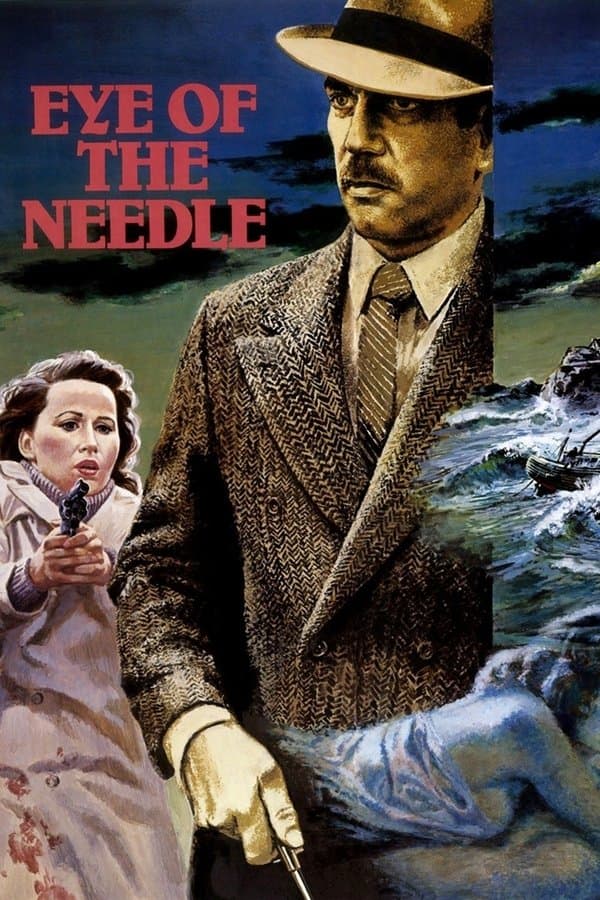
Great Britain, 1944, during World War II. Relentlessly pursued by several MI5 agents, Henry Faber the Needle, a ruthless German spy in possession of vital information about D-Day, takes refuge on Storm Island, an inhospitable, sparsely inhabited island off the coast of northern Scotland.
Runtime: 1h 48m
Buy related books from Amazon
As an Amazon Associate I earn from qualifying purchases. Read the full disclosure.
Why you should read the novel
If you loved the tension of the 1981 film Eye of the Needle, the original Ken Follett novel offers even more depth, historical texture, and white-knuckle suspense. Reading the Eye of the Needle book places you inside the spy’s mind and the intelligence hunt in a way no two-hour movie can match.
Ken Follett’s World War II spy novel meticulously builds stakes around Operation Fortitude, MI5 tradecraft, and life-or-death choices. The prose delivers layered motivations, richly drawn settings, and pulse-quickening set pieces that make the book the definitive Eye of the Needle experience for espionage fans.
Choose the novel over another rewatch to uncover subplots, locations, and character backstories trimmed from the adaptation. For readers seeking richer context on D-Day deception, authentic spycraft, and a slower-burn, immersive thriller, Ken Follett’s pages provide the most complete story.
Adaptation differences
Scope and structure: In the Eye of the Needle book vs movie comparison, the novel spans multiple years, following Operation Fortitude, MI5 surveillance, and the spy’s broader trail across wartime Europe and Britain. The 1981 film adaptation compresses timelines and narrows the canvas, prioritizing the storm-lashed island thriller while trimming much of the intelligence-procedural material.
Character emphasis: Ken Follett’s novel develops MI5 investigators and the antagonist’s inner life with far greater nuance. The film elevates Lucy’s presence and the isolated relationship dynamics, merging or removing several secondary agents, handlers, and civilians from the page—classic book-to-movie streamlining that shifts balance from espionage procedure to intimate suspense.
Tone and detail: On the page, tradecraft, coded communications, and deception logistics receive granular attention that creates a slow-burn espionage feel. On screen, visual tension, romance, and action take precedence, softening some brutality, reducing historical exposition, and delivering a leaner, pace-first thriller. These differences make the Eye of the Needle book richer in context, while the movie favors immediacy.
Climax and resolution: Without explicit spoilers, the novel’s endgame reflects Follett’s methodical logic and the consequences of wartime secrecy, with beats and explanations that diverge from the film’s choices. The movie opts for a more kinetic showdown and simplified aftermath to deliver a cinematic punch—one of the key differences between the book and the 1981 film adaptation.
Eye of the Needle inspired from
Eye of the Needle
by Ken Follett