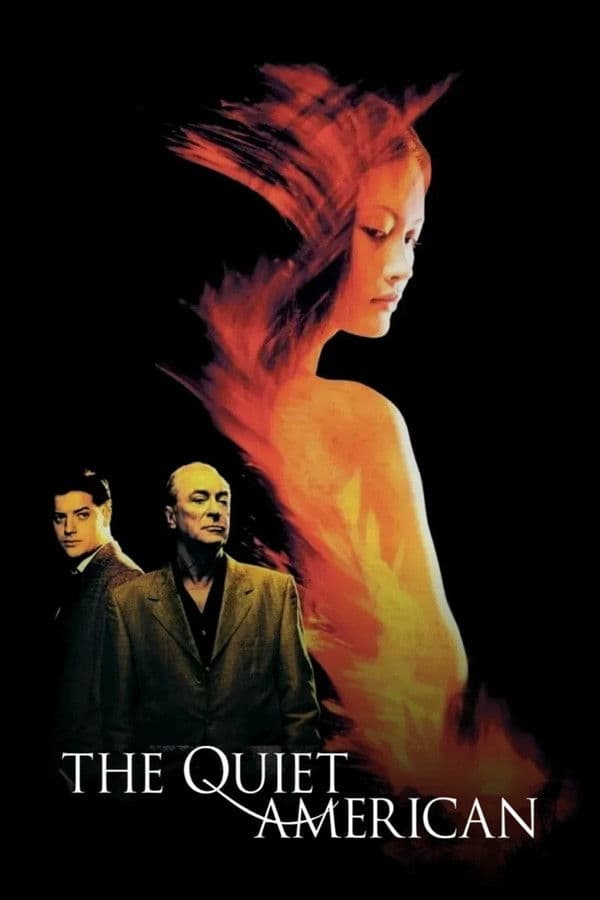
The Quiet American
2002 • Drama, Romance, Thriller, War • R
Cynical British journalist Fowler falls in love with a young Vietnamese woman but is dismayed when a naïve U.S. official also begins vying for her attention. In retaliation, Fowler informs the communists that the American is selling arms to their enemy.
Runtime: 1h 41m
Buy related books from Amazon
As an Amazon Associate I earn from qualifying purchases. Read the full disclosure.
Why you should read the novel
Before pressing play on the 2002 film, experience Graham Greene’s The Quiet American in its original form. The novel’s first-person voice pulls you inside Saigon’s humid streets and smoky rooms, revealing moral ambiguity no screen can fully capture.
Greene’s prose is spare, penetrating, and unforgettable. Through Fowler’s eyes, the book layers political intrigue with intimate emotion, exploring colonialism, idealism versus realism, and personal responsibility with nuance that rewards close reading and reflection.
If you love literary thrillers, historical fiction, or razor-sharp character studies, read the novel first. You will gain richer context, deeper motivations, and the author’s exact intentions—an essential foundation that enhances or even replaces the need to watch the movie.
Adaptation differences
Book vs movie begins with perspective. The novel is a confessional first-person narrative from Thomas Fowler, immersing readers in his doubts, guilt, faith, and cynicism. The 2002 film broadens the lens, staging scenes Fowler could not witness and substituting interior monologue with visual cues and selective voice-over, changing how we interpret motives and moral stakes.
Politics and culpability diverge noticeably. In Graham Greene’s book, Alden Pyle operates under an aid mission cover, with intelligence ties strongly implied and filtered through Fowler’s skepticism; the film makes Pyle’s covert role more overt, compresses ideology, and downplays the intellectual influence of York Harding’s Third Force, streamlining complex debates into clearer plot drivers.
Tone and emphasis shift as well. The novel’s quiet accumulation of dread and ethical complexity becomes, on screen, sharper suspense and graphic visualization of violence, especially the bombing sequence. Romance gets a slightly brighter spotlight in the movie, while the book keeps emotional entanglements tightly bound to questions of complicity, faith, and colonial power.
Characterization and endings feel different. Phuong’s inner life remains largely unreadable in the novel by design; the film offers her a touch more presence yet still lacks her perspective. Fowler’s Catholic doubt, opium haze, and moral bargaining are richer on the page. The adaptation clarifies and condenses side characters and timelines, and its closing notes tilt toward political explicitness, whereas the book preserves deeper ambiguity about responsibility and the cost of choosing sides.
The Quiet American inspired from
The Quiet American
by Graham Greene