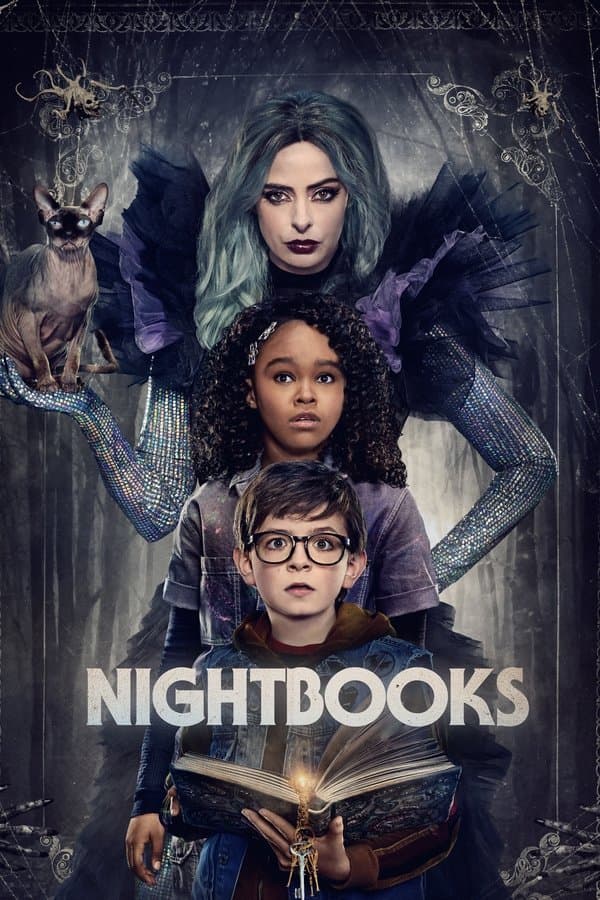
Nightbooks
2021 • Family, Fantasy, Horror
Alex, a boy obsessed with scary stories, is trapped by a witch in her modern, magical New York City apartment. His original hair-raising tales are the only thing keeping him safe as he desperately tries to find a way out of this twisted place.
Runtime: 1h 41m
Buy related books from Amazon
As an Amazon Associate I earn from qualifying purchases. Read the full disclosure.
Why you should read the novel
Before you stream the movie, discover Nightbooks by J. A. White, the original middle-grade novel that started it all. The book’s voice, atmosphere, and carefully built dread draw you into Alex’s mind in a way only prose can, turning every page into a pulse-quickening choice between fear and bravery.
Reading the Nightbooks book gives you the complete experience of Alex’s own scary tales, presented as full stories within the story. These chilling mini-tales deepen the themes, expand the world, and deliver the kind of slow-burn tension, imagination, and emotional nuance that no screen can match.
Choose the source novel first and let your imagination do the directing. Whether in paperback, ebook, or audiobook, Nightbooks offers rich character growth, clever twists, and the satisfying, page-turning terror readers of children’s horror and middle-grade fantasy crave.
Adaptation differences
The biggest book vs movie difference is structure and scope. The Nightbooks novel embeds Alex’s scary tales as complete, self-contained stories that meaningfully shape the main plot, while the film condenses them into quick, stylized vignettes to keep momentum. On the page, these nested stories deepen character and theme; on screen, they serve more as mood and visual flair.
Characterization shifts too. The book spends more time inside Alex’s head, exploring anxiety, self-doubt, and the complicated pride he takes in writing scary stories. The friendship between Alex and Yasmin develops more gradually and warily in the novel, whereas the film streamlines their bond and adds lighter, comic beats. Lenore is a sharper, stealthier spy in the book; the movie leans more on expressive, scene-stealing moments for the familiar.
Mythology and world-building diverge in emphasis. The film foregrounds the witch’s backstory and leans into overt Hansel and Gretel imagery, using bold production design to visualize the apartment’s magic and rules. The novel keeps the witch’s origins more mysterious and dwells on bargains, consequences, and the subtle logic of the enchanted apartment, letting readers piece together the lore through clues.
Tone and resolution also differ. The book’s horror is more atmospheric and psychologically pointed, delivering a character-centered conclusion that resolves Alex’s relationship to his creativity. The movie favors punchy set pieces and ends with a playful tease that leaves the door ajar for more, while the novel offers tidier closure and reflection on what it means to own your weirdness.
Nightbooks inspired from
Nightbooks
by J. A. White