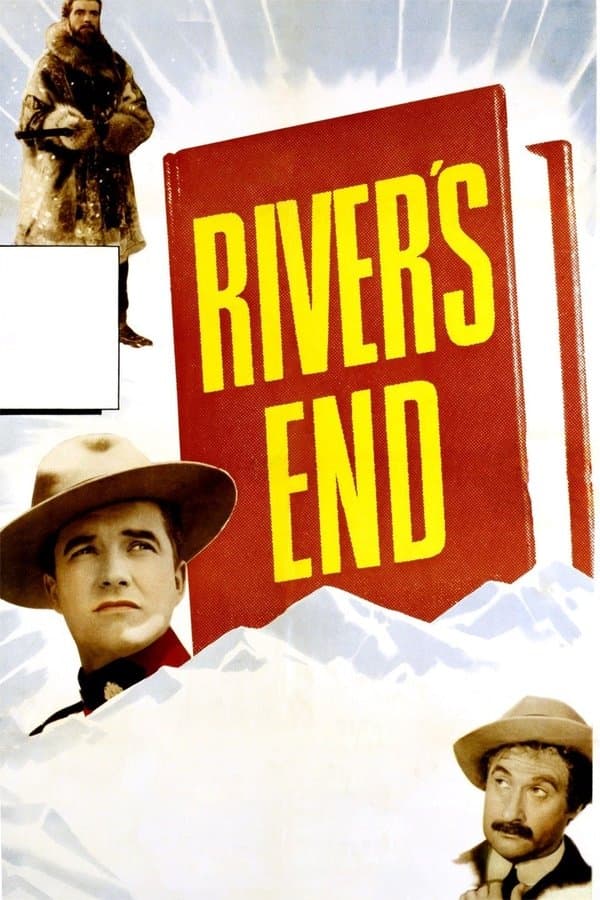
River's End
1940 • Action, Drama, Western • NR
An escaped criminal pretends to be a member of the Royal Canadian Mounted Police in order to prove his innocence of murder. Star Dennis Morgan plays two roles.
Runtime: 1h 9m
Buy related books from Amazon
As an Amazon Associate I earn from qualifying purchases. Read the full disclosure.
Why you should read the novel
Before you watch River's End (1940), experience James Oliver Curwood's original novel, The River's End: A New Story of God's Country. The book immerses you in the Canadian North with vivid wilderness detail and psychological depth that a brisk studio runtime can’t match.
Curwood’s prose explores the doppelgänger premise—the hunted man and the lawman who look alike—with intimate interiority: fear, duty, identity, and survival. You’ll traverse snowfields, cabins, and river trails, feeling the moral weight of each decision in ways a film can only suggest.
For fans of classic adventure literature, The River’s End offers richer themes, atmosphere, and character nuance than the movie. Widely available in English as print, ebook, and audiobook, it’s the definitive way to experience this timeless story of justice, redemption, and the wild North.
Adaptation differences
When comparing River’s End (1940) to James Oliver Curwood’s novel The River’s End, the biggest difference is scope and pacing. The film condenses the novel’s long northern trek into a streamlined chase, trimming seasonal hardships, travel logistics, and bushcraft sequences that dominate Curwood’s chapters to prioritize momentum and set‑piece action.
Character focus also shifts in the movie adaptation. On the page, Curwood develops fuller backstories, motivations, and internal conflict for both the fugitive and the Mountie, along with mentors and community figures. The film compresses or renames supporting characters and sidelines several relationships, resulting in fewer perspectives and a tighter roster than the book.
Tone and theme diverge as well. The novel wrestles with identity, justice, and redemption in morally gray terms, letting ambiguity linger. The 1940 version—shaped by Production Code expectations—draws clearer hero/villain lines, softens violence, elevates the romance, and delivers a more upbeat mood than Curwood’s nuanced, reflective narrative.
Finally, plot mechanics and resolution differ. Curwood’s mystery unfolds gradually through clues, letters, and layered revelations. The film accelerates key reveals, collapses subplots, and provides a tidier legal wrap‑up to fit feature length. Readers seeking the richest explanation of motives and consequences will find the novel’s slower, more investigative arc far more satisfying than the movie’s compressed conclusion.
River's End inspired from
The River's End: A New Story of God's Country
by James Oliver Curwood