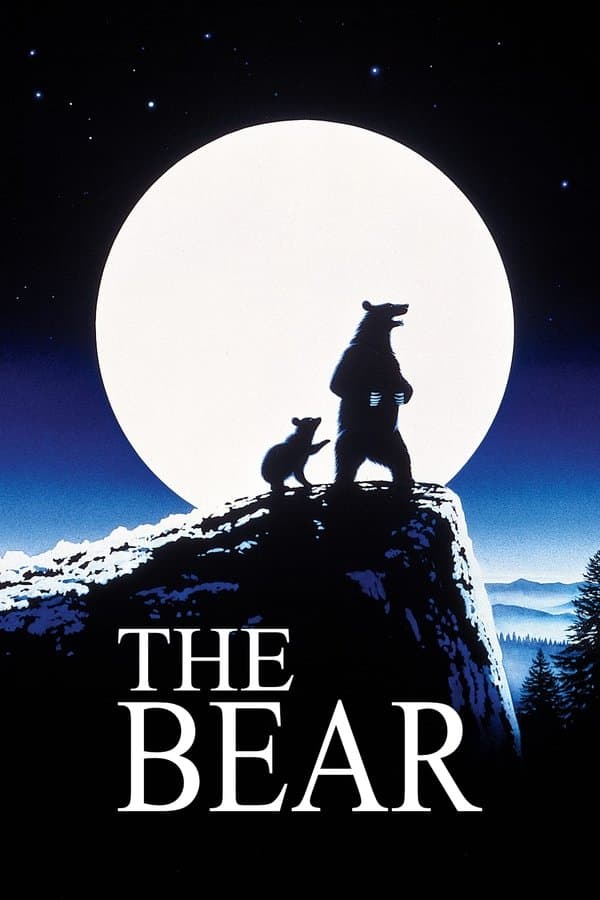
The Bear
1988 • Adventure, Drama, Family • PG
An orphan bear cub hooks up with an adult male as they try to dodge human hunters.
Runtime: 1h 37m
Buy related books from Amazon
As an Amazon Associate I earn from qualifying purchases. Read the full disclosure.
Why you should read the novel
If The Bear (1988) moved you, go deeper with the source novel that inspired it: The Grizzly King by James Oliver Curwood. The book delivers the wilderness from the inside out, pairing vivid natural history with a story that breathes with the rhythms of real bears, seasons, and survival.
Reading The Grizzly King lets you experience what the film can only suggest—rich ecological detail, the bears’ learning and adaptation over time, and the moral questions that shape the hunters who pursue them. Curwood’s prose brings texture to every valley, river, and ridge, turning the Canadian wilds into a living character.
For anyone comparing book vs movie, the novel offers more context, more reflection, and more awe. Discover the original voice behind The Bear (1988), explore the themes of compassion and coexistence at their literary source, and let Curwood’s classic deepen your appreciation of the film.
Adaptation differences
The Bear (1988) is almost wordless and told primarily through behavior and image, while The Grizzly King uses descriptive prose and gentle anthropomorphism to share what the animals notice, learn, and fear. On the page, Curwood often invites you into the bears’ inner world; on screen, Jean‑Jacques Annaud trusts body language, editing, and sound to convey meaning without dialogue or narration.
Names and emphasis differ too. The novel’s elder bear is Thor and the cub is Muskwa, whereas the film avoids explicit naming on screen (the cub is known as Youk in materials) to keep the story more elemental. The book follows their development across broader stretches of time and terrain; the film condenses events into a tightly focused survival journey.
Human characters are streamlined for cinema. Curwood’s novel spends more time with hunters and guides—their motives, ethics, and evolving respect for the wild—whereas the film narrows this to a small group of pursuers and a tracking dog, using a single climactic change of heart to land its theme. The movie also softens or compresses some harsher encounters to maintain an accessible, family‑friendly tone.
There are invented or heightened cinematic moments, such as the cub’s dreamlike, hallucinatory sequence, that are not present in the book’s naturalistic storytelling. Finally, the film’s photographed landscapes (shot outside Canada) generalize the setting for universality, while the novel roots its drama in a distinctly Canadian wilderness with period detail and extended ecological observation.
The Bear inspired from
The Grizzly King: A Romance of the Wild
by James Oliver Curwood