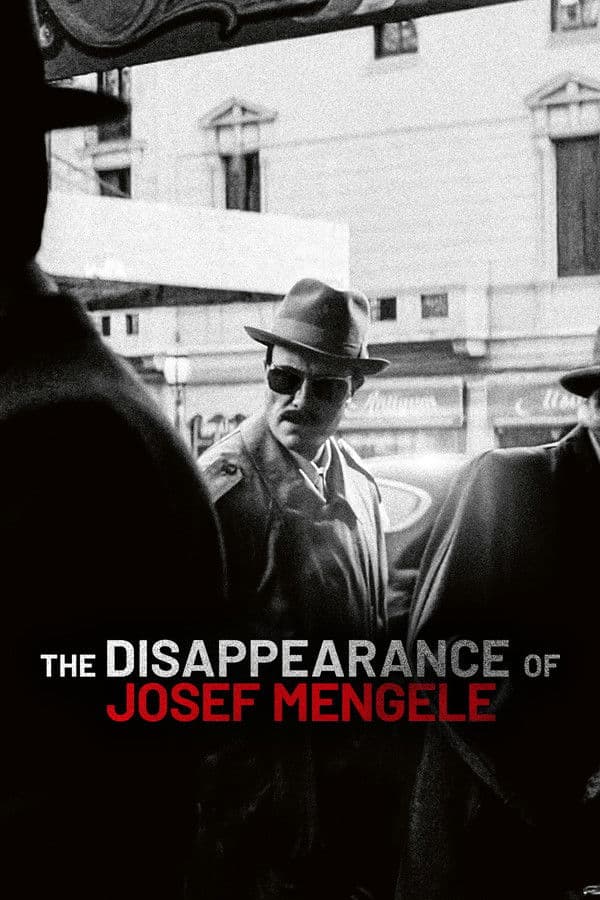
The Disappearance of Josef Mengele
2025 • Drama, History
In the aftermath of the Second World War, Josef Mengele, the Nazi doctor at Auschwitz, escapes to South America to rebuild his life in hiding. Through the eyes of his son who finds him again, Mengele is confronted with a past he can no longer ignore. From Buenos Aires to Paraguay via Brazil, the man who became known as “The Angel of Death” will organize his methodical disappearance to avoid any form of trial.
Runtime: 2h 15m
Why you should read the novel
Before you watch The Disappearance of Josef Mengele (2025), read Olivier Guez's acclaimed novel The Disappearance of Josef Mengele. This riveting, research-driven narrative plunges you into the fugitive years in South America, delivering nuance, context, and psychological depth no screen version can fully capture.
On the page, Guez fuses investigative rigor with literary insight, tracing safe havens, handlers, and betrayals while charting the corrosive psychology of evasion. If you are searching for a definitive, historically grounded account, the book offers granular timelines, motivations, and a chilling portrait of complicity that rewards careful reading.
For readers comparing book vs movie, the novel’s precise detail, moral complexity, and immersive atmosphere make it the ideal starting point. Read The Disappearance of Josef Mengele by Olivier Guez to experience the full scope of this history-rich story before any adaptation condenses it for the screen.
Adaptation differences
Note: At the time of writing, the 2025 adaptation has not been released. The observations below focus on likely book vs movie differences based on typical adaptation choices, rather than confirmed scene-by-scene changes.
The novel is a hybrid of documentary research and literary reconstruction, granting intimate access to inner thoughts, paranoia, and rationalizations. A film will likely externalize this interiority—favoring visuals, gesture, and silence over extended internal monologue—shifting the emphasis from psychological narration to observable behavior and atmosphere.
Expect timeline and character consolidation. The book ranges across decades and countries—Argentina, Paraguay, Brazil—with meticulous detours and a wide cast of enablers and pursuers. A feature-length movie often compresses chronology, merges minor figures, and streamlines locations to maintain pace, which can alter how causes and consequences are perceived.
Tone and scope may diverge. Olivier Guez’s text is unsensational, forensic, and ethically exacting, foregrounding bureaucracy, networks, and the banality of survival. An adaptation may heighten suspense and craft set-pieces (raids, close calls, escapes) to sustain cinematic tension, narrowing the focus to a tighter cat-and-mouse arc while the book preserves a broader, documentary texture.
The Disappearance of Josef Mengele inspired from
The Disappearance of Josef Mengele
by Olivier Guez