The Human Condition III: A Soldier's Prayer
1961 • Drama, History, War
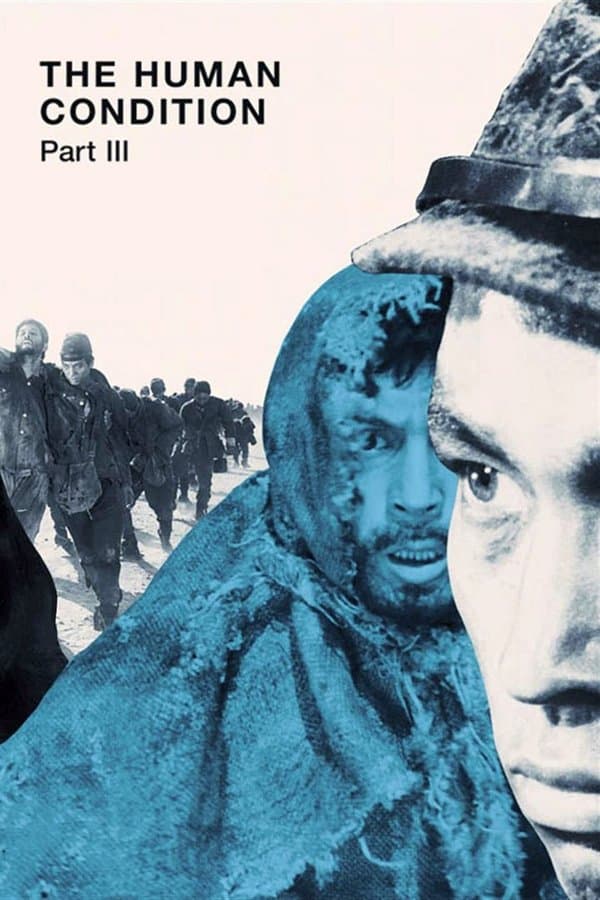
After the Japanese defeat to the Russians, Kaji leads the last remaining men through Manchuria. Intent on returning to his old life, he faces great odds in a variety of different harrowing circumstances as he and his men sneak behind enemy lines.
Runtime: 3h 10m
Buy related books from Amazon
As an Amazon Associate I earn from qualifying purchases. Read the full disclosure.
Why you should read the novel
If you were moved by The Human Condition III: A Soldier’s Prayer, experience the full power of Junpei Gomikawa’s The Human Condition novel in English translation. The source book immerses you in Kaji’s moral struggle with unmatched depth, exploring war, responsibility, and human dignity across a sweeping narrative the film can only suggest.
Gomikawa’s prose offers the interior voice the movie must compress. You will encounter Kaji’s reasoning, doubts, and ideals in vivid detail, along with the social, political, and historical forces shaping his choices. For readers seeking a profound antiwar classic, the novel delivers layered context, resonant themes, and unforgettable psychological insight.
For fans of Masaki Kobayashi’s film trilogy and newcomers alike, reading The Human Condition novel reveals the richness behind A Soldier’s Prayer. Discover the nuanced character arcs, broader settings, and ethical questions that make the book an essential complement—or even the definitive version—of this landmark story.
Adaptation differences
Book vs movie: The Human Condition novel by Junpei Gomikawa covers far more ground than A Soldier’s Prayer can in a single feature. The late volumes trace the retreat, captivity, and survival ordeals across a wider geographic and temporal span. The film condenses events and streamlines chronology, selecting key set‑pieces to sustain momentum and cinematic clarity.
Characterization differs in emphasis. On the page, Kaji’s interior monologue, letters, memories, and political reasoning are central; the book foregrounds his ideals, doubts, and evolving worldview. The movie necessarily externalizes this, shifting to performance, framing, and action, which reduces extended ideological debates and compresses nuances in relationships, including the lingering presence of Michiko through recollection rather than extended textual reflection.
Tone and theme diverge subtly. The novel’s critique of militarism, bureaucracy, and class structures is more explicit and discursive, while the film leans into universal humanist anguish, visual symbolism, and the immediacy of survival. Readers will find broader social context, more secondary voices, and fuller portraits of civilians, Japanese soldiers, and Soviet captors in the book; the adaptation often merges or truncates supporting roles.
The ending’s effect also shifts across mediums. In the film, Kaji’s final passage is distilled into stark, unforgettable imagery that closes the trilogy with concentrated emotional force. The novel lingers longer on his physical and psychological decline, extending the arc with additional memory, reflection, and moral reckoning. For anyone comparing The Human Condition book vs movie, these differences make A Soldier’s Prayer a powerful distillation, but the novel remains the most comprehensive—and ultimately most revealing—version of Kaji’s journey.
The Human Condition III: A Soldier's Prayer inspired from
The Human Condition
by Junpei Gomikawa