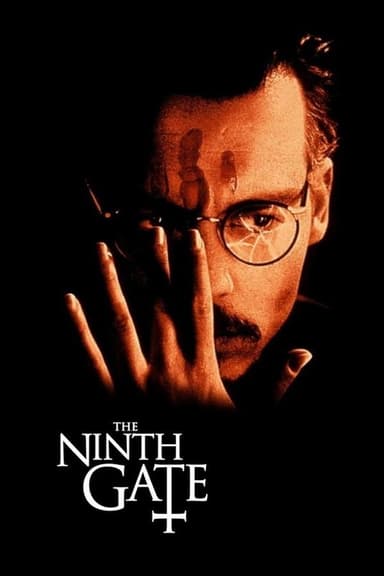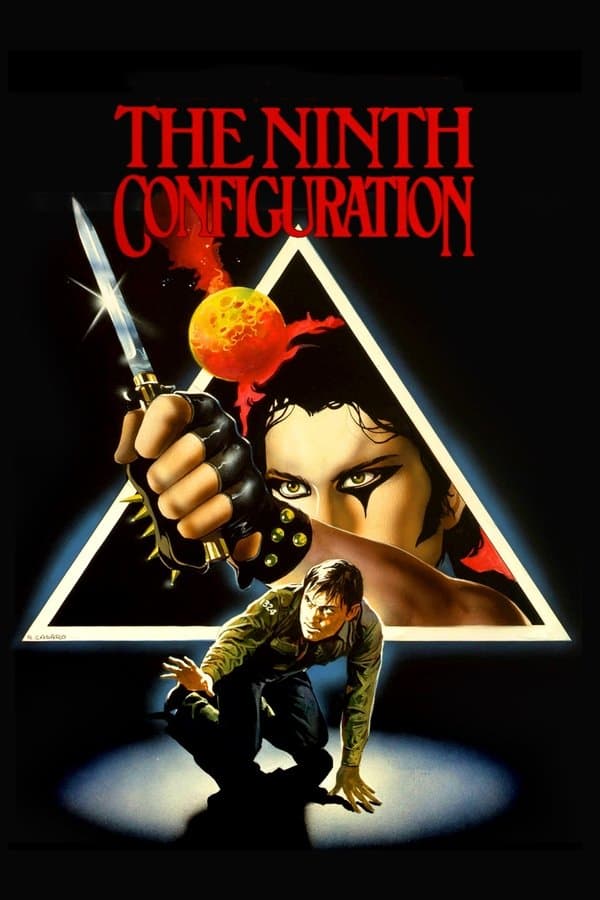
The Ninth Configuration
1980 • Comedy, Drama, Horror, Mystery, Thriller • R
Army psychiatrist Colonel Kane is posted to a secluded gothic castle housing a military asylum. With a reserved calm, he indulges the inmates' delusions, allowing them free rein to express their fantasies.
Runtime: 1h 58m
Buy related books from Amazon
As an Amazon Associate I earn from qualifying purchases. Read the full disclosure.
Why you should read the novels
Read William Peter Blatty’s The Ninth Configuration to experience the full power of the story that inspired the 1980 film. The Ninth Configuration book layers psychological thriller tension with rich religious and philosophical questions that the camera can only hint at, making it a must-read for fans of serious literary horror.
The Twinkle, Twinkle, 'Killer' Kane! book (Blatty’s earlier version of the same tale) amplifies the dark comedy and satirical edge, offering tonal shades and character nuances you won’t find on screen. On the page, you’ll discover deeper backstories, interior monologues, and razor-sharp conversations that clarify the ideas the movie only sketches.
If you’re searching for a profound, thought-provoking reading experience, choose the source novels over a two-hour viewing. The Ninth Configuration book rewards close reading with unforgettable insights into faith, trauma, madness, and redemption—perfect for readers who crave psychological depth and literary craftsmanship.
Adaptation differences
The biggest difference between the Ninth Configuration book and movie is scope and depth. The novel devotes entire chapters to interior monologues and long, searching dialogues about faith, morality, and the possibility of selfless sacrifice. The film streamlines these exchanges for pace, favoring visual mood and performance over the novel’s sustained philosophical argumentation.
Characterization also diverges. In the book, several inmates receive fuller histories and sharper comedic beats, while the adaptation compresses or merges secondary figures to keep momentum. Kane and Cutshaw’s relationship accrues more nuance on the page—especially through recurring verbal motifs and doubts—whereas the movie keeps their dynamic taut and mysterious until key revelations land more abruptly.
Tone shifts differently across mediums. The 1966 Twinkle, Twinkle, 'Killer' Kane! leans more toward satire, the 1978 The Ninth Configuration revision intensifies theological weight, and the film tracks the 1978 edition yet trims discursions. As a result, the movie emphasizes atmosphere and a haunting, gothic war-psychology vibe, while the book sustains a broader range—from absurdist humor to metaphysical debate—without the same time constraints.
The climax exemplifies the contrast. On screen, the barroom confrontation erupts in tightly staged, visceral violence; in the novel, the same sequence carries more preparatory foreshadowing, internal reflection, and thematic aftershocks. The book’s pacing lets Kane’s sacrifice resonate as a carefully argued proof-of-goodness, while the film delivers the idea in a concentrated, affecting burst that privileges cinematic impact over analytic unpacking.
The Ninth Configuration inspired from
The Ninth Configuration
by William Peter Blatty
Twinkle, Twinkle, 'Killer' Kane!
by William Peter Blatty