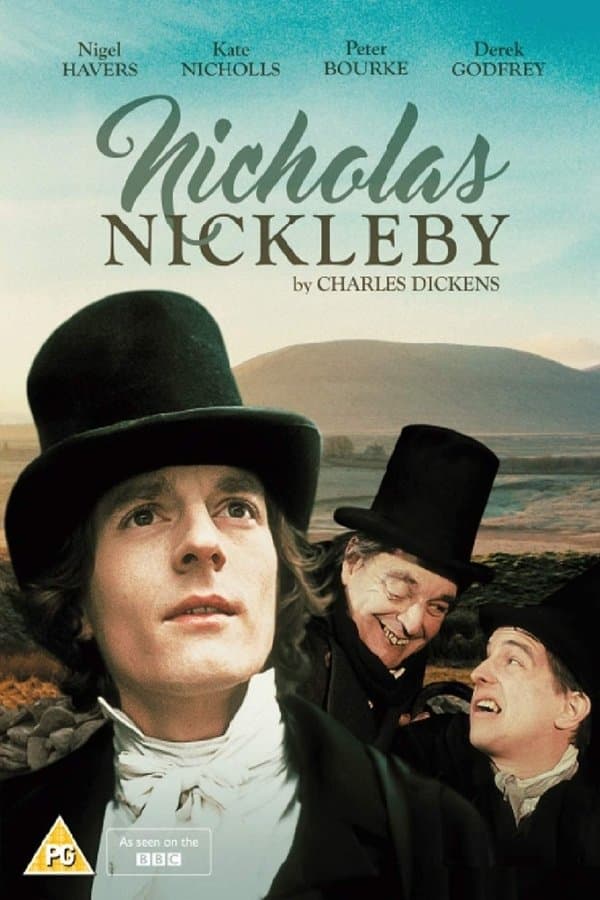
Nicholas Nickleby
1977 • Drama
Nicholas Nickleby, a young boy in search of a better life, struggles to save his family and friends from the abusive exploitation of his coldheartedly grasping uncle.
Buy related books from Amazon
As an Amazon Associate I earn from qualifying purchases. Read the full disclosure.
Why you should read the novel
Before pressing play on the 1977 TV series, experience the full power of Charles Dickens’s original novel, The Life and Adventures of Nicholas Nickleby. The book’s sharp social satire, exuberant humor, and emotional depth unfold with a richness no screen can fully match, revealing layers of meaning in every chapter.
Reading the classic Charles Dickens novel Nicholas Nickleby offers the unfiltered voice of a master storyteller. You’ll savor Victorian literature at its best: vivid prose, unforgettable characters, and a gripping plot that exposes the cruelty of Yorkshire schools while celebrating compassion, courage, and community. For lovers of classic books and the original text, this is essential.
The novel immerses you in Dickens’s world-building—Newman Noggs’s loyalty, Kate Nickleby’s resilience, the Cheeryble brothers’ generosity, and the colorful Crummles troupe—each rendered with comic flair and moral insight. Choose the book to enjoy the intricate subplots, sparkling dialogue, and narrative energy that make Nicholas Nickleby a timeless reading experience.
Adaptation differences
Scope and structure are streamlined in the 1977 adaptation. The series condenses Dickens’s sprawling, serialized narrative, trimming or merging side episodes such as the Kenwigs circle, Miss Knag’s rivalries, and extended excursions with the Crummles troupe to maintain momentum across limited screen hours.
Dickens’s distinctive narrator—whose asides, irony, and direct addresses shape the reader’s understanding—has no real equivalent on screen. The TV version conveys cruelty and satire visually, which reduces the novel’s biting commentary and wordplay, and inevitably paraphrases or omits stretches of Dickens’s dialogue.
Character focus shifts to the central trio of Nicholas, Kate, and Smike. Ralph Nickleby’s financial schemes and the conspiracy involving Arthur Gride and Madeline Bray are simplified for clarity, while Kate’s workplace ordeal with Madame Mantalini and her harassment by Sir Mulberry Hawk are compressed, softening some of the novel’s social critique and incremental character development.
Theatricality in the novel—especially Nicholas’s adventures with Mr. and Mrs. Crummles and the Infant Phenomenon—serves as extended satire of performance and celebrity. The series presents these episodes more briefly, reducing Dickens’s meta-theatrical commentary. Likewise, the Cheeryble brothers’ philanthropy and the final unmasking of Ralph unfold faster and more neatly on screen than in the book’s carefully layered resolution.
Nicholas Nickleby inspired from
The Life and Adventures of Nicholas Nickleby
by Charles Dickens