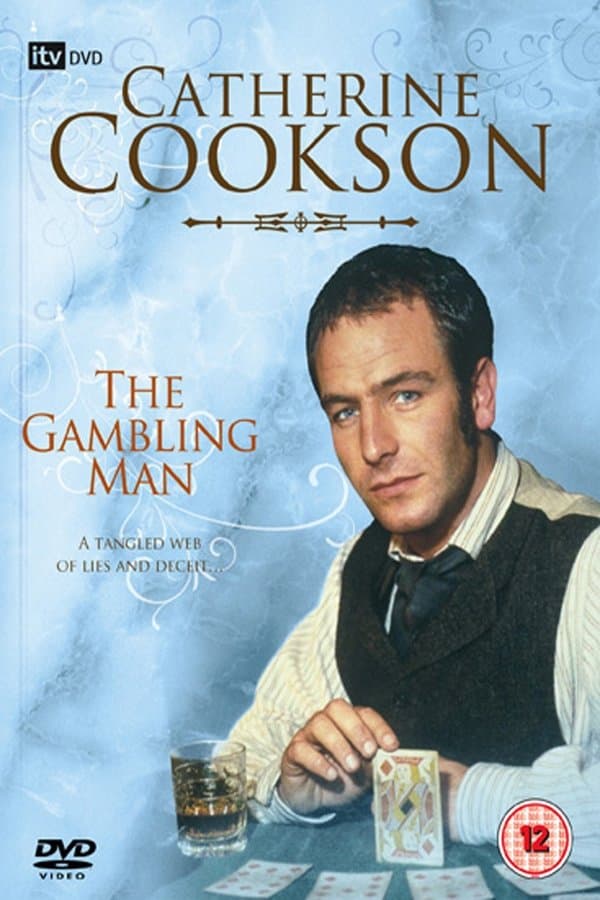
The Gambling Man
1995 • Drama
The Gambling Man is a three-part British television drama based on Catherine Cookson's 1975 novel of the same name. Produced by Tyne Tees Television for ITV, the serial stars Robson Green, Stephanie Putson, Ian Cullen, and David Nellist.
Dissatisfied with his life, Tyneside rent collector Rory Connor decides to use his talents as a card player to improve his situation. He's soon able to purchase a boatyard and marry his childhood sweetheart Janie Waggett, but his success is built on a tangle of lies and deceit. Never one to shy away from high stakes, Rory is in the game of his life when he's asked to make the ultimate sacrifice for his brother.
Buy related books from Amazon
As an Amazon Associate I earn from qualifying purchases. Read the full disclosure.
Why you should read the novel
Before you stream The Gambling Man, experience Catherine Cookson’s original novel. The book delivers richer character psychology, bolder themes of class and ambition, and the vivid rhythms of Tyneside life that screen time can’t fully capture.
Cookson’s storytelling places you inside the stakes of every bet and every choice, combining historical detail with emotional depth. If you enjoy gritty period drama, the novel’s raw portrayal of poverty, power, and desire offers a more immersive journey than the adaptation.
Reading The Gambling Man lets you savor Cookson’s distinctive voice, her textured dialogue, and the social tensions of Victorian North East England. For fans of historical fiction, this classic offers layered insight and unforgettable atmosphere beyond the limits of a miniseries.
Adaptation differences
The TV adaptation condenses the novel’s expansive timeline and streamlines subplots to fit episodic pacing. As a result, several secondary storylines and community threads that enrich the book’s social tapestry are abbreviated or omitted.
Character complexity is also simplified on screen. Where the novel lingers on inner conflicts, moral compromises, and the psychology of risk, the series emphasizes outward action and romance, reducing the protagonist’s darker edges and some supporting characters’ backstories.
Tone and texture shift as well. Cookson’s grittier depictions of working-class hardship, gambling’s corrosive consequences, and the harsher social realities of Tyneside are moderated for television, with dialect, setting details, and violence stylized or softened to broaden accessibility.
Key events are rearranged for dramatic cliffhangers and clearer episodic arcs. The adaptation favors neater resolutions and visual momentum, while the book offers more nuanced motivations, a slower burn of tension, and a thematically layered payoff shaped by Cookson’s prose.
The Gambling Man inspired from
The Gambling Man
by Catherine Cookson