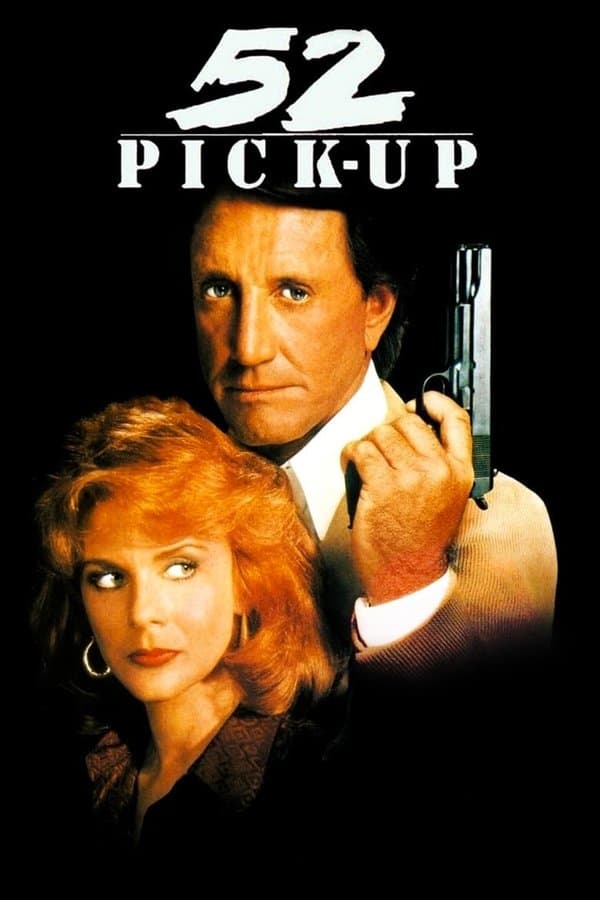
52 Pick-Up
1986 • Action, Crime, Drama, Thriller • R
Harry Mitchell is a successful Los Angeles manufacturer whose wife is running for city council. His life is turned upside down when three blackmailers confront him with a videotape of him with his young mistress and demand $100,000. Fearing that the story will hurt his wife's political campaign if he goes to the police, Harry pretends that he will pay the men, but does not follow through.
Runtime: 1h 50m
Buy related books from Amazon
As an Amazon Associate I earn from qualifying purchases. Read the full disclosure.
Why you should read the novel
Before you press play on the 1986 movie, discover the source that started it all: 52 Pickup by Elmore Leonard. This lean, propulsive crime novel delivers the authentic voice, razor-edged dialogue, and gritty Detroit atmosphere that made Leonard a genre legend.
Reading the book unlocks richer character depth and darker shades of motivation. You’ll feel the tension as a successful businessman faces ruthless blackmailers, watch loyalties bend under pressure, and experience Leonard’s masterful, slow-burn suspense that screen time can only hint at.
If you’re searching for a definitive 52 Pickup experience, choose the novel for its pulse, precision, and psychological bite. Perfect for fans of crime fiction, noir, and character-driven thrillers, the book offers the fullest picture—read it before or after the movie to see why the original stands above the adaptation.
Adaptation differences
Setting is the biggest immediate change in 52 Pickup book vs movie comparisons. Elmore Leonard’s novel unfolds in Detroit, steeped in Midwestern grit and blue-collar rhythms, while the 1986 film relocates the story to sun-baked Los Angeles, leaning into a glossier, adult-entertainment underworld. The shift alters mood, texture, and stakes, trading Motor City chill for West Coast menace.
The adaptation also updates and amplifies the blackmail mechanics. The film favors videotape evidence and a more sensational, shock-driven escalation, including on-camera brutality, whereas the novel relies on lower-tech leverage and a more methodical cat-and-mouse build. As a result, the movie’s plot beats hit faster and harder, while the book sustains a slow, nerve-twisting grind.
Characterization differs notably between the book and the 1986 film adaptation. Leonard’s villains are raw, opportunistic predators whose menace grows from credible street-level detail; the movie reshapes them into flashier figures tailored for high-tension set pieces. The film also heightens public stakes by foregrounding the wife’s civic profile and the couple’s exposure risk, while the novel centers more intimately on marriage, business reputation, and personal brinkmanship.
Tone and structure diverge as well. The film streamlines subplots, boosts action, and delivers a sharper, more explosive climax; the book’s endgame is more deliberate, morally ambiguous, and psychologically textured. In short, 52 Pickup book vs movie differences come down to atmosphere, pacing, and emphasis: the novel’s nuanced realism versus the adaptation’s slick, high-impact thriller sensibility.
52 Pick-Up inspired from
52 Pickup
by Elmore Leonard