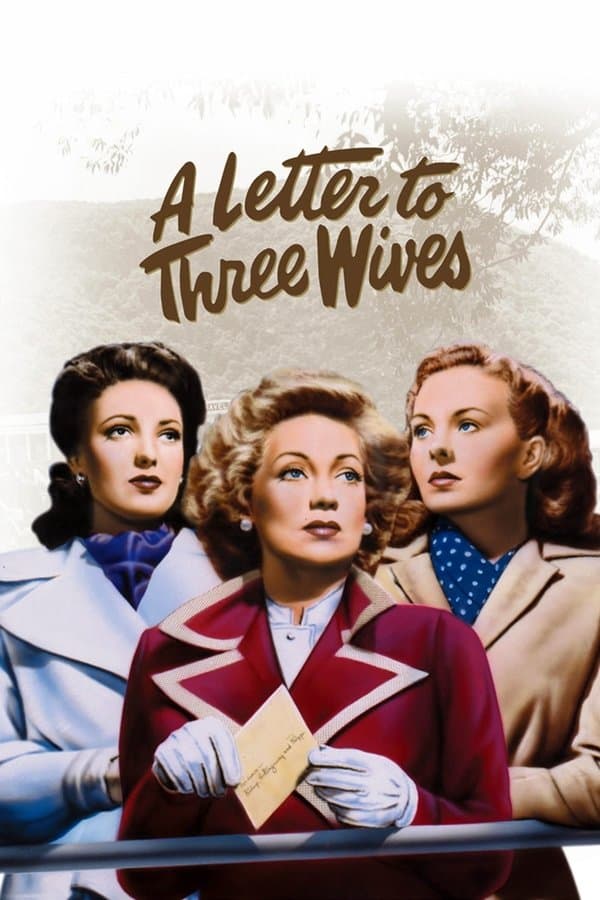
A Letter to Three Wives
1948 • Drama, Mystery, Romance • NR
A letter is addressed to three wives from their 'best friend', announcing that she's running away with one of their husbands – but she doesn't specify which one.
Runtime: 1h 43m
Buy related books from Amazon
As an Amazon Associate I earn from qualifying purchases. Read the full disclosure.
Why you should read the novel
Before you press play on A Letter to Three Wives, discover the richer, sharper source: John Klempner’s A Letter to Five Wives. The novel’s broader canvas, with five marriages under the microscope, delivers a deeper, more varied exploration of love, ambition, insecurity, and class in postwar America.
Reading the original book unlocks the intimate inner lives that a camera can only hint at. Klempner’s prose captures conflicted thoughts, subtle motives, and private compromises—insights that elevate every dilemma and twist beyond what the movie can show. If you love character-driven storytelling, this is the definitive version to experience.
For anyone comparing book vs movie, start with the novel to appreciate the story’s full scope and social bite. A Letter to Five Wives offers richer context, more viewpoints, and a satisfying literary depth that makes A Letter to Three Wives even more rewarding afterward.
Adaptation differences
Scope and roster: the book features five wives, while the film narrows the focus to three. That change reshapes pacing, compresses subplots, and concentrates attention on a trio of marriages rather than a broader social cross‑section.
Narrative methods diverge. The film famously uses an unseen woman’s voice and tightly structured flashbacks built around a single day’s outing, while the novel ranges more freely through multiple points of view and extended interior reflection, offering motives and memories that the screen must externalize.
Tone and candor shift under Hollywood’s Production Code. The movie leans into sparkling wit and moral reassurance, softening certain implications of infidelity and ambition. The book’s dialogue and insight are often more direct, allowing for grayer areas of marital power, status, and desire.
Characterization is consolidated in adaptation. With two wives removed, traits and conflicts from the novel are folded into the remaining trio, streamlining arcs for clarity and momentum. The book, by contrast, presents a wider social mosaic—more professions, neighborhoods, and marriage types—broadening its satire and emotional range.
A Letter to Three Wives inspired from
A Letter to Five Wives
by John Klempner