A Long Way Down
2014 • Comedy, Drama • R
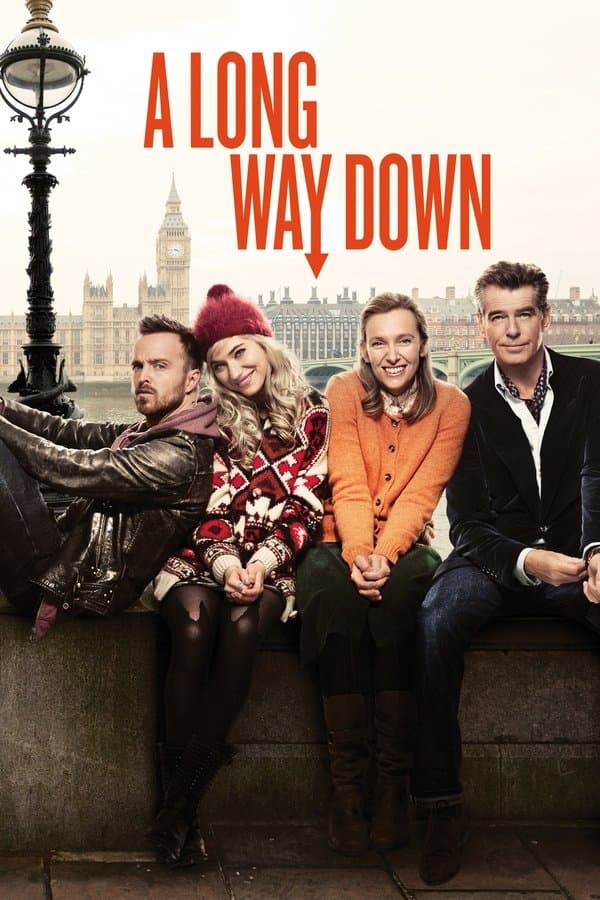
Four lost souls—a disgraced TV presenter, a foul-mouthed teen, an isolated single mother, and a solipsistic muso—decide to end their lives on the same night, New Year's Eve. When this disillusioned quartet of strangers meet unintentionally at the same suicide hotspot, a London high-rise with the well-earned nickname Topper's Tower, they mutually agree to call off their plans for six weeks, forming an unconventional, dysfunctional family. They become media sensations as the Topper House Four and search together for the reasons to keep on living.
Runtime: 1h 36m
Buy related books from Amazon
As an Amazon Associate I earn from qualifying purchases. Read the full disclosure.
Why you should read the novel
Before you stream the 2014 movie, read A Long Way Down by Nick Hornby—the original, razor-sharp novel that launched the story. The book’s rotating first-person voices deliver raw honesty, gallows humor, and emotional insight you simply won’t get on screen.
Hornby’s novel dives deeper into each character’s inner life—depression, guilt, caregiving, failed fame, and tabloid fallout—unpacking why they end up on that rooftop and what keeps them going afterward. If you want the most complete, character-driven version of this tale, the A Long Way Down book is the definitive experience.
For readers who love smart, humane fiction with bite, choosing the source material pays off. Discover the unfiltered wit, the richer themes, and the nuanced arcs that make Nick Hornby’s novel a modern classic—available in paperback, ebook, and audiobook for your next great read.
Adaptation differences
A Long Way Down book vs movie: the most striking difference is structure and tone. The novel unfolds through alternating first-person chapters, immersing you in four distinct voices and darker, spikier humor; the film becomes an ensemble dramedy that smooths edges for broader warmth and pace.
Character depth shifts, too. Martin’s tabloid disgrace is portrayed with harsher self-reckoning in the book, while the film tilts more sympathetic. Maureen’s interior faith, loneliness, and relentless caregiving receive sustained, intimate focus in the novel; on screen they’re condensed into a few powerful but briefer beats.
The Nick Hornby novel lingers on media scrutiny and the messy consequences of sudden notoriety, whereas the movie trims this social satire to keep momentum. JJ’s invented illness is a quick plot turn in the film, but the book unpacks the psychology and fallout in far greater detail, making his self-deception and recovery more complex.
Finally, pacing and resolution differ. The film compresses time and bonding into tighter, feel-good rhythms—including a brief, sunny escape sequence—while the book keeps you grounded in awkward, everyday London months. The movie aims for a more uplifting closure; the novel leaves a more open-ended, ambiguous path that better reflects its raw, lived-in realism.
A Long Way Down inspired from
A Long Way Down
by Nick Hornby