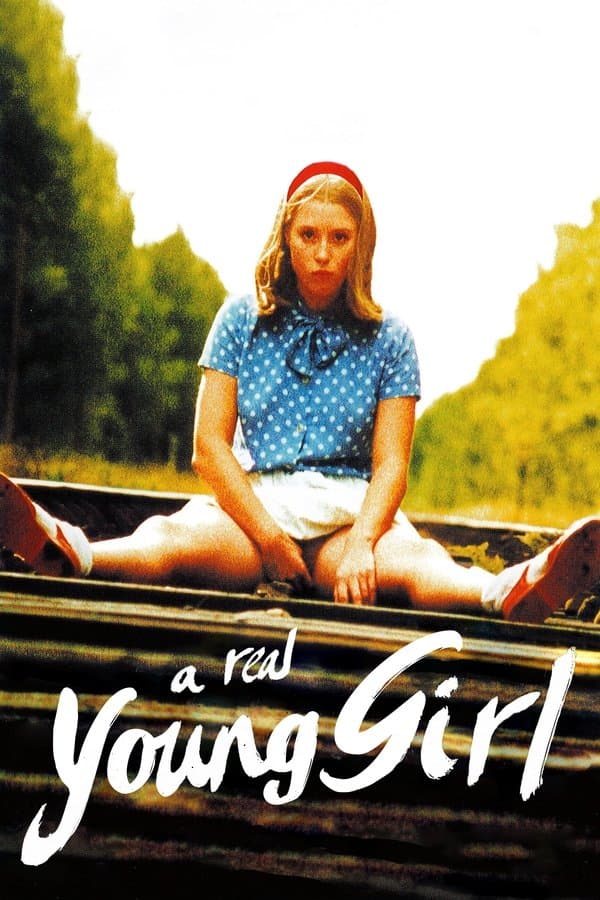
A Real Young Girl
1976 • Drama, Romance
Reluctantly, a sulky adolescent returns to her parents' house for yet another boring summer vacation, dabbling in desire and the art of desirability, eventually mixing reality with vision, caged fantasies with the fierce female sexuality.
Runtime: 1h 34m
Buy related books from Amazon
As an Amazon Associate I earn from qualifying purchases. Read the full disclosure.
Why you should read the novel
Before pressing play on A Real Young Girl (1976), discover Catherine Breillat’s original vision on the page. Her novel Le Soupirail—often rendered in English as “The Basement Window”—delivers the raw, unfiltered voice that inspired the film, revealing the protagonist’s interior life with startling intimacy.
Reading the book offers a deeper psychological journey than any screen can provide. Breillat’s prose captures fleeting sensations, contradictory desires, and taboo thoughts with a precision that turns adolescent awakening into high-stakes literature—a must for readers who value bold, boundary-pushing fiction.
If you’re curious about the source material behind Breillat’s controversial cinema, start with the novel. Experience the author’s language, themes, and feminist perspective firsthand, and let the literary version guide your understanding before (or instead of) watching the movie.
Adaptation differences
Voice and interiority: the novel speaks in a fiercely intimate, confessional register that sustains a continuous stream of thought. The film inevitably externalizes much of this inner voice, relying on performance, framing, and sound to imply what the book articulates directly, making the character’s psychology more inferred than stated.
Structure and pacing: Le Soupirail lingers on textures, memory, and sensation, allowing episodes to accumulate gradually. The adaptation condenses and rearranges moments into a tighter timeline, emphasizing key set pieces and visual shocks; the book’s slower build and reflective passages become brisker transitions on screen.
Imagery and symbolism: Breillat’s film amplifies earthy, tactile motifs—mud, insects, damp landscapes—into confrontational visual symbols. On the page, similar ideas register as metaphor and language-driven suggestion, letting readers calibrate intensity in their imagination rather than confronting fixed images.
Character and scope: secondary relationships and social context feel broader and more nuanced in the novel, where family dynamics, class inflections, and gender power games get sustained attention. The movie narrows its focus to the protagonist’s immediate experiences, streamlining side characters and shading the tone toward visual provocation over discursive exploration.
A Real Young Girl inspired from
The Basement Window (Le Soupirail)
by Catherine Breillat