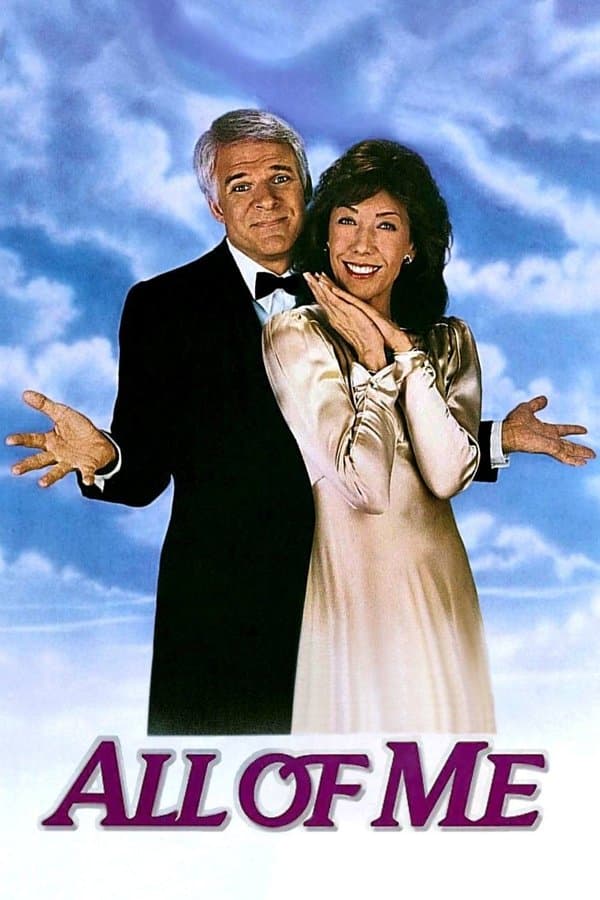
All of Me
1984 • Comedy, Fantasy, Romance • PG
Just before stubborn millionaire Edwina Cutwater dies, she asks her uptight lawyer, Roger Cobb, to amend her will so that her soul will pass to the young, vibrant Terry Hoskins – but the spiritual transference goes awry. Edwina enters Roger's body instead, forcing him to battle Edwina for control of his own being.
Runtime: 1h 33m
Buy related books from Amazon
As an Amazon Associate I earn from qualifying purchases. Read the full disclosure.
Why you should read the novel
If you loved the wit and whirlwind energy of All of Me (1984), step into the original story that inspired it: Me Two by Edwin Davis. The novel offers nuanced character motivations, fuller backstories, and a richer exploration of identity and consciousness than any 90-minute film can capture.
Reading Me Two gives you the author’s voice, deeper internal monologue, and layered humor that reward close attention. It’s the ideal companion for fans of body-swap and soul-sharing comedies who also crave thought-provoking, character-driven fiction with emotional stakes.
Before you press play on the movie, discover the source that started it all. Find Me Two by Edwin Davis in paperback, ebook, or audiobook and enjoy the complete book-before-movie experience—perfect for anyone comparing the novel vs. film and searching for the definitive All of Me reading guide.
Adaptation differences
Curious about the differences between All of Me (1984) and the book? The screen version leans into visual humor and physical set-pieces, while Me Two by Edwin Davis can live inside the characters’ heads, exploring two voices in one body with more nuance. That inner access naturally shifts tone and emphasis, giving the novel extra space for reflection alongside comedy.
Structurally, films must streamline. The adaptation condenses timelines, clarifies rules, and often combines or trims supporting roles to keep momentum. The novel, by contrast, allows for side threads and slower-burn identity negotiations that enrich the premise. Readers typically find more context around how and why the soul-sharing unfolds, as prose can unpack complexities without interrupting pacing.
Tone and balance also diverge. The movie targets big laughs, snappy banter, and a crowd-pleasing rhythm emblematic of 1980s studio comedies. The book balances humor with speculative and ethical questions—what it means to share a body, who gets to decide, and how agency is negotiated—which land more thoughtfully on the page than in a brisk comedic montage.
Focus and setting details shift in adaptation. The film highlights workplace hijinks, romantic beats, and set-piece gags tailored to star performances, while the novel devotes more attention to the metaphysical mechanics, psychological push-and-pull, and long-form character development. If you’re comparing Me Two vs. All of Me, reading the source illuminates what the movie simplifies, reframes, or amplifies for cinematic impact.
All of Me inspired from
Me Two
by Edwin Davis