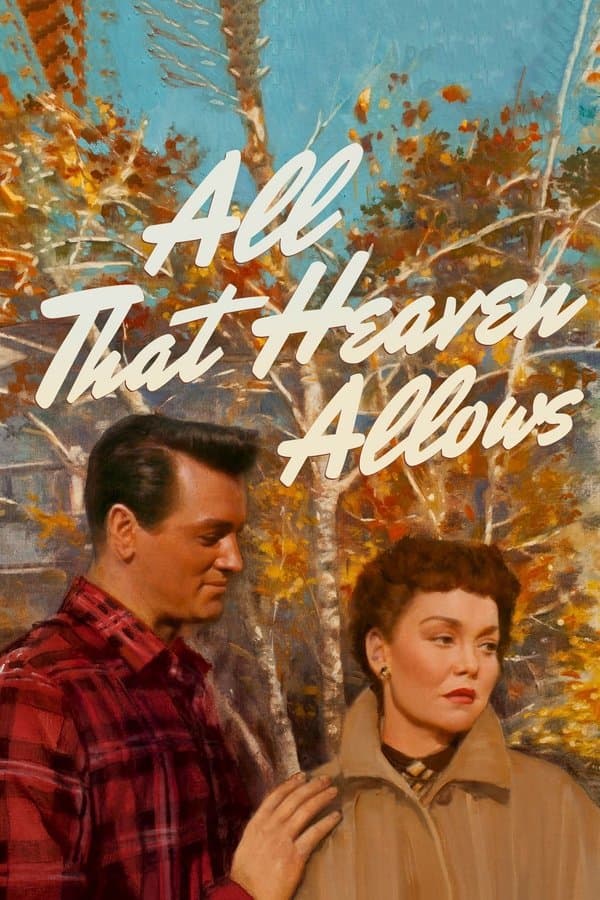
All That Heaven Allows
1955 • Drama, Romance
Two different social classes collide when Cary Scott, a wealthy upper-class widow, falls in love with her much younger and down-to-earth gardener, prompting disapproval and criticism from her children and country club friends.
Runtime: 1h 29m
Buy related books from Amazon
As an Amazon Associate I earn from qualifying purchases. Read the full disclosure.
Why you should read the novel
Discover the original source of the classic film by reading All That Heaven Allows by Edna Lee. The novel offers intimate access to Cary’s thoughts, social pressures, and the quiet complexities of mid-century small-town life that the screen can only suggest. If you’re searching for the definitive All That Heaven Allows book experience, the page delivers deeper insight and lasting emotional resonance.
Instead of watching the movie again, step into the richly observed world that inspired it. Edna Lee’s prose layers nuance onto every relationship, revealing how love, reputation, and independence collide in subtle, unforgettable ways. Perfect for book clubs and fans of domestic fiction, the novel rewards careful reading with character depth and social detail you won’t want to miss.
Readers curious about Douglas Sirk’s adaptation will find the novel a compelling companion—and an essential alternative. Explore the source material before you watch the movie, understand the characters’ inner lives, and appreciate the story’s themes in their fullest form. Search-friendly and timeless, All That Heaven Allows by Edna Lee is the best way to experience the narrative at its origin.
Adaptation differences
When comparing All That Heaven Allows the novel vs film, the most significant difference is perspective. Edna Lee’s book gives readers sustained interiority—Cary’s private doubts, rationalizations, and hopes—while the movie externalizes those feelings through color, framing, and gesture. The film’s visual poetry condenses psychology; the novel lets you live inside it.
Structure and pacing also diverge. The adaptation streamlines events, tightens the timeline, and merges or drops some supporting figures to sharpen the central romance. On the page, neighborhood dynamics, family routines, and social rituals receive more space, creating a fuller map of the community forces that shape Cary’s choices—details the movie abbreviates for narrative momentum.
Characterization shifts subtly. In the book, Cary’s self-scrutiny and the town’s gossip unfold with greater granularity, while Ron’s background and motivations are developed in practical, everyday terms. The film heightens archetypes for impact—emphasizing an ideal of individualism—whereas the novel complicates both leads with textured histories, obligations, and reputations within their social circle.
Tone and resolution feel different as well. The movie, guided by Douglas Sirk’s style and the Production Code era’s boundaries, aims for a concentrated, cathartic ending; the novel resolves conflicts with more reflective pacing and lingering social tensions. Sirk’s added motifs—mirrors, windows, and seasonal color—are interpretive choices, not direct lifts from the page, making the film a distilled, symbolic adaptation of Edna Lee’s more expansive psychological and social portrait.
All That Heaven Allows inspired from
All That Heaven Allows
by Edna Lee