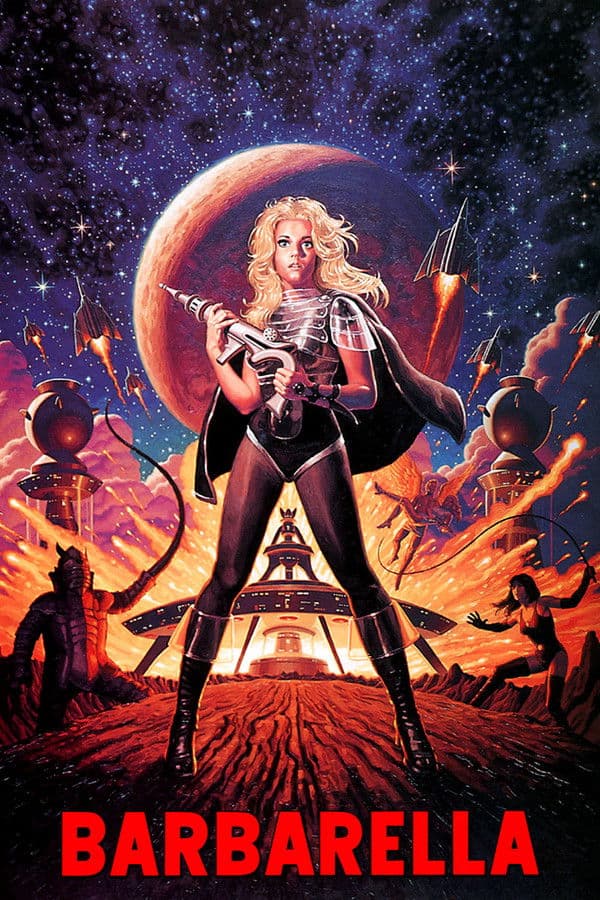
Barbarella
1968 • Adventure, Comedy, Science Fiction • PG
In the far future, a highly sexual woman is tasked with finding and stopping the evil Durand-Durand. Along the way she encounters various unusual people.
Runtime: 1h 38m
Buy related books from Amazon
As an Amazon Associate I earn from qualifying purchases. Read the full disclosure.
Why you should read the novel
Discover the original Barbarella by Jean-Claude Forest, the groundbreaking English-translated graphic novel that launched the cult phenomenon. Experience bold 1960s science fiction, sensual wit, and daring social satire exactly as conceived by its creator.
Reading the Barbarella book reveals richly composed artwork, inventive worldbuilding, and episodic adventures that the movie only hints at. Enjoy restored editions, thoughtful translations, and contextual essays that illuminate its cultural impact, influence on pop art, and place in science fiction history.
If you love retro sci fi and pop art, the best way to explore Barbarella is on the page. Search for the Barbarella graphic novel in English, find authoritative editions, and rediscover a definitive classic that rewards close reading far beyond the film.
Adaptation differences
The 1968 film streamlines the comic’s freewheeling episodes into a single quest to locate scientist Durand Durand, culminating in Sogo and the Mathmos. The book favors playful, self-contained escapades with shifting locales and evolving, open-ended stakes rather than one driving mission.
Tone and content diverge. Forest’s pages balance sensuality, satire, and sly political commentary, while the movie leans into camp, mod fashion, and slapstick humor to meet mainstream expectations and era-specific censorship. As a result, the comic’s adult edge and subversive bite are softened on screen.
Characterization shifts noticeably. On the page, Barbarella is wry, assertive, and confidently in control; on screen she is more naive and frequently bewildered. Several supporting figures and set pieces are reimagined or invented for cinema, including the infamous Excessive Machine, which has no direct counterpart in the book.
Visual language contrasts, too. Forest’s elegant linework and bande dessinée layouts conjure surreal, intimate worlds, whereas the film translates ideas into pop-art sets, glittering costumes, and lounge-psychedelic vibes. The adaptation trades the comic’s quiet, suggestive provocations for eye-popping spectacle and condensed, goal-driven storytelling.
Barbarella inspired from
Barbarella
by Jean-Claude Forest