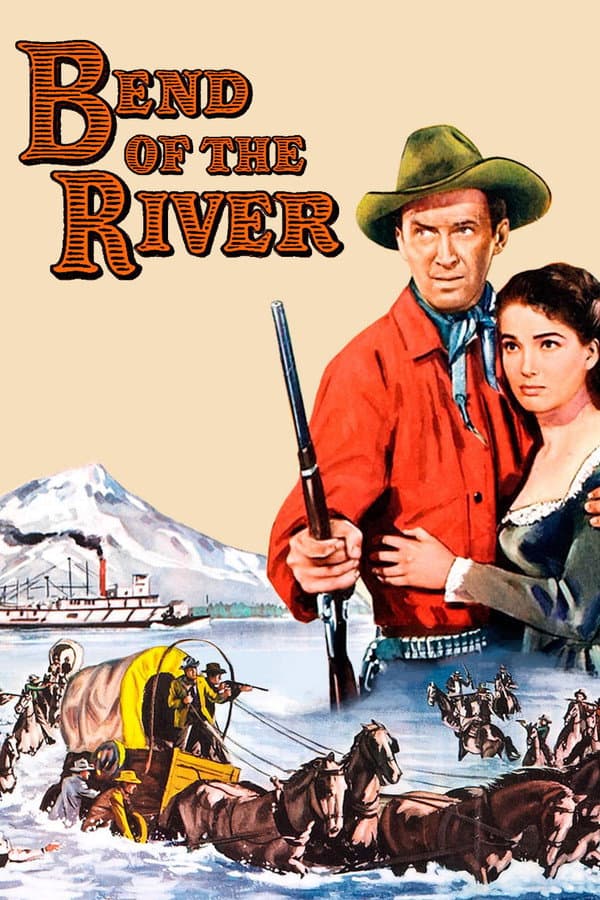
Bend of the River
1952 • Adventure, Western • NR
Two men with questionable pasts, Glyn McLyntock and his friend Cole, lead a wagon-train load of homesteaders from Missouri to the Oregon territory...
Runtime: 1h 31m
Buy related books from Amazon
As an Amazon Associate I earn from qualifying purchases. Read the full disclosure.
Why you should read the novel
Before watching Bend of the River, discover the original source: Bend of the Snake by Bill Gulick. This classic Western novel offers deeper character motivations, richer world-building, and a more layered portrait of frontier survival and community-building than the film can capture.
Reading Bend of the Snake gives you the author’s full vision—nuanced moral conflicts, textured descriptions of the Oregon frontier, and the slow-burn tensions that shaped the settlers’ journey. It’s a compelling, page-turning experience for fans of historical Westerns and character-driven storytelling.
If you love Western cinema, you’ll appreciate how the novel expands every theme the movie touches—from redemption to loyalty, from lawless commerce to hard-won justice. Choose the book to experience the story’s complexity, authenticity, and emotional stakes at their source.
Adaptation differences
When comparing Bend of the River (1952) to its source novel Bend of the Snake by Bill Gulick, the first clear change is the title and narrative focus. The film streamlines the book’s broader frontier saga into a tighter, action-forward arc, highlighting a perilous supply effort and condensing the timeline to fit a fast-paced theatrical rhythm.
Characterization marks another key difference between the book and the movie. The novel delves more deeply into internal conflicts and shifting loyalties—especially between the central figures—while the film externalizes those tensions through set-pieces, showdowns, and visual storytelling. As a result, the movie clarifies moral lines that the book often leaves more ambiguous.
Structure and setting details are also reshaped. The book invests more attention in the mechanics of settlement, trade, and regional power dynamics, whereas the adaptation compresses or merges supporting roles, trims subplots, and heightens spectacle (river travel, confrontations, and showdowns) to satisfy a 1950s studio Western’s momentum and Production Code boundaries.
Finally, tone and theme diverge in subtle but important ways. The novel’s frontier realism and incremental suspense yield to the film’s crisp pacing and star-driven heroism. Expect adjustments to character emphasis, the balance of romance versus survival, and the severity of consequences—changes typical of mid-century Hollywood adaptations that aim for immediacy over the book’s slower-burning complexity.
Bend of the River inspired from
Bend of the Snake
by Bill Gulick