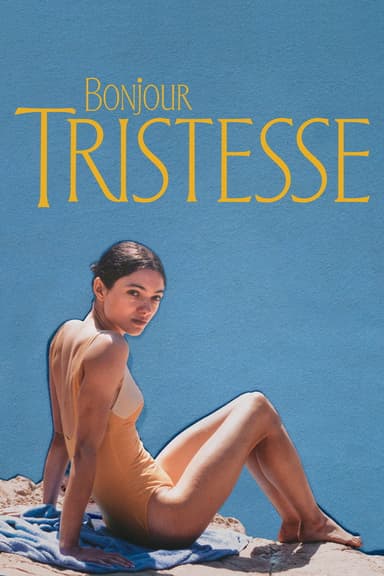
Bonjour Tristesse
1958 • Drama, Romance
A spoiled teenager spends the summer at the French Riviera with her rich, widower, playboy father, but when his old flame resurfaces, she resolves to keep her frivolous lifestyle at all costs.
Runtime: 1h 34m
Buy related books from Amazon
As an Amazon Associate I earn from qualifying purchases. Read the full disclosure.
Why you should read the novel
Before pressing play on the 1958 film, experience the source: Bonjour Tristesse by Françoise Sagan. This slim, devastating French classic delivers Cécile’s intimate first‑person voice, psychological precision, and crystalline prose that no camera can fully capture.
Readers drawn to the Riviera setting, youthful desire, and moral ambiguity will find the novel richer and bolder than any adaptation. The book’s candor, irony, and emotional aftershocks make it a definitive coming‑of‑age tale—perfect for anyone searching “Bonjour Tristesse book vs movie” or “read before you watch.”
Choose the book over the movie for the complete impact of Sagan’s vision. The English edition of Bonjour Tristesse is brief yet unforgettable—ideal for weekend reading, book clubs, and anyone who wants the pure, undiluted source material behind the film.
Adaptation differences
Point of view and structure: the novel is a confessional, first‑person account steeped in Cécile’s shifting justifications and guilt. The film, while occasionally narrated, must externalize her interiority and adds a framing device—bleak black‑and‑white Paris scenes set against lush color flashbacks on the Riviera—to signal memory and consequence.
Character portrayals shift with casting and era. In the book, Raymond is a charming, irresponsible libertine; onscreen, David Niven’s effortless warmth softens his edges. Deborah Kerr’s Anne becomes more overtly poised and sympathetic, while Cécile’s manipulativeness and sexual candor are toned down by 1950s production sensibilities, altering the moral temperature.
Several story details are streamlined. Cécile’s summer lover Cyril is renamed Philippe in the film, timelines are compressed, and schemes are simplified for clarity. The novel hints more strongly at the suicidal impulse behind Anne’s fatal crash; the movie leans toward ambiguity and a cautionary, morally framed “accident,” reshaping how blame and remorse land.
Tone and theme diverge notably. Sagan’s prose distills existential ennui, sun‑struck hedonism, and creeping “tristesse.” The adaptation foregrounds glamorous surfaces—fashion, villas, parties—and English‑language dialogue, shifting the cultural register. Where the book’s final pages return to an aching self‑knowledge, the film visualizes emptiness through its stark Paris sequences, but cannot equal the novel’s piercing ambiguity.
Bonjour Tristesse inspired from
Bonjour Tristesse
by Françoise Sagan