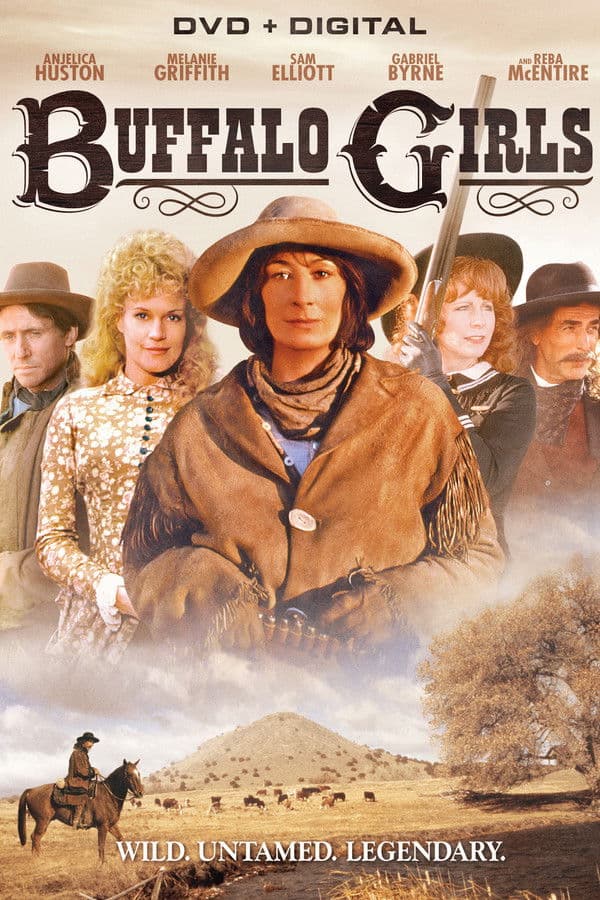
Buffalo Girls
1995 • TV Movie, Western
The bold escapades of tough-talking Calamity Jane Canary and her illustrious cohorts. It's the waning days of the Wild West and Jane, the rough 'n' rugged cowgirl, is searching not only for her long-lost daughter, but the Wild West she once knew. Jane traverses plains, mountains and continents until she finally discovers the answer to her problems: Dora, the vivacious, gold-hearted madam who's been her one true friend all along.
Runtime: 3h
Buy related books from Amazon
As an Amazon Associate I earn from qualifying purchases. Read the full disclosure.
Why you should read the novel
If the 1995 Buffalo Girls miniseries intrigued you, read Larry McMurtry’s Buffalo Girls novel to experience Calamity Jane’s voice in full. The Buffalo Girls book offers layered interiority, gritty humor, and emotional nuance no screen can fully capture.
McMurtry—Pulitzer Prize–winning author of Lonesome Dove—builds a vivid, historically rich West where myth and memory collide. Through poignant letters and intimate reflection, the novel deepens every relationship and moment, rewarding readers who want more than highlights from the frontier legend.
For fans of Western literature, American history, and strong character-driven storytelling, choosing the Buffalo Girls novel over the adaptation means discovering richer context, sharper themes, and unforgettable prose. Read the book first—or after watching—to see what the miniseries leaves behind.
Adaptation differences
A central difference between the Buffalo Girls book and the miniseries is narrative form. Larry McMurtry’s novel frequently uses Calamity Jane’s intimate, reflective voice—often via letters—while the adaptation shifts to an external, scene-driven perspective that prioritizes visual storytelling over interior monologue.
Characterization also changes. The novel spends more time inside Jane’s mind—her doubts, sharp wit, and contradictions—along with fuller portraits of friends and rivals. The miniseries condenses or combines supporting characters, trims backstory, and softens rougher edges to fit network-TV constraints and runtime.
The timeline and scope are streamlined on screen. Where the book roams across years, towns, and tours, the adaptation concentrates on a tighter sequence of events and marquee moments (such as show-business spectacle), reducing side journeys and historical detours that enrich the novel’s tapestry.
Themes tilt as well. McMurtry’s Buffalo Girls is more openly elegiac and skeptical about frontier mythmaking, aging, and loss, with a darker, more ironic tone. The miniseries leans into romance, camaraderie, and adventure, often offering clearer resolutions and visual grandeur in place of the novel’s ambiguity and bittersweet introspection.
Buffalo Girls inspired from
Buffalo Girls
by Larry McMurtry