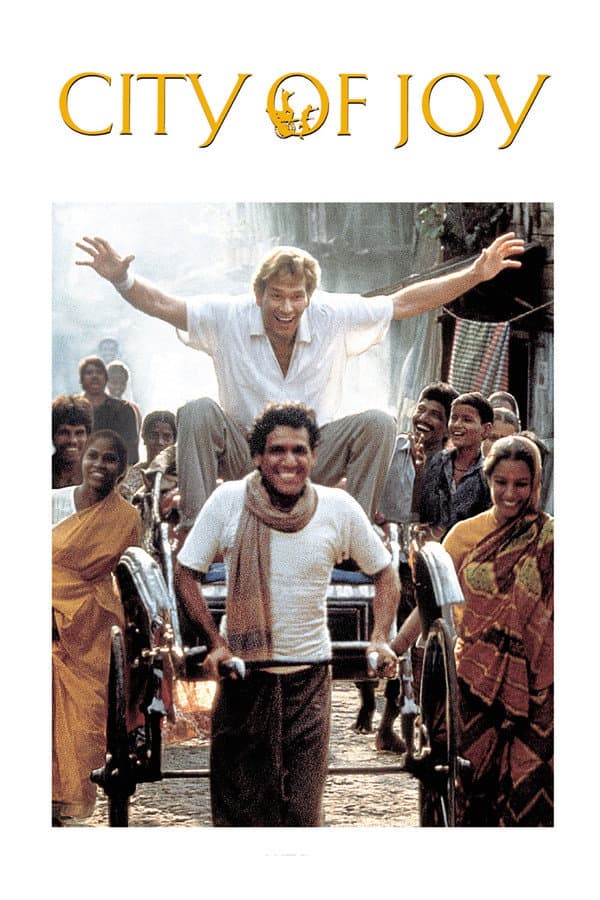
City of Joy
1992 • Drama • PG-13
Max Lowe is a Houston surgeon who has grown weary of the bureaucracy of American medicine. When he loses a patient on the operating table, Max impulsively decides to leave America and travel to India in the hope of finding himself. Not long after he arrives in Calcutta, Max is attacked by a group of thugs and left without money or a passport.
Runtime: 2h 12m
Buy related books from Amazon
As an Amazon Associate I earn from qualifying purchases. Read the full disclosure.
Why you should read the novel
Before you stream or rewatch the 1992 film, read the source: City of Joy by Dominique Lapierre. This acclaimed work of narrative nonfiction delivers ground-level reporting and intimate storytelling from Kolkata’s most vulnerable communities, offering depth and context the movie can only hint at.
The book’s pages are filled with lived experience: rickshaw pullers, families, caregivers, and clergy navigating hardship with courage and humor. If you want the whole story behind the headlines, reading the City of Joy book provides cultural, historical, and spiritual dimensions the screen condenses.
Available in English in paperback, ebook, and audiobook, Lapierre’s classic is perfect for readers comparing book vs movie. Buy, borrow, or download the novel to gain the nuance, authenticity, and humanity that make City of Joy unforgettable.
Adaptation differences
The biggest difference between the book and the 1992 movie City of Joy is perspective. Dominique Lapierre’s City of Joy is narrative nonfiction built from years of on-the-ground reporting; the film reframes the material as a fictional drama led by an outsider doctor. The book prioritizes the community’s collective voice, while the movie centers a single protagonist’s redemption arc.
Scope and structure also diverge. The book spans many lives over an extended period, layering vignettes that reveal work, faith, health care, migration, and survival in minute detail. The movie compresses time, combines characters, and streamlines events into a more conventional plot, amplifying a few dramatic set pieces at the expense of the book’s broader social tapestry.
Characterization shifts with the adaptation. In the book, local families, aid workers, and clergy are complex, sometimes contradictory figures whose choices emerge from culture and circumstance. The film simplifies several roles, introduces a foreign doctor as an emotional anchor, and hints at relationships that heighten personal stakes. This creates a more accessible entry point for viewers, but it tilts the narrative toward a Western-savior framing absent from much of the source.
Tone and emphasis differ markedly. Lapierre’s pages balance indignation with hard-won hope, focusing on community resilience and systemic realities. The movie raises the melodrama, adds a more visible criminal antagonist, and foregrounds violence and cathartic triumphs. As a result, the adaptation delivers swifter impact, while the book offers the slower, contextual understanding that many readers seek when comparing book vs movie differences.
City of Joy inspired from
City of Joy
by Dominique Lapierre