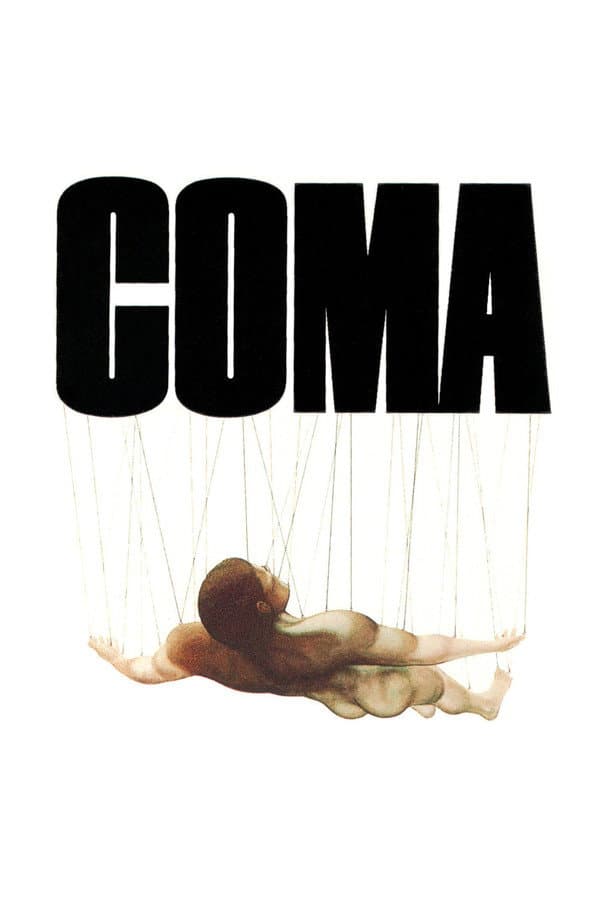
Coma
1978 • Horror, Mystery, Thriller • PG
When relatively healthy patients begin having 'complications' during simple operations and ending up in comas, a concerned doctor defies her male superiors when she suspects a secret plot.
Runtime: 1h 53m
Buy related books from Amazon
As an Amazon Associate I earn from qualifying purchases. Read the full disclosure.
Why you should read the novel
Before you watch Coma from 1978, experience the source that started it all: Robin Cook’s Coma, the groundbreaking medical thriller novel that redefined hospital suspense. The book’s razor-sharp realism, escalating dread, and authentic operating room detail deliver an intensity no screen adaptation can match.
Reading the Coma novel puts you inside Susan Wheeler’s mind, where every clue, ethical dilemma, and institutional secret lands with chilling immediacy. If you love medical suspense books, Cook’s meticulous anatomy, procedural accuracy, and investigative sleuthing create a page-turning immersion the movie necessarily condenses.
For fans of Michael Crichton and Tess Gerritsen, Robin Cook’s Coma is essential reading. Choose the deeper character work, richer themes, and original twists only the book offers. Buy and read Robin Cook’s Coma novel today to discover why this medical thriller classic still grips readers decades later.
Adaptation differences
While the Coma movie captures the story’s paranoia and sleek hospital menace, the novel offers far more granular medical detail, data-driven investigation, and a slower, more methodical build of conspiracy. The adaptation streamlines subplots and compresses timelines to emphasize visual suspense and set pieces.
One notable change is Susan Wheeler’s role: in the book she is a third-year medical student, while the film presents her as a surgical resident. That shift alters power dynamics, mentorship tensions, and how institutional resistance confronts her. The movie also consolidates antagonistic forces, making the conspiracy’s leadership clearer and more immediate than in the book.
The novel dwells on records, autopsies, and technical explanations of anesthetic risk and hospital systems, whereas the film favors kinetic chases, stark imagery at the Jefferson Institute, and quick reveals. The mechanism of inducing comas is dramatized visually on screen; the book explains the technicalities with greater nuance and procedural depth.
Tonal emphasis differs too: the film drives toward a taut, high-stakes operating room climax with a decisive resolution, while the novel’s conclusion feels more methodical and thematically focused on systemic culpability. For a fuller understanding of the characters, motives, and medical intricacies, reading the book reveals layers the adaptation can only hint at.
Coma inspired from
Coma
by Robin Cook