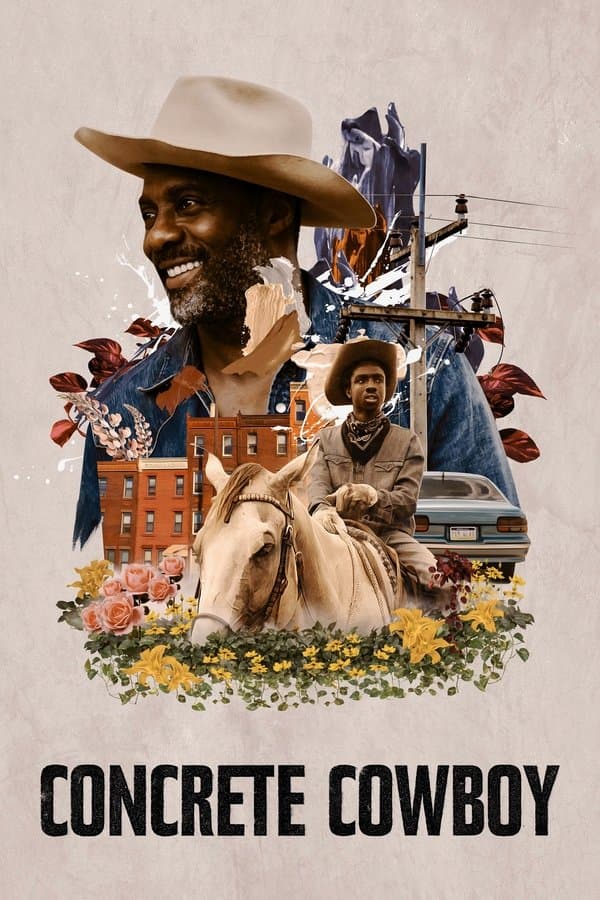
Concrete Cowboy
2020 • Drama, Western • R
Sent to live with his estranged father for the summer, a rebellious teen finds kinship in a tight-knit Philadelphia community of Black cowboys.
Runtime: 1h 51m
Buy related books from Amazon
As an Amazon Associate I earn from qualifying purchases. Read the full disclosure.
Why you should read the novel
Before you stream Concrete Cowboy, discover the original inspiration: Ghetto Cowboy by G. Neri. This acclaimed novel invites you straight into Cole’s head, letting you feel every hard-earned lesson, each small victory, and the pulse of Philadelphia’s urban stables in a way only a page-turning book can deliver.
Reading Ghetto Cowboy gives you the unfiltered heart of the story—rich inner monologue, textured language, and a deeper connection to the culture and history of the Fletcher Street riding community. The novel’s intimate voice reveals motivations and emotions the camera can’t capture, making Cole’s transformation even more powerful and personal.
If you want the fullest version of this tale, choose the book first. Ghetto Cowboy is fast, vivid, and deeply human—perfect for readers who love authentic coming-of-age journeys, urban Western grit, and the real-life legacy behind the headlines and the movie.
Adaptation differences
Concrete Cowboy vs book: the film broadens the lens, while Ghetto Cowboy by G. Neri stays tightly inside Cole’s first-person perspective. On the page, you live in Cole’s thoughts and language; on screen, the story shifts to an ensemble portrait of the Fletcher Street riders, blending fiction with real community members to celebrate the culture at large.
Character handling also diverges. The novel presents Cole as a younger teen and centers his evolving bond with his father (Harper) and the horse Boo; the film ages Cole up and renames the father Harp, while creating or significantly expanding figures like Smush to add peer pressure and street-level temptation. The movie leans into a criminal subplot and more explicit consequences, whereas the book treats risk and hardship in a middle-grade–appropriate register.
Structurally, the book spends more time on learning the craft—stable chores, horsemanship, responsibility, and the day-to-day rhythms that build trust between boy and horse. The film compresses timelines, highlights community set pieces, and stages larger confrontations around city crackdowns on stables and horse impoundment, using visual momentum where the novel favors gradual, reflective growth.
Tone and resolution differ as well. Ghetto Cowboy closes on a hopeful note grounded in personal responsibility and community resilience, matching its intended readership. Concrete Cowboy carries a grittier, bittersweet mood, emphasizing systemic pressure, gentrification, and the fragility of the riding tradition. Both honor the same core truth—belonging, discipline, and love—but they take distinct routes to get there.
Concrete Cowboy inspired from
Ghetto Cowboy
by G. Neri