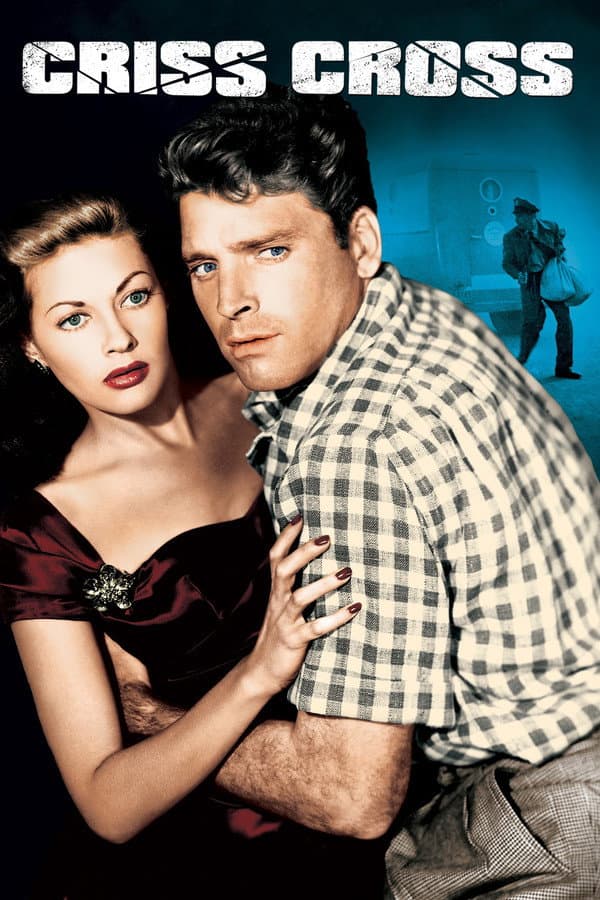
Criss Cross
1949 • Crime, Thriller • NR
An armored-car guard must join a robbery after being caught with his ex-wife by her gangster husband.
Runtime: 1h 28m
Buy related books from Amazon
As an Amazon Associate I earn from qualifying purchases. Read the full disclosure.
Why you should read the novel
Before you press play on the 1949 film classic, experience the razor-edged source: Criss Cross by Don Tracy. The novel’s lean, hardboiled prose digs into obsession, betrayal, and bad decisions with a psychological intimacy that cinema can only hint at. If you love film noir, reading the book reveals the genre’s roots—unfiltered, immediate, and impossible to shake.
Don Tracy’s Criss Cross offers street-level authenticity and a noir atmosphere that feels lived-in. Where the movie dazzles with shadowy images, the novel immerses you in motive, memory, and moral slippage. You get the tempo of the underworld, the smell of the streets, and the mounting dread of a plan that can’t possibly end well. It’s the definitive way to understand why the story endures.
Whether you collect vintage crime fiction, crave character-driven suspense, or want the full context behind the Burt Lancaster–era film, start with the book. Modern paperback and ebook editions make it easy to find, and the same source inspired later adaptations, too. Read Don Tracy’s Criss Cross first to see the blueprint—then watch the movie with sharper insight and appreciation.
Adaptation differences
Narrative emphasis and structure diverge. The film famously leans on flashbacks and visual crosscutting to create a fatalistic spiral, while Don Tracy’s novel unfolds more directly, lingering longer in interior motives and incremental compromises. Reading the book clarifies how the story’s tension grows from thought to action, not just from montage and lighting.
Characterization is sharper and more psychologically shaded on the page. The novel affords fuller access to the protagonist’s rationalizations and the femme fatale’s shifting loyalties, rendering their choices messier and more human. On screen, archetypes and performance charisma do heavy lifting; in the book, moral ambiguity and self-deception broaden the emotional range and deepen the tragedy.
The mechanics of the crime aren’t a one-to-one match. The film streamlines planning and compresses timelines for pace and spectacle, foregrounding the iconic armored-car job in a specific West Coast milieu. The novel devotes more space to groundwork, underworld logistics, and the grinding pressure that precedes the break. Police presence, informants, and side players register differently, altering where the suspense lands.
Tone and outcomes reflect medium and era. Production Code constraints push the movie toward clearer on-screen retribution, while the book is franker about desire, violence, and the costs of obsession. Both versions are bleak, but the novel’s conclusion feels thematically broader and psychologically exacting, whereas the film frames its doom within stylized, unforgettable noir iconography.
Criss Cross inspired from
Criss Cross
by Don Tracy