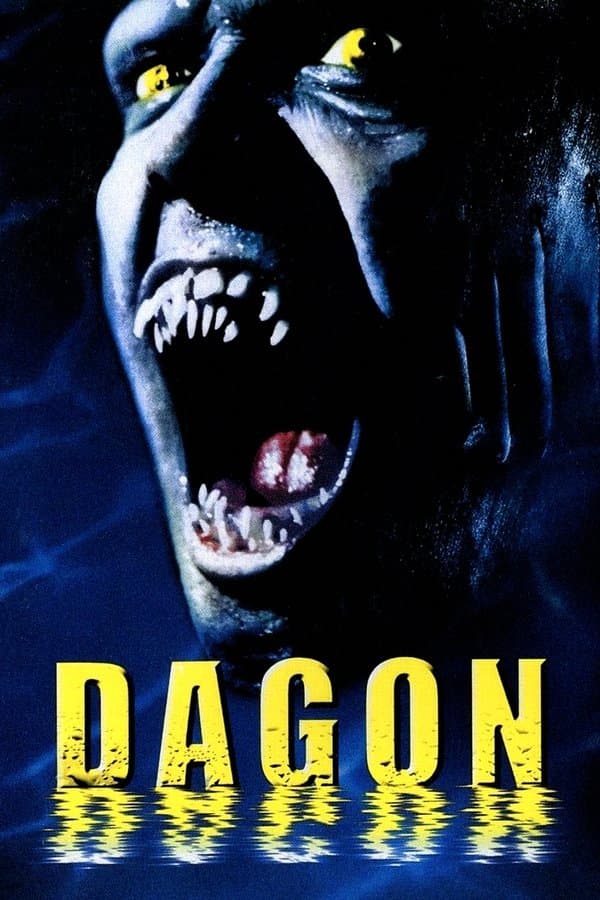
Dagon
2001 • Fantasy, Horror, Thriller
A boating accident off the coast of Spain sends Paul and his girlfriend Barbara to the decrepit fishing village of Imboca. As night falls, people start to disappear and things not quite human start to appear. Paul is pursued by the entire town. Running for his life, he uncovers Imboca's secret..they worship Dagon, a monstrous god of the sea...and Dagon's unholy offspring are on the loose...
Runtime: 1h 35m
Buy related books from Amazon
As an Amazon Associate I earn from qualifying purchases. Read the full disclosure.
Why you should read the novels
If Dagon (2001) pulled you into its stormy nightmare, go straight to the source: read H. P. Lovecraft’s The Shadow over Innsmouth and Dagon. These foundational stories deliver the original Deep One mythology, creeping atmosphere, and cosmic dread that shaped the movie’s most memorable moments.
On the page, Innsmouth’s crumbling streets and the abyssal monolith of Dagon become vivid through Lovecraft’s language—anxiety building with every clue, whisper, and tide change. Reading The Shadow over Innsmouth and Dagon lets you absorb the lore, history, and unsettling implications the film can only hint at.
Choose the source material to experience Lovecraft’s precise pacing, unsettling revelations, and the full breadth of his mythos. For horror fans and curious newcomers, reading The Shadow over Innsmouth and Dagon offers the richest, most authentic version of this sea-haunted nightmare.
Adaptation differences
Setting and cultural shift: Dagon (2001) relocates Lovecraft’s New England decay to the Galician coastal village of Imboca, a Spanish echo of Innsmouth. This change introduces new language, architecture, and Catholic-inflected folk imagery, trading the Prohibition-era Massachusetts atmosphere for a modern European fishing town while preserving the core fish-god cult premise.
Structure and tone: The film compresses and accelerates Lovecraft’s slow-burn investigation into a chase-driven survival horror. While The Shadow over Innsmouth unfolds through research, rumors, and an overnight pursuit, the movie emphasizes immediate peril, graphic rituals, and set‑piece escapes. It also visualizes Dagon directly, whereas Lovecraft’s stories favor suggestion, implication, and the terror of the unseen.
Character revisions: The film recasts the lone narrator as Paul, adds a romantic partner, and introduces Uxía as a seductive hybrid—elements absent from the prose. Zadok Allen’s role as the exposition-bearing drunk becomes Ezequiel, shifting how backstory is delivered. The movie heightens erotic and body‑horror content (sacrifice, flaying, transformation) far beyond the restraint and innuendo of the original texts.
Mythos blending and endings: Dagon (2001) fuses The Shadow over Innsmouth with motifs from Dagon, bringing the sea deity and abyssal worship to the forefront. The novella’s government raid and broader aftermath are omitted, and the film’s climax forces immediate revelation and transformation rather than Lovecraft’s gradual, reflective acceptance. The result is a more visceral, action-forward interpretation of themes that the stories explore with slow dread and genealogical unease.
Dagon inspired from
Dagon
by H. P. Lovecraft
The Shadow over Innsmouth
by H. P. Lovecraft