Dance with the Devil
1997 • Action, Thriller
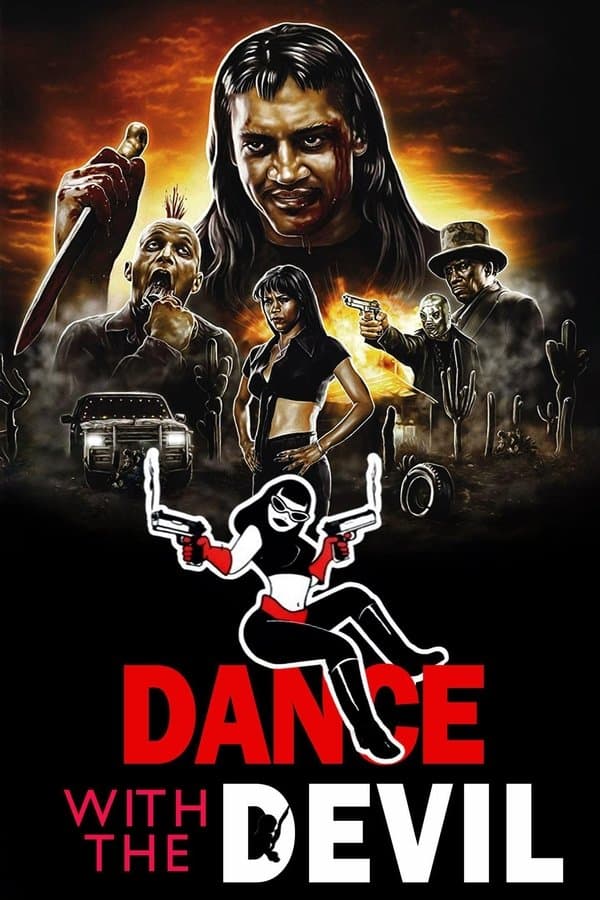
She's sexy, shameless and loves taking people to their limit. She's a dangerous young woman who dreams about a jaguar that licks her naked body and sleeps by her side. Her past is bathed in blood and weird passions. Now she's met the man of her wildest dreams. He's dark, tough and mysterious. He likes robbing banks, trafficking in corpses and spicing it all with voodoo rituals. Together, the duo sets off toward Mexico destined to become the most feared outlaws in the continent.
Runtime: 2h 10m
Buy related books from Amazon
As an Amazon Associate I earn from qualifying purchases. Read the full disclosure.
Why you should read the novel
Before you stream or rewatch Dance with the Devil (Perdita Durango), dive into Barry Gifford’s source novel, 59 Degrees and Raining: The Story of Perdita Durango. The book’s razor‑edged prose and noir mood put you inside Perdita’s and Romeo’s heads in ways no camera can match.
Gifford’s novel is a masterclass in literary noir: lean, propulsive chapters, a borderlands atmosphere steeped in dread, and psychological nuance that reframes the violence, desire, and spiritual hustle at the story’s core. If you’re searching for the most authentic version of this cult saga, the page is where it lives.
Reading the book gives you richer context within Gifford’s Sailor & Lula universe, deeper character motivations, and thematic threads the film only hints at. For fans comparing book vs movie adaptations, start with the novel to experience the original intent, then watch the film to enjoy its wild reinterpretation.
Adaptation differences
Tone and style shift dramatically from page to screen. Gifford’s novel is spare, fatalistic, and psychologically interior, while the movie amps up dark comedy, gore, and shock value. The book’s noir minimalism becomes a high‑octane, cult‑cinema spectacle in the adaptation.
Character focus changes as well. On the page, Perdita’s inner life, contradictions, and survival instincts are rendered with icily precise detail. The film leans into her mythic outlaw persona and Romeo’s flamboyant charisma, streamlining or reinventing certain side characters to keep the action front and center.
Structure and plot beats are compressed for momentum. The movie condenses timelines, heightens set‑pieces, and stylizes the ritual and smuggling elements for maximum visual impact, while the novel lingers on travel, dread, and the moral vacuum surrounding the kidnapped teens. Several episodes are rearranged or combined, and some encounters in the book are reduced or omitted entirely.
The endings and themes diverge in emphasis. The film pushes toward a more explosive, closed confrontation, favoring catharsis and sensation. The novel skews bleaker and more ambiguous, prioritizing moral disquiet over payoff. Readers also catch connective tissue to the broader Sailor & Lula cycle that the standalone film mostly sidelines.
Dance with the Devil inspired from
59 Degrees and Raining: The Story of Perdita Durango
by Barry Gifford