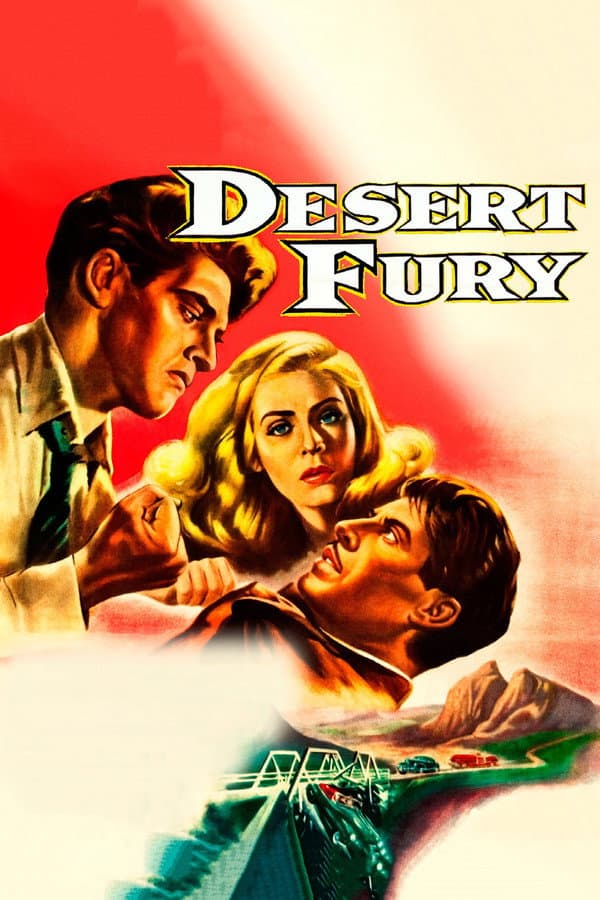
Desert Fury
1947 • Crime, Drama • NR
The daughter of a Nevada casino owner gets involved with a racketeer, despite everyone's efforts to separate them.
Runtime: 1h 36m
Buy related books from Amazon
As an Amazon Associate I earn from qualifying purchases. Read the full disclosure.
Why you should read the novel
Before you watch Desert Fury (1947), discover Desert Town by Ramona Stewart—the gripping source novel that ignited the film’s vivid intrigue. Stewart’s original story layers desire, danger, and small‑town corruption with a psychological sharpness no screen can fully replicate. If you crave the authentic blueprint behind the movie, the novel delivers the unfiltered experience.
Reading Desert Town gives you deeper character motivations, richer backstories, and the full desert atmosphere that the film only hints at. Stewart’s prose captures the heat, dust, and moral mirages of a remote gambling town, immersing you in tense relationships and slow-burn suspense that make every decision feel fateful.
For fans of crime fiction, romantic suspense, and classic noir, Desert Town is the essential companion—and, arguably, the superior way—to experience this story. Search for Desert Town by Ramona Stewart in paperback or ebook, and explore the source material that shaped Desert Fury while revealing far more than the camera could show.
Adaptation differences
While Desert Fury streamlines the plot into a sleek Technicolor melodrama, Desert Town unfolds with broader scope and patient pacing. The novel develops multiple threads around the town’s power structures and simmering secrets, whereas the film centers tightly on the central romance and its immediate dangers, compressing or combining subplots for momentum.
Characterization diverges notably. In the book, Paula, Fritzi, Eddie, Johnny, and Tom are explored through interior perspective and layered motivation, clarifying why they push and pull at each other. On screen, those motives are translated into looks, staging, and brisk dialogue. The novel’s mother–daughter power dynamic is especially nuanced, granting Fritzi and Paula more complex emotional histories than the film can fully dramatize in its runtime.
Themes are sharper in print. Desert Town is franker about small‑town corruption, moral compromise, and the tangled loyalties binding its criminal and civic worlds. The Production Code era shaped Desert Fury’s treatment of sexuality, violence, and consequences, softening certain edges and redirecting ambiguity into coded suggestion. The novel’s candor makes its tensions feel more personal and less polished.
Tone and resolution also part ways. The book leans into moral ambiguity and psychological aftermath, allowing unease to linger beyond plot mechanics. The movie, designed for immediacy and visual impact, delivers clearer narrative closure and emphasizes spectacle over introspection. Readers who want the story’s full weight—its interior conflicts and thornier ambiguities—will find them most powerfully in Desert Town.
Desert Fury inspired from
Desert Town
by Ramona Stewart