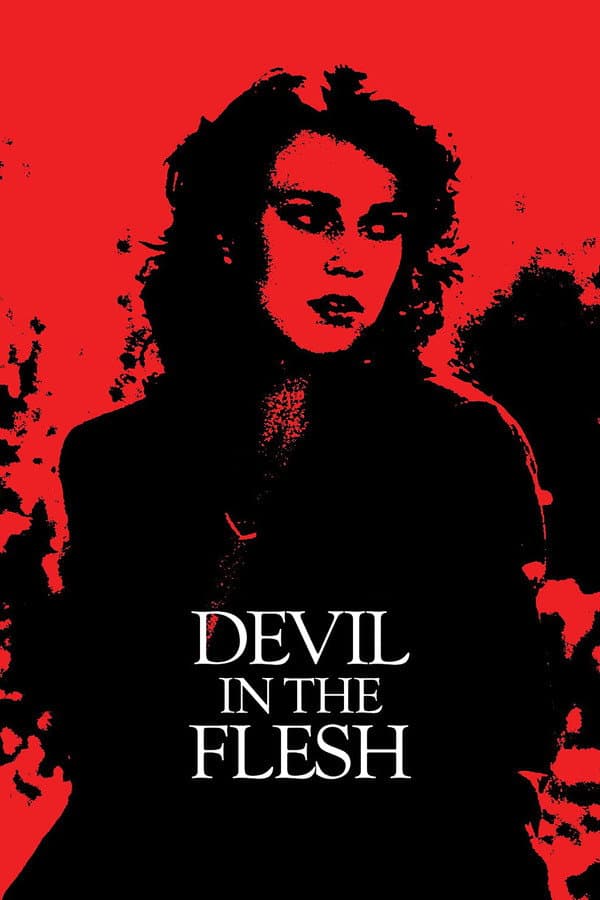
Devil in the Flesh
1986 • Drama, Romance • R
An Italian high school student becomes infatuated with a woman he sees outside his class window. Her fiancée is in jail for being involved in a radical movement, and she spends much time in court providing moral support. At first she resists the student's advances, but eventually begins an affair with him. Their situation is condemned by her family and his father, who is the woman's psychologist.
Runtime: 1h 54m
Buy related books from Amazon
As an Amazon Associate I earn from qualifying purchases. Read the full disclosure.
Why you should read the novel
Before you watch the 1986 film Devil in the Flesh, experience the source that started it all: Raymond Radiguet’s classic novel, Devil in the Flesh. This essential work of French literature delivers the original voice, themes, and emotional textures that no screen version can fully capture.
Radiguet’s book is a concise, devastating portrait of first love, desire, and societal hypocrisy set against World War I France. Its unforgettable first-person narration, crystalline prose, and moral ambiguity make the Devil in the Flesh novel a must-read for anyone who values psychological depth and literary craftsmanship.
If the movie’s intensity drew you in, the book offers the blueprint—richer context, sharper insight, and a different atmosphere only prose can provide. Discover why generations of readers return to Raymond Radiguet’s Devil in the Flesh instead of (or before) watching any adaptation.
Adaptation differences
Setting and historical context shift dramatically between page and screen. Radiguet’s novel unfolds in World War I France, where the fiancé is away at the front; the 1986 film relocates the affair to contemporary Italy, threading the romance through urban unrest and political tensions. This move reframes the scandal—from wartime absence to a landscape charged with ideological conflict.
Key characters and their circumstances are reimagined. In the book, the young narrator (a teenage schoolboy) conducts an illicit affair with Marthe, engaged to a soldier. The film updates names and backstories, centering on a teenage student and an older woman whose fiancé is entangled in politically volatile circumstances. These changes recalibrate motivations, power dynamics, and the social risks each character faces.
Narrative voice and style diverge as well. Radiguet’s Devil in the Flesh is told in a spare, reflective first person that probes guilt, desire, and self-deception; the film necessarily externalizes that inner turmoil through performances, staging, and notably more explicit sexuality. What is elliptical and morally ambiguous on the page becomes visceral, confrontational, and visually immediate on screen.
Plot emphasis and resolution also differ. The novel’s tragic momentum is shaped by secrecy, wartime pressures, and an intimate reckoning with consequence; the film heightens external pressures in a contemporary milieu and opts for a starker, more provocative climax. Viewers and readers will recognize the same forbidden-love core, but the adaptation’s altered time, tone, and ending deliver a meaningfully different emotional and ethical impact.
Devil in the Flesh inspired from
Devil in the Flesh
by Raymond Radiguet