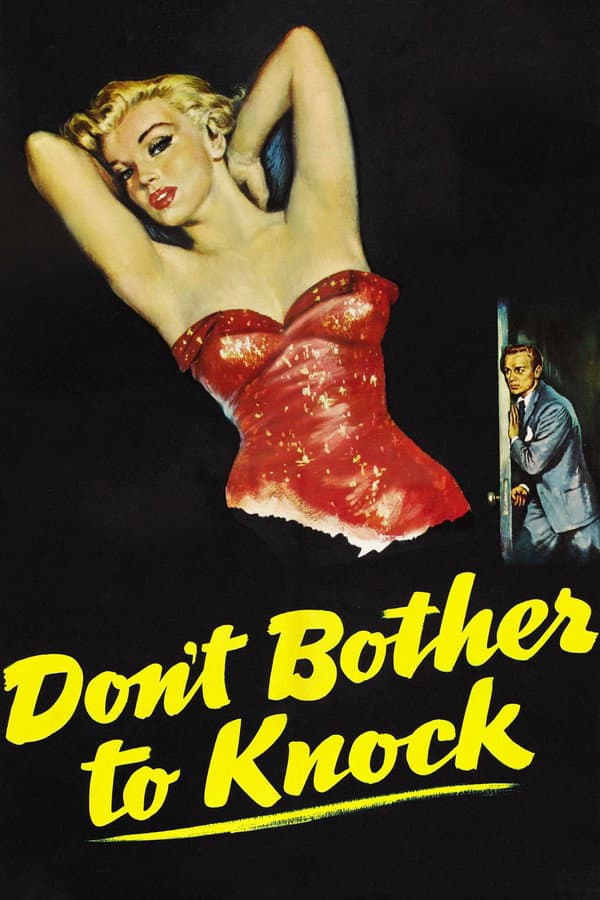
Don't Bother to Knock
1952 • Drama, Thriller
An airline pilot pursues a live-in babysitter at his hotel and gradually realizes she is not as stable as perhaps she should be.
Runtime: 1h 16m
Buy related books from Amazon
As an Amazon Associate I earn from qualifying purchases. Read the full disclosure.
Why you should read the novel
Before watching the 1952 film, discover the gripping source: Mischief by Charlotte Armstrong. This classic of psychological suspense delivers the original, full-bodied vision behind Don't Bother to Knock, with layered character work and nerve-tightening tension.
Reading Charlotte Armstrong’s Mischief puts you inside the hotel’s shadowy corridors and the babysitter’s unraveling mind in a way cinema can only hint at. The novel’s precise pacing, claustrophobic setting, and expertly seeded clues make it a definitive domestic noir page‑turner.
If you love vintage crime fiction, Hitchcockian atmosphere, and slow-burn dread, choose the book first. Experience the authentic themes, nuances, and subtext the movie simplifies—available in print, ebook, and audiobook for your next night of suspense.
Adaptation differences
The film Don't Bother to Knock is adapted from Charlotte Armstrong’s novel Mischief, a title some later editions reissued to match the movie. The adaptation compresses events for a swift runtime, prioritizing visual suspense and star presence over the novel’s broader psychological texture.
Armstrong’s book spends more time inside multiple viewpoints—especially the sitter and the uneasy adults orbiting her—building dread through interior thought and perception. The movie reframes emphasis around a visiting man and a nightclub singer, expanding or inventing elements to create a romance-laced, screen-friendly throughline.
Tone and theme shift notably. The novel’s domestic noir ambiguity and uncomfortable intimacy give way to a leaner thriller rhythm onscreen; psychological backstory is streamlined, and depictions of mental illness and violence are adjusted to fit early-1950s Production Code expectations and marketing needs.
Setting and structure diverge in feel, too. The book treats the hotel as a labyrinth of rooms, corridors, and bystanders, gradually tightening the vise through cross-cut tension. The film opts for fewer characters, set‑piece confrontations, and lounge‑act interludes, trimming or merging subplots and redirecting suspense toward a brisk, resolution-forward finale.
Don't Bother to Knock inspired from
Mischief
by Charlotte Armstrong