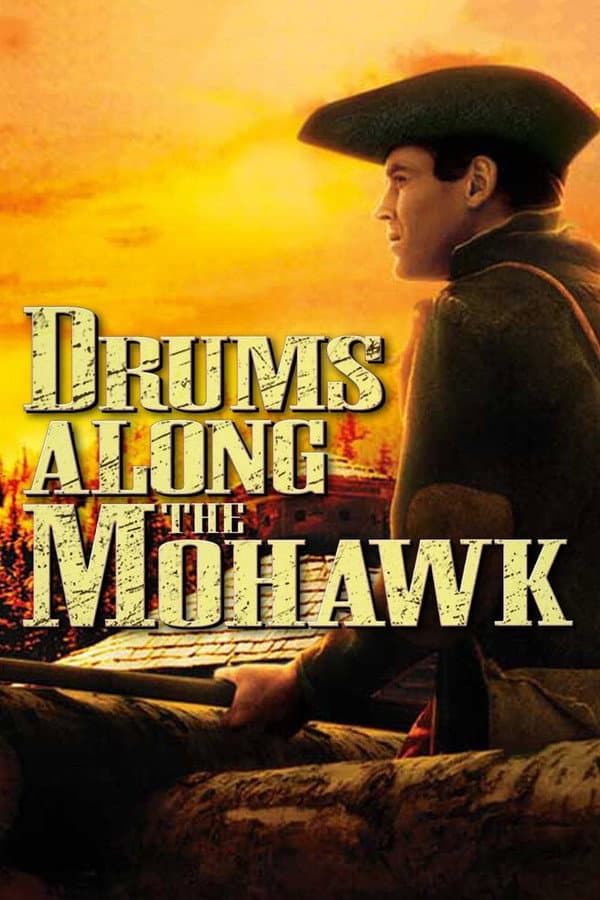
Drums Along the Mohawk
1939 • Drama, History, War • NR
Albany, New York, 1776. After marrying, Gil and Lana travel north to settle on a small farm in the Mohawk River Valley, but soon their growing prosperity and happiness are threatened by the sinister sound of drums that announce dark times of revolution and war.
Runtime: 1h 40m
Buy related books from Amazon
As an Amazon Associate I earn from qualifying purchases. Read the full disclosure.
Why you should read the novel
Before you watch the 1939 film, experience the source novel Drums Along the Mohawk by Walter D. Edmonds. This historical fiction classic offers immersive frontier realism and richly researched detail about Revolutionary-era Mohawk Valley life.
If you enjoyed the movie’s characters, the book deepens Gilbert and Lana Martin’s marriage, neighbors, and enemies. You’ll find seasons of toil, raids, and resilience rendered with textures the screen can’t hold—craft, faith, dialect, and community bonds.
For readers seeking authentic American history and compelling narrative, choose the novel over the adaptation. The unabridged text rewards book clubs, classrooms, and collectors with context, nuance, and atmosphere that elevate Drums Along the Mohawk beyond the movie.
Adaptation differences
Scope and timeline: The Walter D. Edmonds novel spans more years, daily routines, and community dynamics in the Mohawk Valley, while the John Ford movie compresses events into a tighter arc focused on major raids and set pieces. As a result, the film streamlines causes and consequences, whereas the book carefully traces seasons, shortages, and the cumulative pressure of war.
Character depth and consolidation: The novel develops a larger ensemble, giving neighbors, Loyalists, militia leaders, and families fuller interior lives. The movie merges or trims roles, elevates a few memorable figures, and leans into comic relief and heroism, creating brisker pacing but less psychological variety than found in Edmonds’s pages.
Tone and themes: The 1939 adaptation favors patriotic momentum, clear-cut villainy, and Technicolor spectacle. The book is grittier and more ambivalent, depicting hunger, trauma, and moral complexity in frontier warfare. Readers will find the novel’s treatment of violence, fear, and survival more candid than the Production Code–era film allows.
Cultural and historical nuance: The film simplifies political and cultural contexts, often stereotyping Native and Loyalist forces to heighten action. The novel provides broader motivations, local politics, and everyday negotiations within a diverse community. Even the ending differs in emphasis: the movie closes on an optimistic, triumphal note, while the book’s resolution lingers on rebuilding and the uncertain costs of victory.
Drums Along the Mohawk inspired from
Drums Along the Mohawk
by Walter D. Edmonds