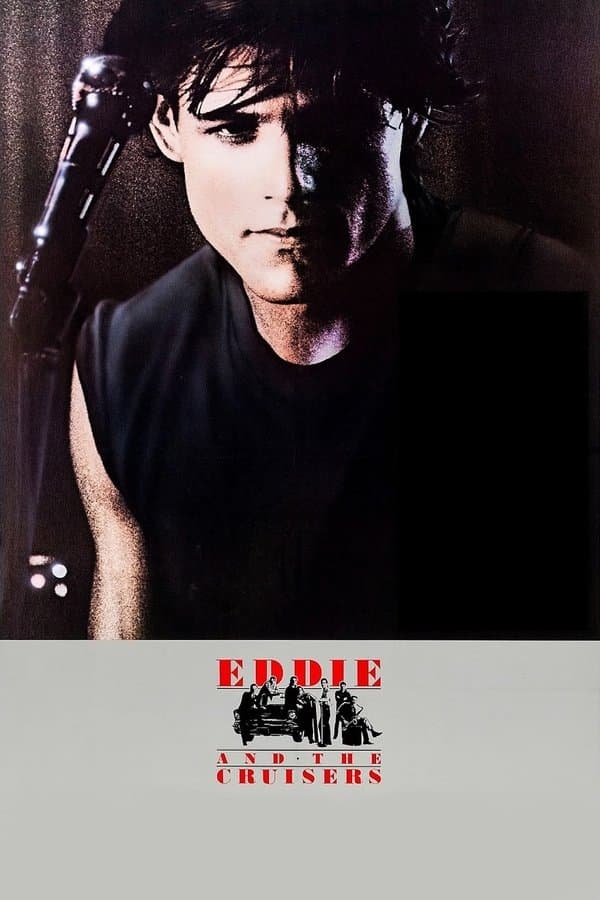
Eddie and the Cruisers
1983 • Drama, Music • PG
A television newswoman picks up the story of a 1960s rock band whose long-lost leader — Eddie Wilson — may still be alive, while searching for the missing tapes of the band's never-released album.
Runtime: 1h 35m
Buy related books from Amazon
As an Amazon Associate I earn from qualifying purchases. Read the full disclosure.
Why you should read the novel
Before hitting play, discover the source that started it all: P. F. Kluge’s novel Eddie and the Cruisers. The book dives deeper into the Jersey Shore club scene, creative obsession, and the fragile chemistry of a rising band.
On the page, you’ll find richer backstories, sharper motives, and a more intimate portrait of Eddie Wilson and Frank Ridgeway. Kluge’s lyrical, noir-tinged prose captures the ache of ambition and the cost of chasing a sound that could change everything.
If you loved the film’s mystery and music, the novel offers a more nuanced, emotionally resonant journey. Read Eddie and the Cruisers to experience the original vision—layered, reflective, and unforgettable rock-and-roll fiction.
Adaptation differences
The novel’s structure and point of view differ significantly from the movie. Kluge tells the story from within the band’s circle—most centrally through Frank Ridgeway—while the film reframes events as a TV-news investigation led by reporter Maggie Foley, a character created for the adaptation.
Eddie’s fate and the ending diverge, too. The book treats his death as a hard, haunting absence, while the film adds an ambiguous final image hinting Eddie might have survived. The movie also offers a more triumphant rediscovery arc, whereas the novel leans into uncertainty and the melancholy of lost art.
Characterization and emphasis shift between mediums. The film streamlines relationships, compresses or reimagines supporting players, and spotlights stage performances and suspense. The book spends more time inside the band’s creative process, rivalries, and compromises, giving a quieter but deeper view of how songs, egos, and ideals collide.
Tone, timeline, and musical texture also diverge. The novel lingers in early-’60s New Jersey bars and threads literary allusions—especially to Rimbaud’s A Season in Hell—through its themes. The film layers on a slicker, 1980s-framed mystery and anthemic soundtrack by John Cafferty & the Beaver Brown Band, shifting the story’s feel and pace.
Eddie and the Cruisers inspired from
Eddie and the Cruisers
by P. F. Kluge